How to Use Porcelain Safely in the Oven
You can safely use porcelain in the oven if you make sure it’s the right type—high-fired or oven-safe varieties work best. These kinds of porcelain are designed to handle heat without cracking or breaking.
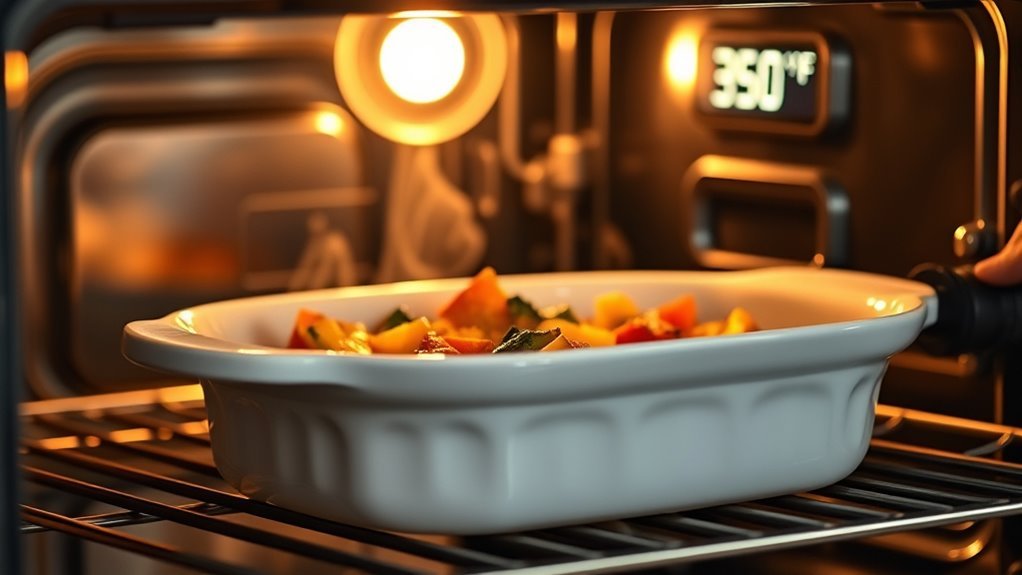
Always avoid sudden temperature changes like placing cold porcelain into a hot oven; instead, let it warm gradually to prevent cracking. Handle it carefully using mitts and avoid rapid cooling after baking.
This means don’t put your hot porcelain straight into cold water or a chilly surface. If you follow these precautions, your porcelain will last longer and stay looking great.
There’s more to know about handling different porcelain types and avoiding damage, so always check manufacturer guidelines before baking.
Understanding Porcelain Types and Oven Safety
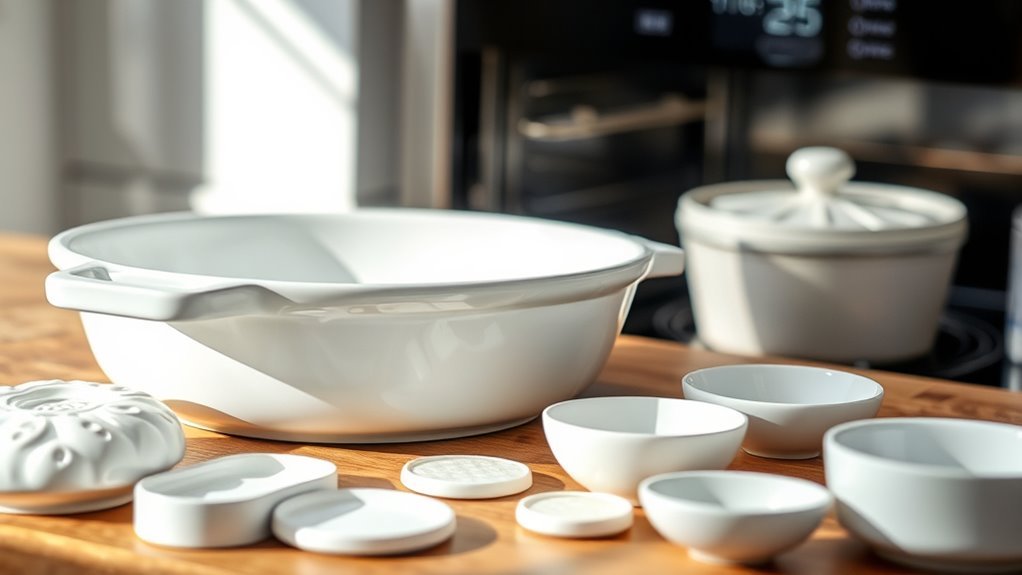
Although porcelain is often considered oven-safe, its suitability depends on the type and treatment. Different porcelain types vary in heat resistance because pure porcelain is fired at high temperatures—around 1200°C—making it generally safe within specified temperature limits.
However, porcelain-coated stoneware or metal with enamel may handle oven temperatures between 220°C to 315°C, depending on the product. Glaze quality and thickness also affect oven safety; thicker, well-glazed pieces tend to resist thermal shock better.
Decorative porcelain, lacking these features, isn’t designed for oven use. Even oven-safe porcelain can crack if exposed to sudden temperature changes or if temperature limits are exceeded.
Best Practices for Preventing Thermal Shock and Damage
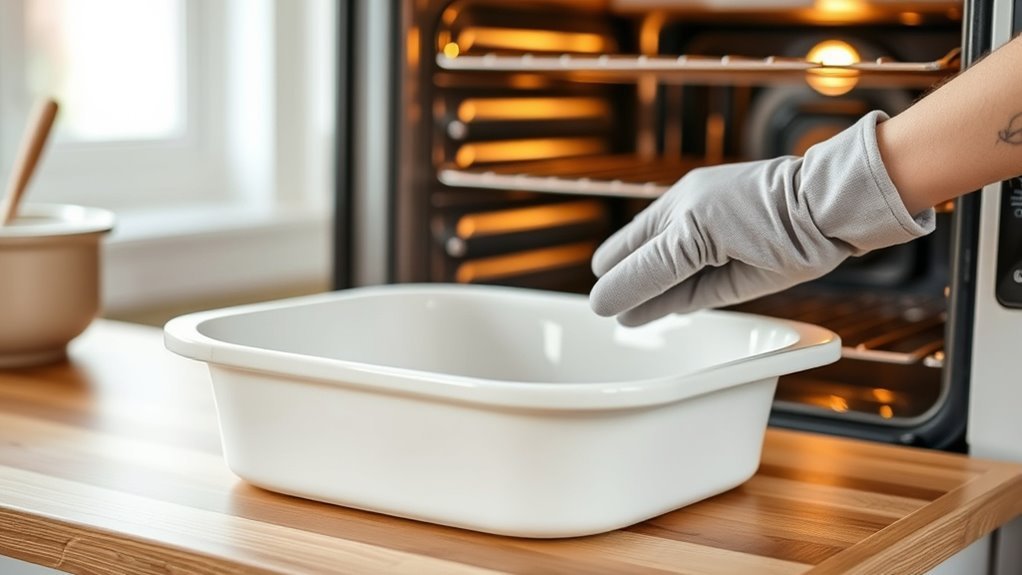
Knowing the type of porcelain you have is just the start; protecting it from thermal shock during use matters most. To prevent damage, follow these best practices:
Always allow your porcelain to reach room temperature before placing it in the oven. Avoid putting cold or frozen dishes directly into a hot oven to minimize rapid temperature changes and thermal stress.
Let porcelain warm to room temperature before baking; avoid sudden heat to prevent cracking from thermal shock.
Preheat your oven gradually using the lowest temperature setting first. This gradual heating ensures a smooth temperature transition, reducing thermal expansion that causes cracks.
Handle your oven-safe porcelain carefully with mitts and avoid sudden impacts during heating and cooling to enhance crack prevention.
Conclusion
When using porcelain in the oven, remember that “haste makes waste.” You’ve learned to recognize oven-safe types and avoid sudden temperature changes to prevent thermal shock. Always preheat your oven and avoid placing cold porcelain directly into a hot environment.
By following these simple steps, you’ll keep your porcelain pieces intact and looking beautiful for years. Treat your cookware with care, and it’ll reward you with lasting durability and charm.
Using porcelain safely in the oven means being mindful of temperature changes and choosing the right pieces. When you handle your oven-safe porcelain properly, you protect it from cracks and damage. This careful approach ensures your porcelain cookware stays both functional and elegant over time. So, take your time, preheat your oven, and avoid quick temperature shifts to enjoy the best results from your porcelain dishes.