Which Ceramic Can Go Safely in the Oven?
You can safely use stoneware or porcelain ceramics in the oven since they’re fired at high temperatures. This process makes them heat-resistant and less likely to crack.
When choosing ceramics, look for those labeled as oven-safe.
Make sure they have even thickness and are coated with lead-free, durable glazes.
On the other hand, avoid earthenware or unglazed pieces. These tend to absorb moisture and are more likely to break when exposed to heat.
Always check the manufacturer’s guidelines before using any ceramic in the oven.
Also, steer clear of any damaged items to prevent accidents.
Curious why some ceramics handle heat better? There’s plenty to learn about their composition and how to care for them properly.
Types of Ceramics Suitable for Oven Use
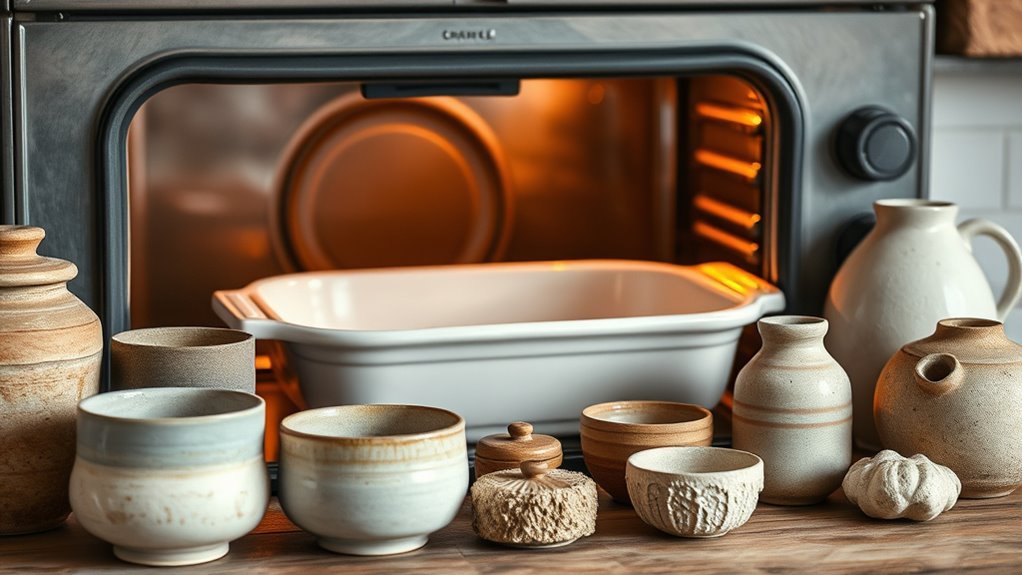
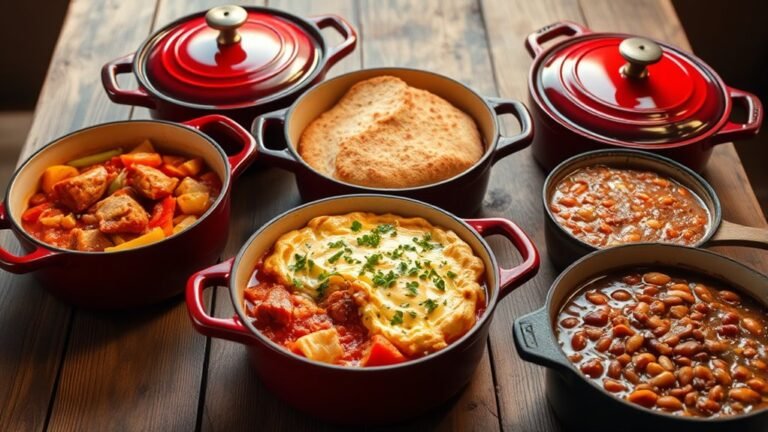
When you choose ceramics for oven use, stoneware and porcelain stand out because they can handle high temperatures and resist damage. These types of ceramic cookware are fired at high firing temperatures, making them durable and heat-resistant. You’ll want to pick glazed ceramic pieces labeled oven-safe to ensure they can withstand typical baking heat without cracking.
Their even heat distribution helps prevent thermal shock, which can cause sudden fractures. Thick-walled ceramics with consistent thickness are especially reliable for oven use, reducing the risk of breakage. Avoid unglazed or low-fired ceramics like earthenware, as they’re porous and less suited for the oven.
Factors Influencing Ceramic Oven Safety

Although ceramics might look similar, several factors determine whether they can safely endure oven temperatures. The type of ceramic, like stoneware, usually offers better heat resistance and higher temperature tolerance compared to others.
Glaze composition plays a pivotal role; a properly fired, lead- and cadmium-free glaze enhances oven-safe qualities. Porosity matters too—highly porous or unglazed ceramics can trap moisture, leading to cracking from thermal shock when heated unevenly.
Proper glaze and low porosity prevent moisture buildup and cracking from thermal shock in oven-safe ceramics.
You should also check the physical condition of your ceramic; cracks or chips weaken its durability. Always follow manufacturer guidelines and look for oven-safe symbols to ensure safety.
Finally, consider heat distribution in your oven, as uneven heating can cause stress on ceramics not designed to handle it. So, it’s always a good idea to be cautious and make sure your ceramic is up for the heat.
Conclusion
Now that you know which ceramics can safely go in the oven, you’re ready to cook without worry. Stoneware and porcelain are your best bets because they can handle high heat like champions.
Avoid delicate or decorative ceramics that might crack under pressure. These aren’t designed for the oven and can easily break or shatter when exposed to high temperatures.
With the right choice, your ceramic dishes will perform like culinary superheroes. They make your oven adventures safe and successful every time.
Choosing oven-safe ceramics like stoneware or porcelain ensures your cooking experience is hassle-free. Don’t let the wrong pottery ruin your perfect meal—stick to oven-safe ceramics to keep your dishes intact and your food delicious.