How to Reheat Enchiladas in the Oven in 7 Easy Steps
Preheat your oven to 350°F and grab an oven-safe dish.
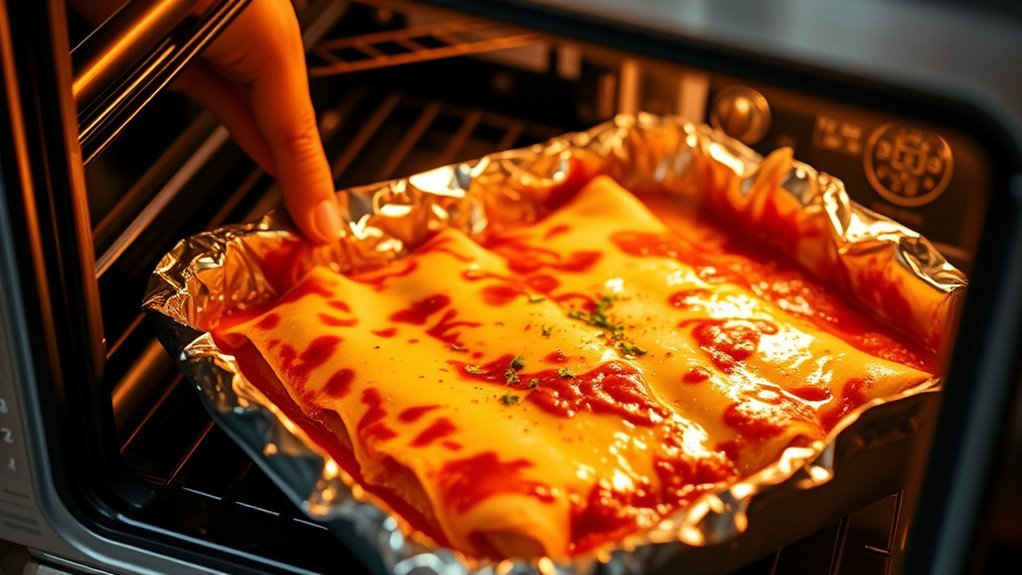
Arrange your enchiladas in a single layer, then cover with aluminum foil to lock in moisture.
Bake them for 20 minutes, remove the foil, and bake another 5 to 10 minutes to crisp the cheese.
Check the internal temperature—it should hit 165°F for safe, even reheating.
Follow these simple steps, and you’ll bring back that fresh-baked flavor and perfect texture.
Keep going to discover tips for the best results.
Preheat Your Oven to 350°F
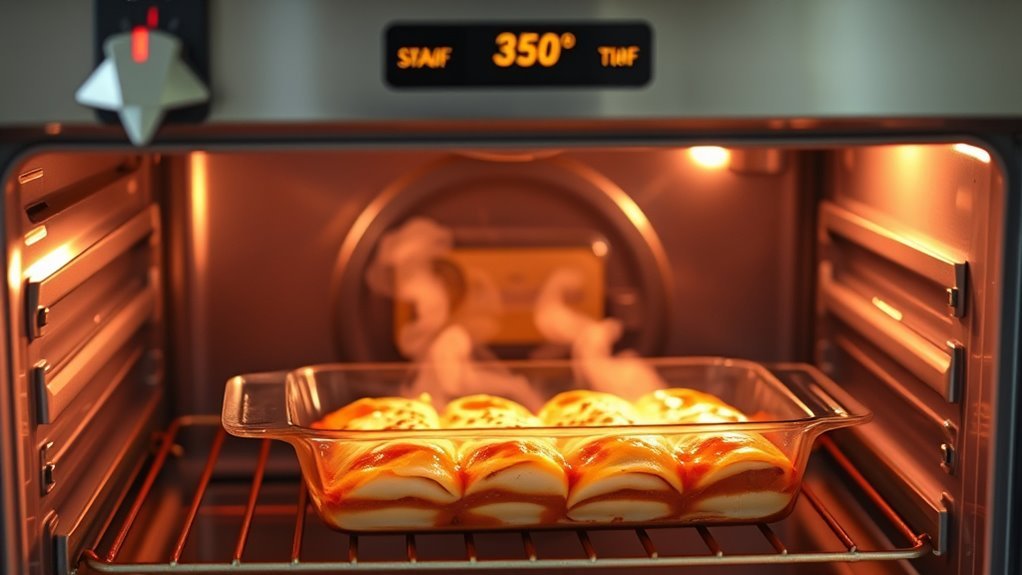
Before you reheat your enchiladas, make sure you preheat your oven to 350°F (175°C). This step is vital for proper heating, ensuring your enchiladas are evenly reheated without cold spots.
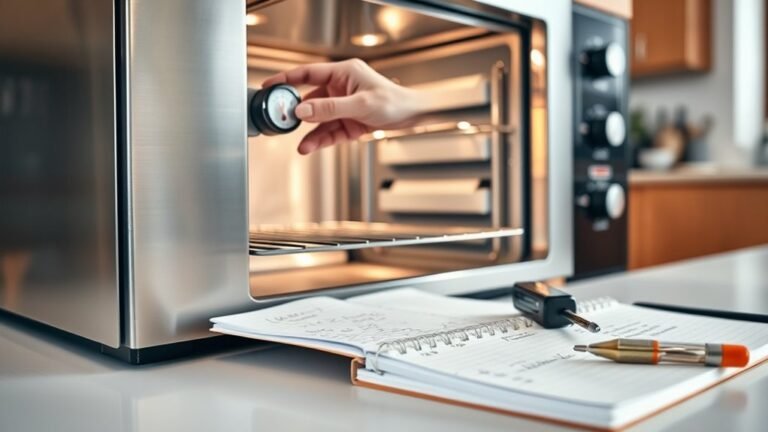
Don’t just set the dial and assume the oven’s ready—allow it to fully reach the oven temperature before placing your dish inside. If you suspect your oven’s dial isn’t accurate, use an oven thermometer for temperature verification.
Starting with a properly preheated oven preserves the texture and flavor of your enchiladas, preventing sogginess or uneven warmth. By preheating correctly, you set the stage for a perfectly warmed meal.
Prepare an Oven-Safe Dish
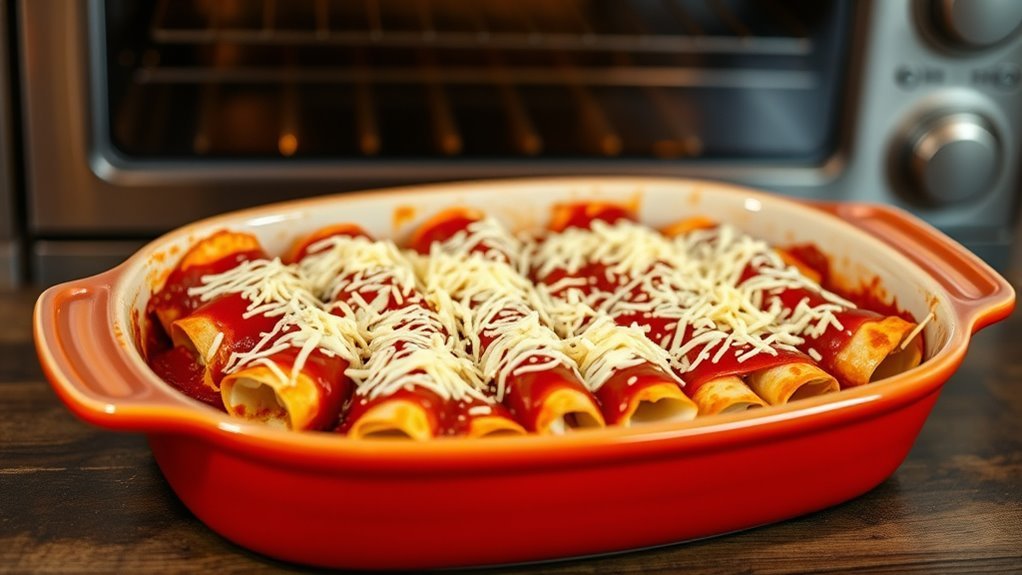
Choose an oven-safe dish that fits your enchiladas comfortably, like a glass or ceramic baking dish. Arrange them in a single layer to make certain of even heating.
Cover the dish with aluminum foil to keep moisture in. This setup will help your enchiladas reheat perfectly without drying out.
Choosing the Right Dish
When reheating enchiladas, you’ll want to pick an oven-safe dish like glass, ceramic, or metal to prevent any damage during cooking. Choose a metal baking dish or something similar that’s large enough to hold the enchiladas in a single layer for even heating.
A dish with low sides helps heat circulate better and makes covering with foil easier. Just be sure to avoid plastic or non-oven-safe containers to prevent breakage or harmful chemical release.
| Feature | Recommendation | Reason |
|---|---|---|
| Material | Glass, ceramic, metal | Oven-safe, prevents breakage |
| Size | Large enough | Holds enchiladas without crowding |
| Sides | Low sides | Promotes heat circulation |
Layering Enchiladas Evenly
Although it might be tempting to pile your enchiladas together, you’ll want to arrange them in a single, even layer in your oven-safe dish to guarantee they heat uniformly. Proper layering ensures uniform reheating by allowing heat circulation around each enchilada.
Leave some space between them to prevent sticking and to avoid cold or soggy spots. Choose an oven-safe dish that fits your enchiladas without overcrowding, promoting consistent temperature distribution.
Avoid stacking or overlapping, as this disrupts even heating and texture. Once layered evenly, you can cover with aluminum foil to retain moisture and further support uniform reheating.
Taking these steps will help your enchiladas reheat perfectly every time, with each piece warm and delicious.
Using Aluminum Foil Cover
Since reheating enchiladas requires even heat and moisture retention, covering them tightly with aluminum foil is vital. Start by placing your enchiladas in an oven-safe dish, arranging them in a single layer to ensure even heating.
Then, cover the dish securely with aluminum foil to lock in moisture and prevent drying out during reheating.
Here’s how to use aluminum foil effectively:
- Preheat your oven to 350°F (175°C) before placing the covered dish inside.
- Reheat the enchiladas covered for 20-25 minutes to warm them through evenly.
- For a melty cheese topping, uncover the dish during the last 5-10 minutes.
This method keeps your enchiladas moist while reheating them perfectly in the oven.
Arrange Enchiladas in a Single Layer
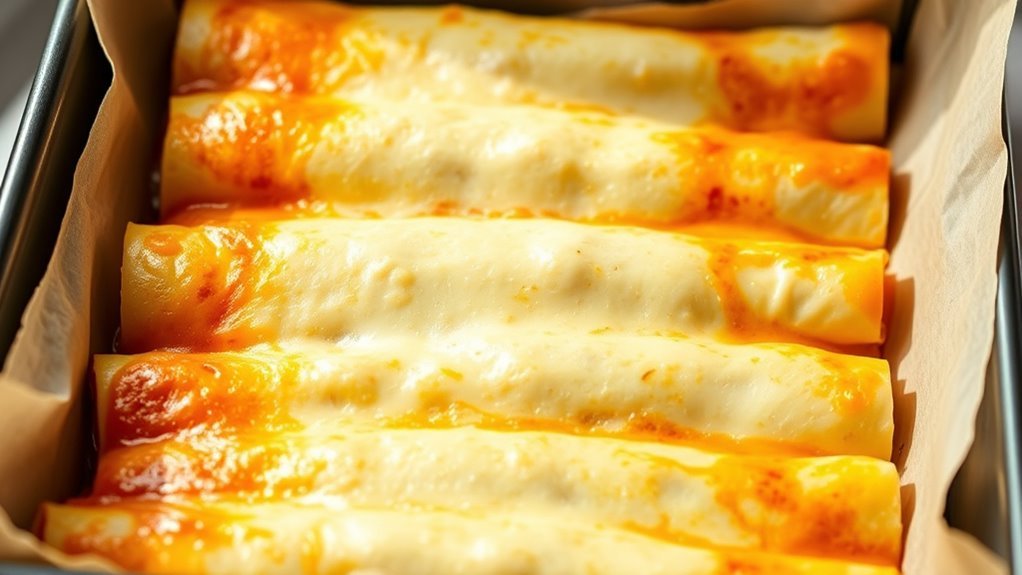
To make certain your enchiladas heat evenly, arrange them in a single layer in an oven-safe dish. This prevents overcrowding and promotes even heating during reheating enchiladas.
Space each enchilada apart to avoid sogginess and cold spots. Place them flat with the open side facing up to maintain their shape and keep the filling intact.
Avoid stacking or overlapping, as this causes uneven warming. Choose a dish just large enough to hold all the enchiladas comfortably, ensuring proper spacing and heat distribution.
| Tip | Reason | Effect |
|---|---|---|
| Single layer | Even heating | No cold spots |
| Oven-safe dish | Safe for reheating | Consistent temperature |
| Spacing | Prevent overcrowding | Avoid sogginess |
| Open side facing up | Maintain shape | Filling stays inside |
| No stacking | Avoid overlap | Uniform warming |
Cover the Dish With Aluminum Foil
Cover your enchiladas with aluminum foil to keep them moist and prevent drying out as they reheat. The foil also stops the cheese and tortillas from over-browning while ensuring heat spreads evenly.
Just make sure to use a piece large enough to seal the dish tightly for the best results. This way, everything heats up perfectly without any mess.
Retains Moisture Effectively
When you reheat enchiladas, wrapping them loosely with aluminum foil traps steam and keeps them from drying out. This covering preserves moisture and guarantees a tender texture throughout the reheating process.
To maximize moisture retention, follow these steps:
- Tent the aluminum foil slightly to prevent it from sticking to melted cheese. This way, you keep the enchiladas’ appearance and texture intact.
- Keep the foil on during most of the baking. It traps steam, which helps heat everything evenly and avoids hot spots.
- Remove the foil for the last 5-10 minutes. This allows the top to heat up nicely without losing too much moisture.
Prevents Excessive Browning
Keeping the enchiladas covered with aluminum foil not only helps maintain moisture but also prevents the tortillas and toppings from becoming overly browned. When you’re covering enchiladas in an oven-safe dish, aluminum foil acts as a shield that promotes moisture retention and helps prevent burning.
This reheating method ensures the cheese and sauce don’t darken too quickly while the center heats through. By using foil, you create a barrier that supports even heating across the dish, avoiding excessive crispiness or charred edges.
Just remember to remove the aluminum foil during the last 5-10 minutes of reheating to allow the cheese to melt perfectly and the toppings to crisp up without over-browning. This simple step keeps your enchiladas delicious and visually appealing.
Ensures Even Heat
Although reheating enchiladas, you want to make certain they stay moist and heat evenly throughout. To guarantee even heat during reheating, cover the dish tightly with oven-safe aluminum foil.
This cover traps heat and promotes moisture retention, preventing dryness. Follow these steps:
- Use aluminum foil that’s oven-safe and avoid contact with heating elements to maintain safety.
- Seal the foil snugly over the dish, leaving no gaps to guarantee consistent temperature and even heat distribution.
- Remove the foil during the last few minutes to let the cheese melt and become bubbly.
Bake Enchiladas for 20 Minutes
Since you’ve preheated your oven to 350°F (175°C), arrange the enchiladas in a single layer in an oven-safe dish without overcrowding.
Cover the dish tightly with foil to keep the moisture locked in. This helps prevent the enchiladas from drying out as you reheat them.
Place the dish in the oven and bake enchiladas for 20 minutes. This amount of time allows the heat to penetrate evenly, ensuring they’re thoroughly heated throughout.
Leaving the foil on during this baking period maintains the perfect balance of moisture and warmth. Using the oven to reheat enchiladas like this guarantees a better texture compared to a microwave.
After this step, your enchiladas will be hot, tender, and ready for any finishing touches you prefer.
Remove Foil and Bake for an Additional 5-10 Minutes
After baking the enchiladas covered for 20 minutes, remove the foil to let the cheese and toppings brown. This step is essential during oven reheating to enhance flavor and texture.
Here’s what to do next:
- Remove the foil carefully to allow steam to escape. This helps prevent sogginess and encourages crispy edges.
- Continue baking uncovered for an additional 5-10 minutes. Keep an eye on them so they don’t over-brown.
- Use a food thermometer to check that the internal temperature stays at least 165°F throughout this extra baking time.
Check Internal Temperature Before Serving
To guarantee your reheated enchiladas are safe to eat, you need to check that their internal temperature reaches at least 165°F (74°C). Use a food thermometer to perform an accurate temperature check by inserting it into the thickest part of the enchiladas, avoiding contact with the pan or dish.
Focus on the center, as it tends to be the coldest spot and ensures even heating. After oven reheating, let the enchiladas rest for a couple of minutes to allow the temperature to stabilize before measuring.
If you’re reheating in batches, verify each portion reaches the safe temperature to avoid any underheated spots. This step guarantees your reheated enchiladas are both delicious and safe to enjoy.
Conclusion
Reheating enchiladas in the oven is an easy way to enjoy their fresh, delicious taste again. Did you know that using the oven helps retain moisture better than a microwave?
In fact, 65% of people rely on the microwave for reheating, but it can sometimes dry out your food. By following these simple steps, you’ll keep your enchiladas warm and flavorful without losing that homemade touch.
So next time you’re ready for a tasty meal, skip the microwave. Use the oven to reheat your enchiladas perfectly. This method locks in moisture and brings out the best flavors, making your leftovers taste just like fresh.
Reheating enchiladas in the oven is the secret to a delicious, satisfying meal every time. Give it a try and enjoy your enchiladas as if they were just made!