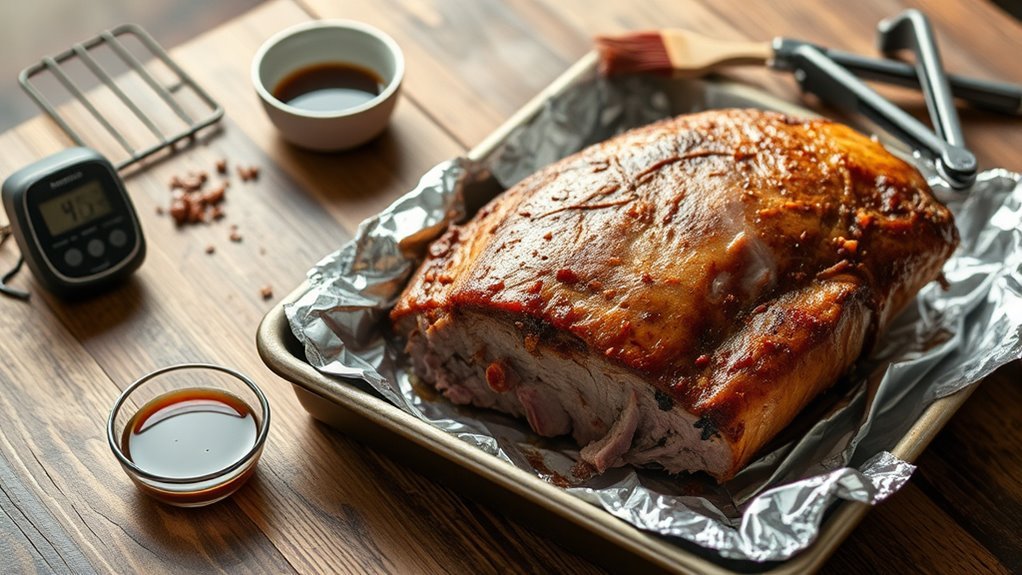
How to Reheat Brisket in the Oven in 7 Simple Steps
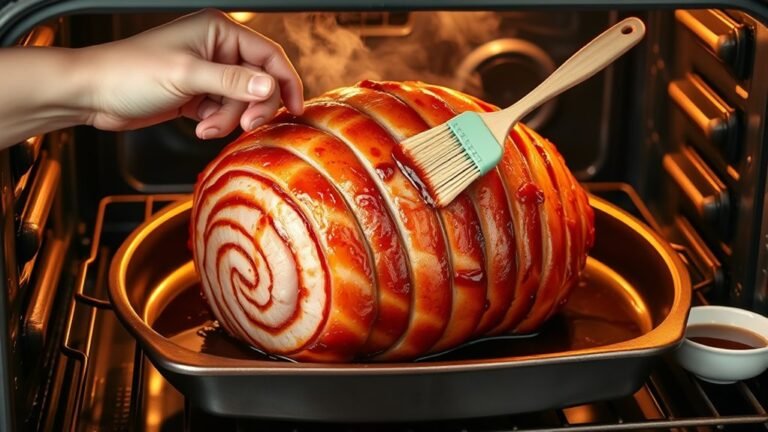
To reheat brisket in the oven, start by preheating it to 250°F–300°F.
Wrapping your brisket tightly in foil is key to locking in moisture and preventing it from drying out. Don’t forget to add some beef broth or au jus inside the foil to keep it juicy and flavorful.
Next, place the wrapped brisket in a baking dish and heat it until the internal temperature reaches 150–155°F. This ensures your brisket is warm throughout but still tender.
Once heated, let it rest for at least 5 minutes before slicing. This rest time helps the juices redistribute, keeping the meat moist and delicious.
Follow these simple steps, and you’ll keep your brisket moist and flavorful every time. There’s definitely more to explore if you want perfect results, but this method is a great start!
Preheat Your Oven to the Right Temperature
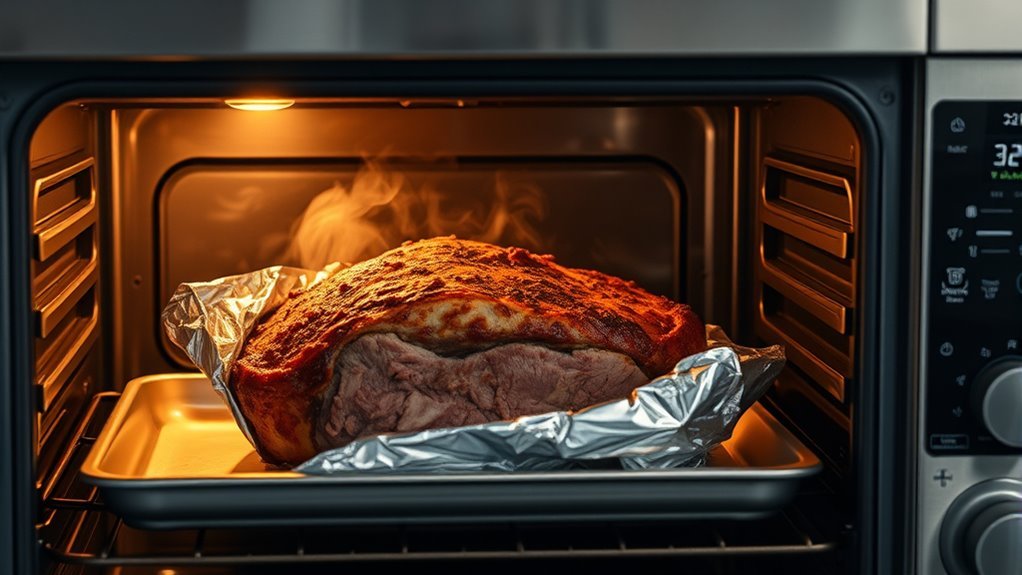
Before you put your brisket in the oven, make sure to preheat it to a gentle temperature between 250°F and 300°F. This range helps preserve moisture and prevents drying out.
To get it just right, use an oven thermometer to monitor the temperature accurately. Don’t rely solely on your oven’s dial, as temperatures can vary.
Preheat the oven for at least 10 to 15 minutes before placing your brisket inside, ensuring it reaches the set temperature fully. Remember, if your brisket is larger, opt for the lower end of the temperature range to allow even reheating without overcooking.
Taking these steps to preheat your oven properly will set the stage for perfectly warmed brisket every time.
Prepare Your Brisket for Reheating
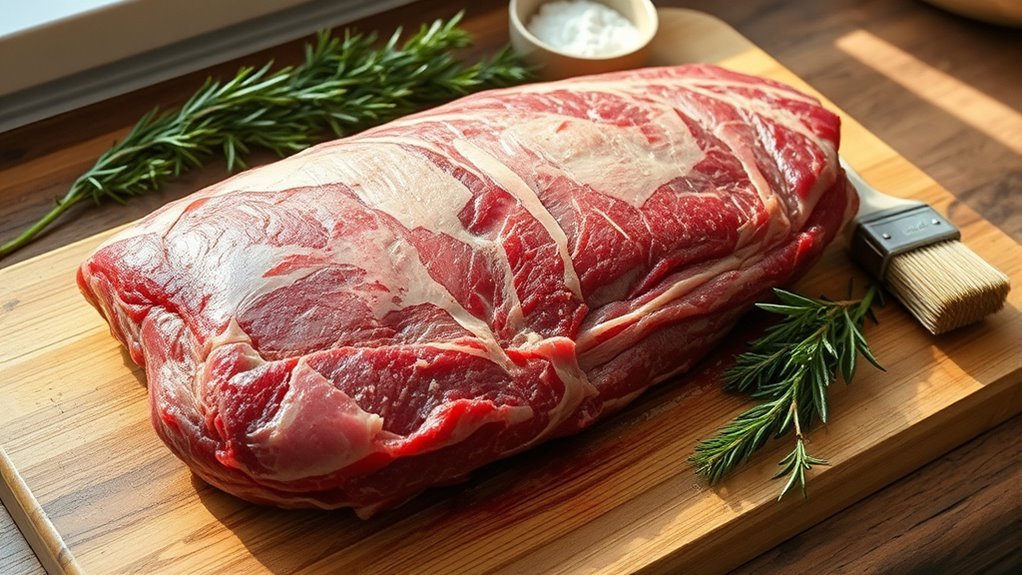
Before reheating, wrap your brisket tightly in foil or butcher paper to lock in moisture and flavor. This step really helps keep it juicy and tasty.
If you’re not heating it right away, store it in an airtight container or bag to keep it fresh. And don’t forget to include any leftover juices or broth—those help maintain that juicy texture when you reheat.
Proper Storage Techniques
When you want to keep your brisket juicy and flavorful for reheating, wrapping it tightly in aluminum foil or butcher paper is essential to prevent moisture loss.
After cooking, store your brisket in an airtight container or resealable bag within two hours. Keep it refrigerated at 40°F (4°C) or below and consume within 3-4 days.
For longer storage, freeze the brisket wrapped securely in foil inside a freezer-safe bag and use within 2-3 months. Don’t forget to label your packaging with the storage date to keep things fresh and make sure you use it in time.
Retain Moisture Strategies
To keep your brisket juicy and flavorful during reheating, focus on retaining moisture throughout the process. Moisture retention is key to preventing dry, tough meat.
When you reheat brisket, wrap it tightly in aluminum foil—this traps steam and keeps the brisket tender. Use low heat, around 250°F to 300°F, to gently warm the meat without drying it out. This slow approach preserves the brisket’s natural juices and texture.
Remember these tips to enhance moisture retention:
- Wrap brisket tightly in aluminum foil to lock in moisture
- Reheat brisket slowly at low heat for even warming
- Let the meat rest after reheating to redistribute juices
Following these steps ensures your brisket stays moist, flavorful, and ready to enjoy.
Use Leftover Juices
A great way to keep your brisket moist and flavorful during reheating is by using leftover juices or au jus. When reheating brisket in the oven, pour these reserved flavorful liquids over the meat before wrapping it tightly in aluminum foil.
This moisture preservation technique prevents the brisket from drying out and enhances its tenderness. Make sure the leftover juices cover the bottom of the baking dish to create a steaming environment during oven reheating.
This steam locks in moisture and preserves the original flavor and texture of your brisket. By incorporating leftover juices, you’ll enjoy reheated brisket that’s juicy and delicious, just like when it was freshly cooked.
Don’t skip this simple step for the best results. It really makes a difference!
Choose the Best Moisture-Adding Liquid
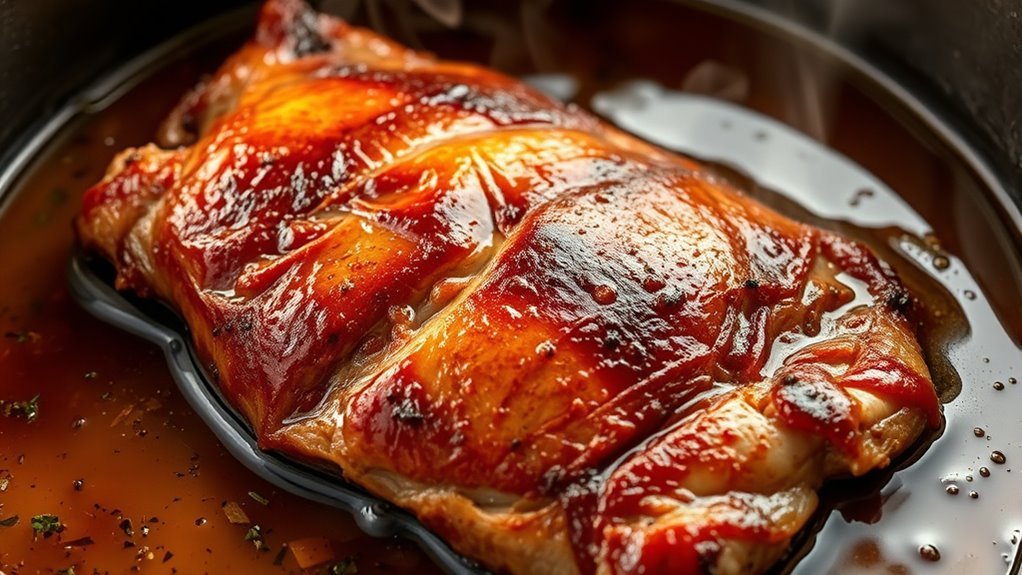
You’ll want to pick a liquid that adds both moisture and flavor to your brisket while it reheats. Options like beef broth, apple juice, or beer work wonders for keeping the meat juicy.
Just pour a thin layer into your baking dish to create steam without soaking the brisket. That way, you get all the moisture without turning your brisket soggy. Easy and effective!
Liquid Options Overview
Which liquid you choose can make all the difference when reheating brisket in the oven. Adding just a small amount—about 1/4 to 1/2 inch—of the right liquid keeps your meat moist and tender without turning it soggy.
Beef broth is a top choice because it keeps the brisket’s savory flavor intact while adding moisture. You can also use leftover juices or tallow from the original cook to enhance taste and prevent dryness.
Remember, you want enough liquid to create steam but not so much that the brisket steams instead of reheats evenly. It’s all about balance.
Here are some great liquid options to contemplate:
- Beef broth: keeps it moist and true to flavor
- Leftover cooking juices: naturally rich and tender
- Apple juice or beer: for subtle moisture and variety
Flavorful Liquid Choices
When reheating brisket, choosing the right liquid can transform dry meat into a juicy, flavorful dish. Opt for flavored liquids like beef broth, apple juice, or beer to boost moisture retention during brisket reheating.
Pour about 1/4 to 1/2 inch of your chosen liquid into the baking dish to create steam that keeps the meat tender. Don’t forget to add reserved drippings or au jus from the original cook—they intensify the natural flavors.
Avoid plain water since it lacks richness. For an extra layer of depth, incorporate aromatic liquids such as red wine or Worcestershire sauce.
These choices not only maintain moisture but also elevate the brisket’s taste, ensuring your reheated meat stays succulent and full of character.
Arrange the Brisket in a Baking Dish
Although reheating brisket might seem straightforward, arranging it properly in a baking dish guarantees even warming and retains moisture. Start by choosing a shallow baking dish that’s large enough to hold your brisket without crowding.
Place the slices or whole cut in a single layer to promote even heating and avoid overlapping. Position the brisket with the fat side facing up, which helps lock in moisture as it reheats.
Remember to give each piece space to breathe for consistent temperature. Keep the arrangement simple to prevent dry spots.
Also, use a dish that allows heat and moisture to circulate freely. This careful setup ensures your brisket reheats evenly and stays juicy.
That way, every bite is as satisfying as the first.
Wrap the Brisket Tightly With Foil
To keep your brisket moist and flavorful during reheating, wrap it tightly in aluminum foil. This step traps moisture, preventing your brisket from drying out in the oven.
Make sure to seal the foil securely around the meat, creating an airtight barrier that locks in juices and preserves the brisket’s tenderness. For extra protection, consider double wrapping the brisket in foil; this helps maintain moisture and keeps the bark intact.
It’s best to wrap the brisket immediately after taking it out of the refrigerator, so it retains its juiciness as you reheat. Taking the time to wrap your brisket properly with foil ensures that when it’s done reheating, it stays succulent and full of flavor.
Reheat Until the Ideal Internal Temperature
Since maintaining juiciness is key, you’ll want to reheat your brisket until it reaches an internal temperature of 150-155°F. Use a meat thermometer to monitor the temperature precisely during oven reheating at 350°F, checking every 15 minutes.
This range ensures your brisket stays tender and juicy without drying out. Though the USDA recommends reheating to 165°F for safety, aiming slightly lower preserves quality without compromising flavor.
Remember, a perfectly reheated brisket means savoring every bite of a juicy brisket that melts in your mouth. You’ll enjoy tender meat that feels freshly cooked and relish the rich flavors enhanced by careful temperature control.
Trust your meat thermometer to guide you to brisket perfection.
Rest the Brisket Before Slicing
Once your brisket reaches the ideal temperature, resist the urge to slice it right away. Resting the brisket for at least 5 minutes on a cutting board allows the juices to redistribute evenly throughout the meat.
This resting period is essential because slicing too soon causes these flavorful juices to escape, leading to a loss of moisture and a drier brisket. By giving the meat time to rest, you help retain its moisture, resulting in enhanced tenderness and a more enjoyable texture.
Additionally, resting lets the residual heat finish cooking gently, improving the overall flavor and consistency. So, be patient—this simple step guarantees your reheated brisket stays moist, tender, and delicious when you finally slice into it.
Conclusion
Reheating brisket in the oven doesn’t have to be tricky. By following these simple steps—preheating properly, adding moisture, and wrapping the meat tightly—you’ll keep your brisket juicy and flavorful.
The theory that reheating brisket dries it out isn’t inevitable; with the right technique, you can enjoy leftovers that taste just as good as fresh. So, take your time and treat your brisket right—you’ll love every bite all over again!
When you reheat brisket in the oven, remember to add a little beef broth or water to maintain moisture. Wrapping the brisket in foil seals in the juices, preventing it from drying out.
By using these tips, reheating brisket in the oven becomes a simple process that brings out the best flavors and textures. Give your brisket the care it deserves, and you’ll savor tender, delicious meat with every bite.