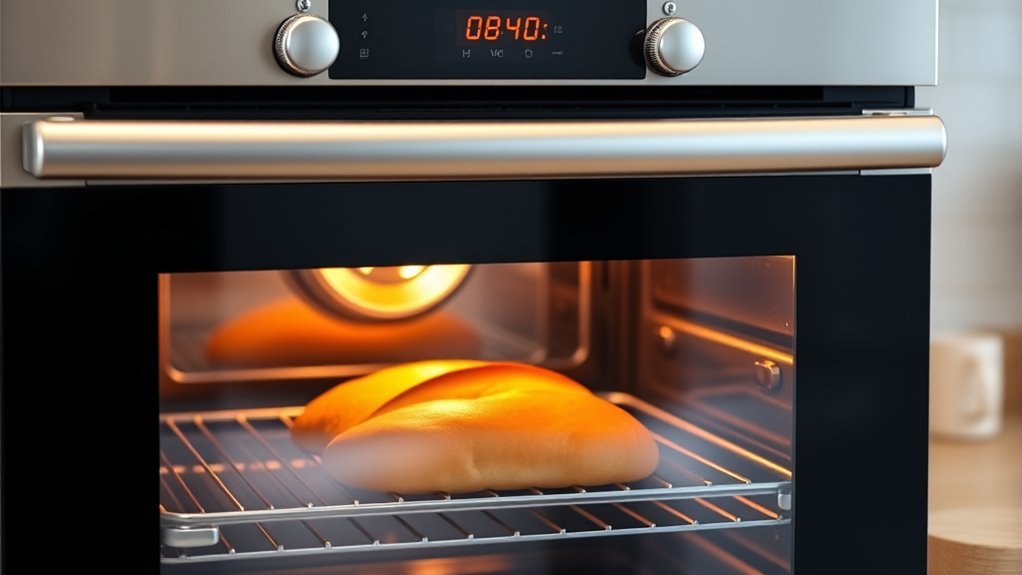
What’s a Conventional Oven?
You use a conventional oven when you bake with heating elements at the top and bottom that produce radiant heat without any fan to circulate air.
This creates a still environment where heat rises naturally, cooking your food evenly if you manage rack placement or rotate dishes.
Conventional ovens are great for pastries and traditional recipes, offering straightforward controls and reliable results.
If you want to understand how this simple oven type works and what dishes suit it best, keep exploring more details.
How Conventional Ovens Work
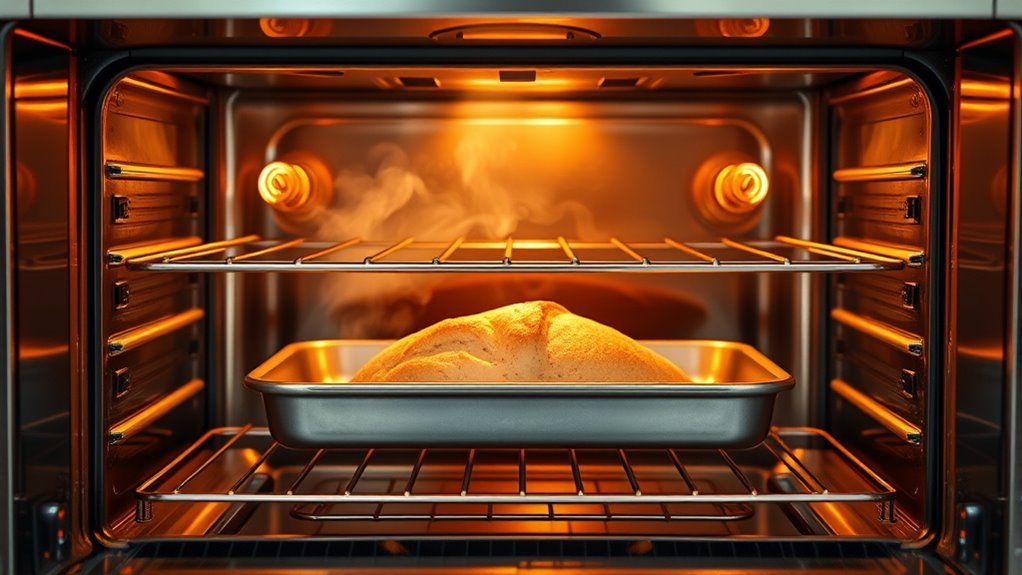
How exactly do conventional ovens cook your food? Conventional ovens use dual heating elements placed at the top and bottom of the oven cavity to generate heat. Heat rises naturally from the bottom element while the top element radiates warmth, creating a still environment inside.
Since there’s no fan or air circulation system, the hot air remains mostly stationary, meaning you get a consistent cooking atmosphere. The oven controls temperature regulation by cycling these heating elements on and off to maintain the set temperature.
Because the air doesn’t move, you might need manual rotation of dishes or careful rack placement to ensure even cooking. Understanding how the top and bottom elements work together in the oven cavity helps you maximize consistent cooking results with your conventional oven.
Benefits and Ideal Uses of Conventional Ovens
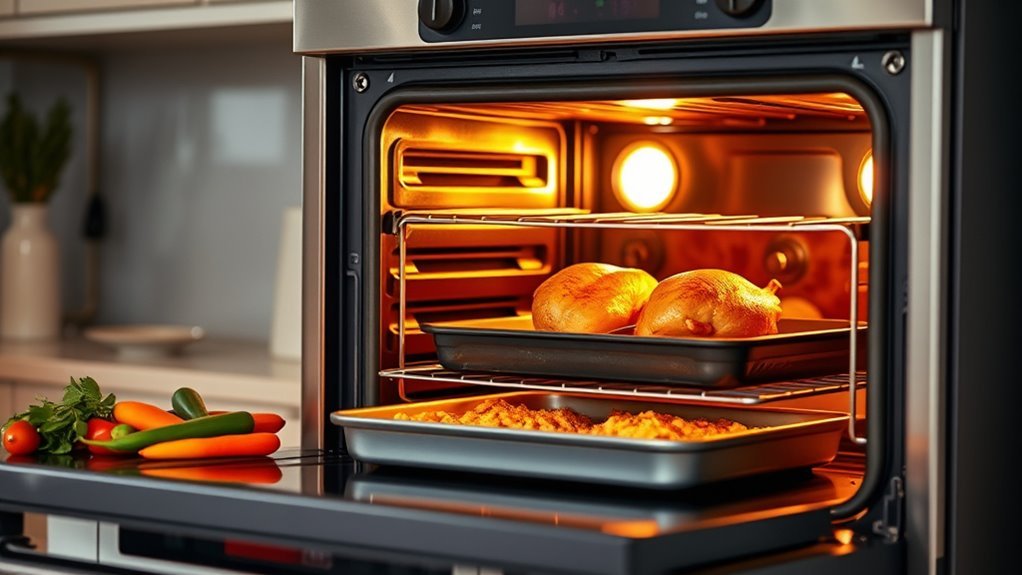
Understanding the heating elements’ role in conventional ovens helps you appreciate their benefits and ideal uses. Conventional ovens use dual heating elements that produce radiant heat from the top and bottom, ensuring temperature consistency.
This setup is ideal for pastries and baking delicate items, as it creates a still, consistent environment without fan-driven air circulation. You’ll find conventional ovens perfect for traditional cooking since most recipes are designed with their simplified operation in mind.
Although even heat distribution can vary, you can manage this by rotating your dishes and adjusting rack positions. Plus, conventional ovens offer reliable performance and tend to be less expensive, making them a practical choice when you want straightforward, dependable baking and cooking results.
Conclusion
Now that you’ve gotten a glimpse of how a conventional oven works, you can appreciate its timeless charm. It’s not just an appliance; it’s a reliable companion that gently embraces your food with even heat, creating comforting meals without fuss.
While newer gadgets promise speed, your conventional oven offers a steady, dependable warmth that’s perfect for those who savor the slow, satisfying art of cooking. Sometimes, the old-fashioned way is the best way.
A conventional oven is all about consistent, radiant heat from both the top and bottom elements, making it ideal for baking, roasting, and slow cooking. It’s this even heat distribution that helps your dishes come out perfectly cooked every time.
So, if you’re looking for an oven that prioritizes steady cooking over quick bursts of heat, the conventional oven remains a classic choice. It’s perfect for anyone who enjoys the process of cooking as much as the delicious results.