How to Reheat Brisket in the Oven in 7 Simple Steps
To reheat brisket in the oven, start by preheating it to 250°F. This temperature is perfect for warming the meat slowly without drying it out.
Adding a splash of beef broth helps keep the brisket moist and flavorful during reheating.
Next, place the brisket in an oven-safe dish and wrap it tightly with foil. This traps the steam and prevents the meat from drying out.
Heat the brisket until it reaches an internal temperature of 150–155°F for the best results.
Once heated, let the brisket rest covered for 10–15 minutes. This allows the juices to redistribute throughout the meat.
Finally, slice the brisket against the grain for tender, juicy bites.
Follow these simple steps, and you’ll enjoy perfectly reheated brisket every time without losing any of its delicious flavor.
Preheat the Oven to a Low Temperature
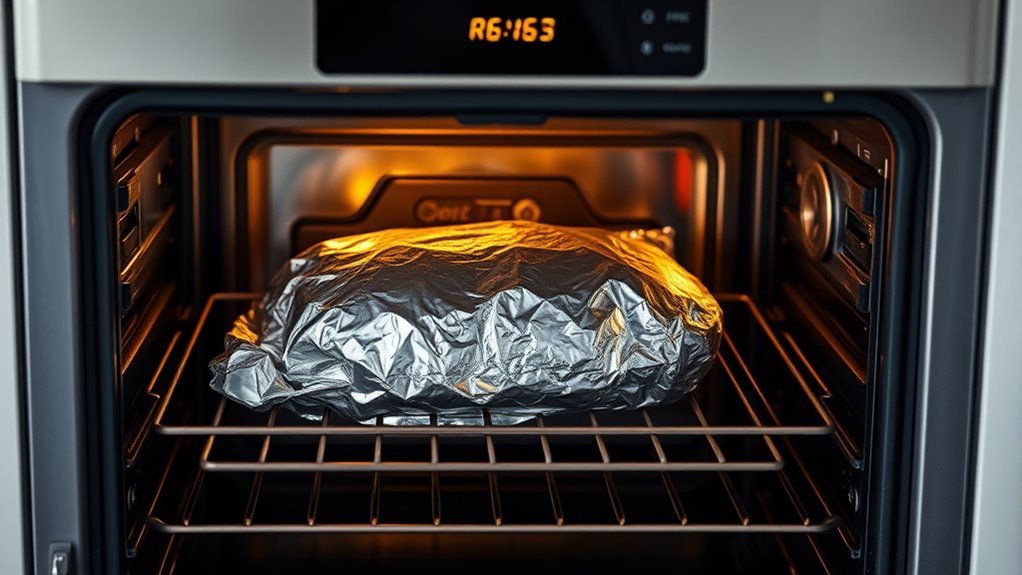
Before you put your brisket in the oven, make sure to preheat it to a low temperature between 250°F and 300°F. This step is essential because preheating ensures the oven reaches the right temperature before you place the brisket inside.
You want to avoid putting the meat in too early, as uneven heat can cause hot spots that dry out parts of your brisket. Allow the oven to fully preheat for at least 10 to 15 minutes to guarantee even heat distribution.
Using a low temperature helps you gently reheat the brisket, preserving its moisture, tenderness, and flavor. Taking the time to preheat properly sets the stage for a perfectly reheated brisket every time.
Prepare the Brisket With Moisture
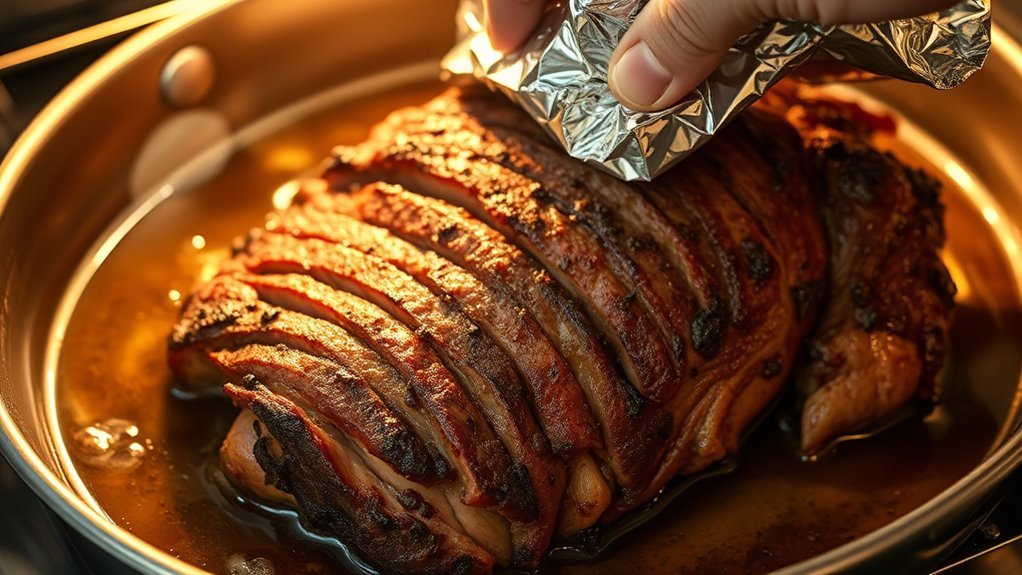
Before reheating, add a splash of beef broth or apple juice to keep your brisket juicy and flavorful. Then, wrap it tightly in aluminum foil to trap steam and lock in moisture.
This simple step guarantees your meat stays tender and delicious as it warms up. You’ll thank yourself when every bite is just as good as the first!
Add Flavorful Liquid
When you add a flavorful liquid like beef broth, beer, or apple juice to the baking dish, you help keep the brisket moist and tender during reheating. Pour about 1/4 to 1/2 inch of this liquid into the dish before you reheat brisket in the oven.
This moisture creates steam as it heats, preventing the meat from drying out. To boost flavor and moisture further, baste or brush the brisket with leftover drippings or additional juices.
Make sure the brisket is well-coated with the flavorful liquid, which also helps distribute heat evenly. Proper covering plays a role too, but we’ll discuss that next.
For now, focus on adding enough moisture to keep your brisket juicy and delicious when reheated.
Wrap Tightly in Foil
Adding moisture to your brisket sets the stage for wrapping it tightly in foil, which locks in that juiciness during reheating. Before you wrap, pour a few tablespoons of leftover beef broth or juices over the meat to keep it moist.
Then, use aluminum foil to envelop your brisket completely, making sure there are no gaps where steam can escape. This tight seal traps moisture and flavor, preventing the brisket from drying out as it reheats.
For larger cuts, consider double-wrapping with foil to enhance moisture retention even more. Not only does wrapping in foil help preserve the brisket’s tenderness, but it also keeps the flavorful bark intact while reheating in the oven.
This simple step guarantees a juicy, delicious brisket every time you reheat. Give it a try—you’ll notice the difference!
Maintain Meat Moisture
Since brisket can easily dry out during reheating, you’ll want to prepare it with moisture to keep it tender and flavorful. Before you start, pour or brush the brisket with leftover juices, beef broth, or a flavored liquid. This adds moisture right from the start, helping the meat stay juicy.
When placing the brisket in the oven, cover it tightly with foil or a lid to trap steam and prevent drying out. Wrapping it well creates a moist environment that keeps the brisket soft.
After reheating, let it rest for a few minutes so the meat can reabsorb its natural juices. Following these steps ensures your reheated brisket stays moist and delicious every time.
Choose the Right Baking Dish and Rack
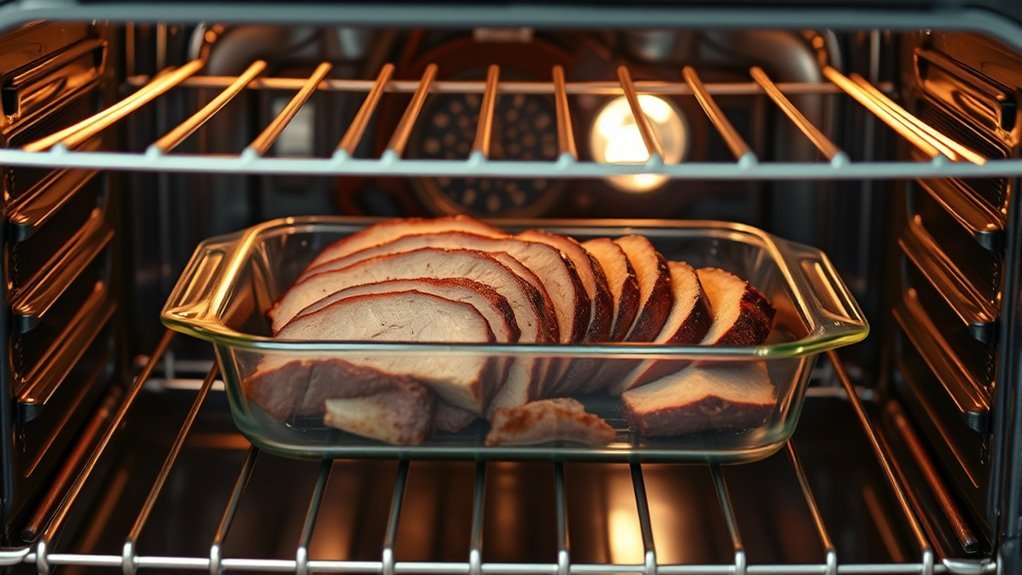
Choosing the right baking dish and rack plays a crucial role in reheating brisket evenly and retaining its moisture. Start by selecting a baking dish large enough to hold your brisket comfortably, with sides at least 2 inches high.
Use a heat-resistant material like glass, ceramic, or metal to guarantee safety at reheating temperatures. Then, place a sturdy, oven-safe wire rack inside the dish to elevate the brisket. This allows hot air to circulate evenly around the meat.
This setup prevents sogginess while promoting even cooking. For extra moisture, pour 1/4 to 1/2 inch of beef broth or apple juice into the bottom of the baking dish beneath the rack. It really helps keep your brisket juicy and perfectly reheated.
Wrap the Brisket Tightly With Foil
When you wrap the brisket tightly with foil, you lock in moisture that keeps the meat juicy during reheating. Start by placing the brisket on a large sheet of aluminum foil and, for extra flavor, drizzle some leftover juices or broth over the top.
Wrapping brisket tightly in foil locks in moisture and enhances flavor with leftover juices during reheating.
Then, wrap the brisket securely to create a sealed pouch that traps steam inside. This steam preserves moisture and prevents the meat from drying out.
For added protection, consider double wrapping with foil to form a stronger barrier against heat loss. Properly wrapping your brisket in foil not only maintains its tender texture but also enhances the reheating results.
This way, every bite stays flavorful and juicy. Don’t skip this essential step for a perfectly reheated brisket.
Reheat Until the Internal Temperature Is Ideal
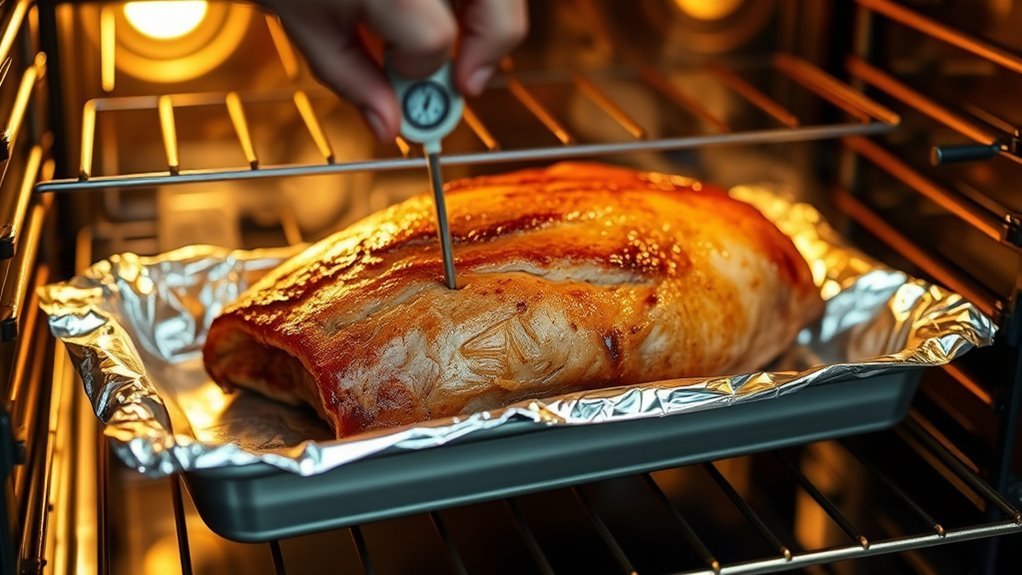
You’ll want to reheat your brisket until it reaches an internal temperature of 150-155°F for the best tenderness and juiciness. Use a meat thermometer to check the thickest part of the meat so you don’t overcook it.
Keep a close eye on the temperature to hit the perfect range every time. This way, your brisket stays nice and juicy, just like you want it.
Target Temperature Range
Although the USDA recommends reheating brisket to 165°F for safety, aiming for an internal temperature between 150-155°F helps keep your meat juicy and tender. When oven reheating, this target range preserves flavor and texture without drying out the brisket.
Using a meat thermometer ensures you reach that ideal internal temperature precisely, avoiding overheating. Pushing beyond 165°F risks drying out your brisket, which diminishes its juiciness and tenderness.
Instead, heat it gently until it hits that 150-155°F sweet spot, then let it rest before slicing. This approach balances food safety with maintaining a juicy brisket, making your reheated meat just as enjoyable as when freshly cooked.
Always monitor internal temperature carefully during oven reheating for the best results.
Using a Meat Thermometer
To guarantee your brisket stays juicy and tender during reheating, use a reliable meat thermometer to monitor its internal temperature carefully. When reheating brisket in the oven, the right temperature ensures you don’t overcook or dry it out.
Follow these steps:
- Insert the meat thermometer into the thickest part of the brisket, avoiding bone or fat for an accurate internal temperature.
- Aim for an internal temperature of 150-155°F, which preserves moisture and tenderness.
- Check the temperature regularly while oven reheating to prevent overcooking.
Once your brisket in the oven hits the ideal internal temperature, remove it promptly. Using a meat thermometer makes reheating precise and keeps your brisket flavorful every time.
Rest the Brisket Before Slicing
When you let the brisket rest for at least 10 to 15 minutes after reheating, the juices redistribute throughout the meat, keeping it tender and juicy. Resting is essential because slicing the brisket immediately can cause those flavorful juices to escape, leaving your meat dry.
To maintain moisture, cover the brisket loosely with foil during this resting period. This keeps it warm while allowing excess steam to escape, preventing sogginess.
Slice Against the Grain for Maximum Tenderness
Since cutting against the grain breaks up the muscle fibers, you’ll find each bite of brisket much more tender and easier to chew.
After reheating leftovers like brisket in the oven, always slice against the grain to maximize tenderness and flavor.
Here’s how to do it right:
- Identify the grain by spotting the muscle fibers running in one direction.
- Use a sharp knife to slice perpendicular to these lines for clean, even cuts.
- Slice only after the brisket has rested post-reheating to keep juices locked in.
Conclusion
Now that you’ve mastered these steps, reheating your brisket is like waking a sleeping giant—bringing those rich flavors back to life with gentle warmth.
By treating your brisket with care, you’ll unseal tenderness that melts like butter and juices that flow like a savory river.
So, wrap it up, heat it slow, and slice it right—your taste buds are in for a delicious encore every time.
Reheating brisket in the oven ensures it stays moist and flavorful, making every bite as good as the first.
Enjoy the feast you deserve, knowing your brisket will be tender, juicy, and perfectly reheated with these simple oven steps!