How to Cook Spiral Ham in the Oven in 10 Easy Steps
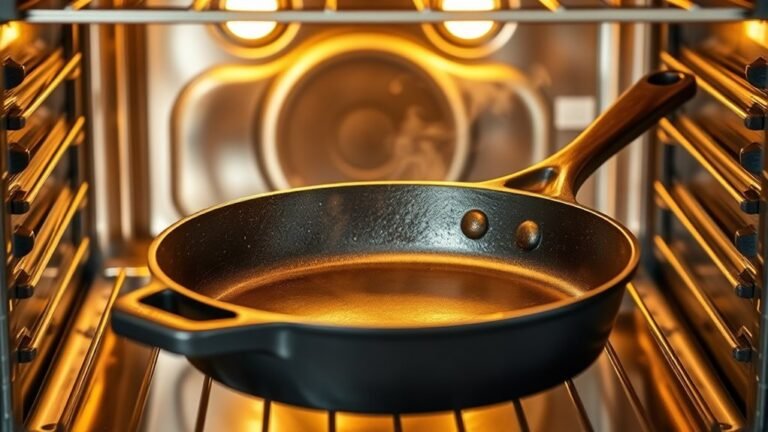
Start by selecting a fully cooked, spiral-cut ham — this makes cooking a breeze. Preheat your oven to 325°F to get it ready for the ham.
Next, remove any packaging and place the ham cut-side down in a foil-lined roasting pan. Cover it tightly with foil to keep it moist.
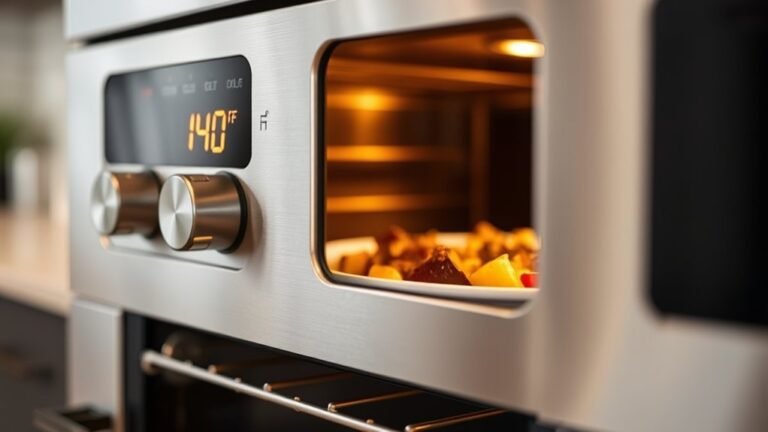
Bake the ham for about 12-15 minutes per pound. You’re aiming for an internal temperature of 140°F to ensure it’s perfectly heated through.
About 30 minutes before your ham is done, it’s time to add some flavor. Brush on your favorite glaze and crank up the oven to 400°F. This step caramelizes the glaze and adds a delicious finish.
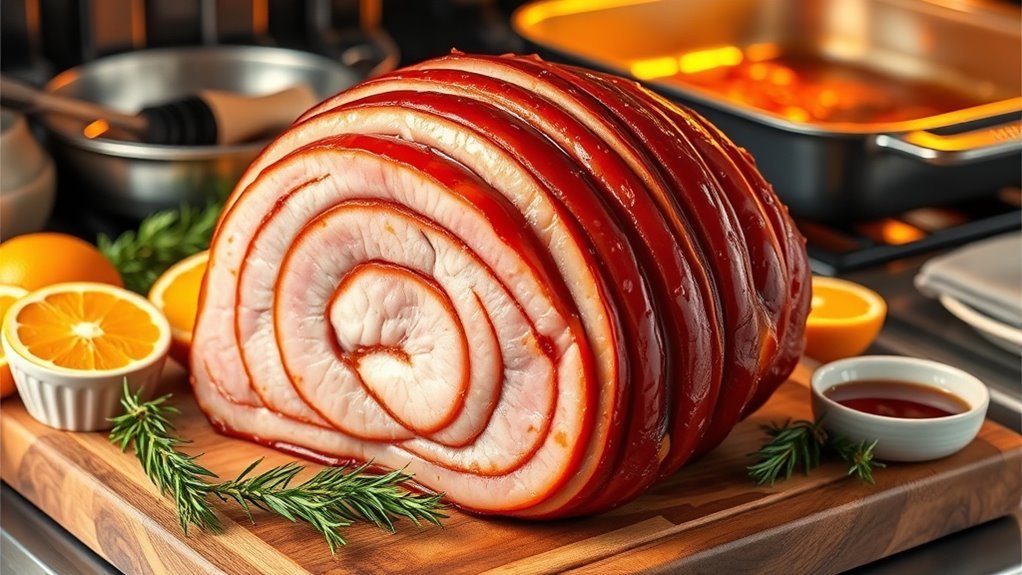
Once it’s out of the oven, let the ham rest before slicing. This keeps it juicy and tender. Keep reading for tips on perfect glazing and serving ideas!
Selecting the Right Spiral Ham
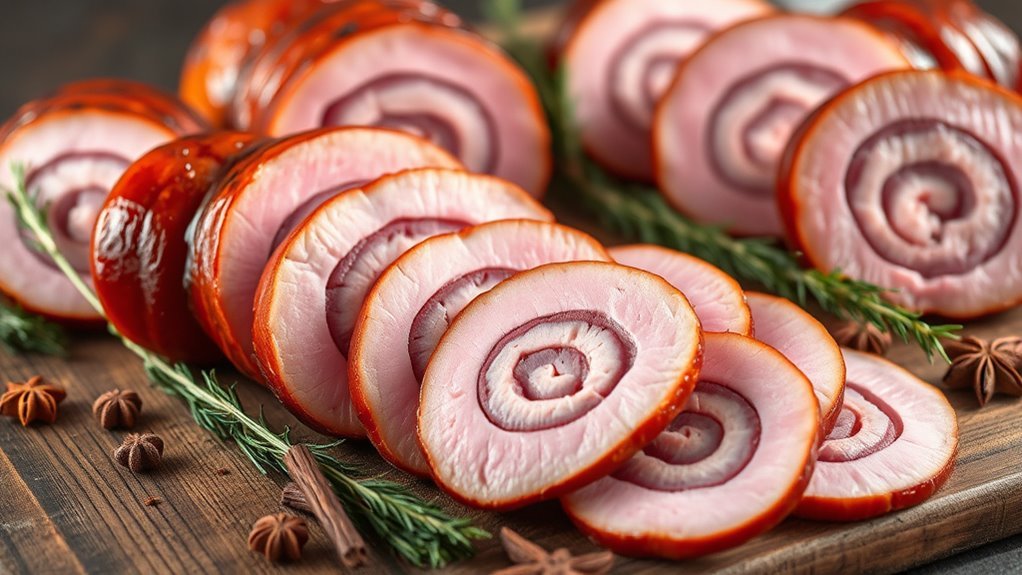
When selecting the right spiral ham, you’ll want to choose a pre-cooked, spiral-cut ham that weighs between 7 to 10 pounds for the best results. Look for a fully cooked ham labeled as pre-sliced, which makes your preparation quicker and easier.
Always check the packaging for a USDA inspection stamp to guarantee quality and safety. If you plan to use leftover bones for soups or stocks, opt for a bone-in spiral ham.
Keep in mind the shape of the ham—rounder hams may require slightly more cooking time than flatter, rectangular ones. By choosing the right pre-cooked ham, you set yourself up for a smooth cooking process and a delicious, tender spiral ham ready to serve.
Preparing Your Ham for the Oven
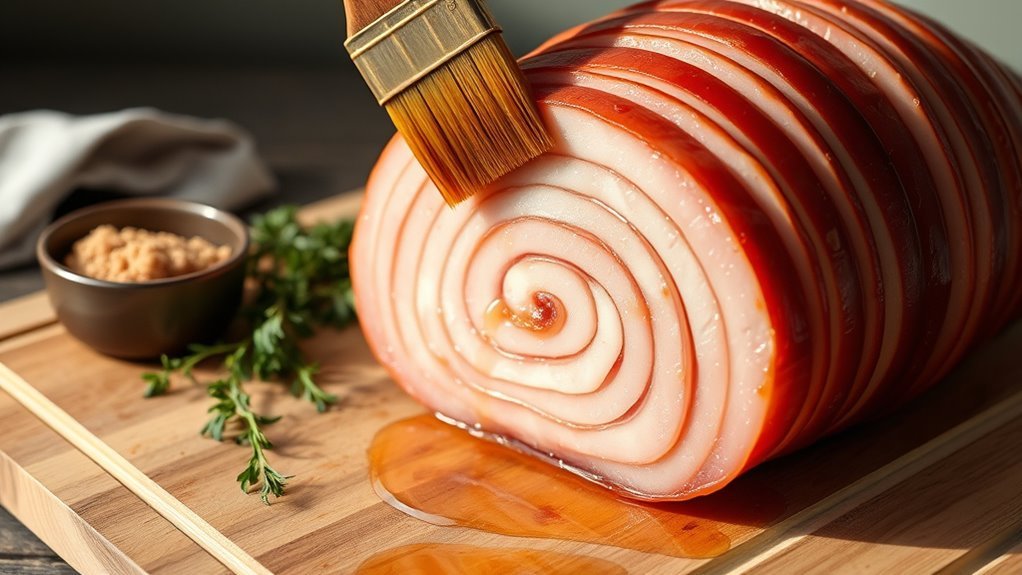
Before placing your spiral ham in the oven, make sure to remove any plastic wrapping or discs from its bottom. This prevents any melting or unwanted flavors during cooking.
Next, set your spiral ham in a roasting pan or baking dish with the cut side facing down—this helps retain moisture as it heats. If you want your glaze to soak in better, score the surface of the ham lightly in a diamond pattern.
This creates grooves for the glaze to penetrate, enhancing flavor. Finally, cover the ham tightly with foil to keep it moist throughout cooking. These steps prepare your spiral ham perfectly, ensuring it stays juicy and flavorful when you move on to applying the glaze and baking.
Preheating the Oven Properly
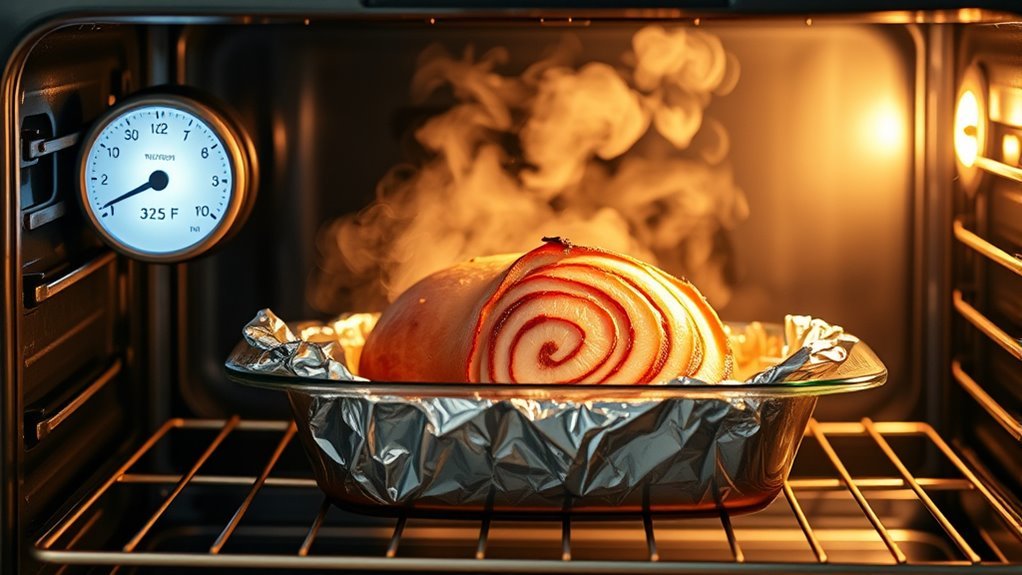
Before you put your spiral ham in, make sure to preheat your oven to 325°F for even cooking.
Place the oven rack in the middle to guarantee heat surrounds the ham uniformly.
Don’t rush—wait until the oven is fully heated to get the best results.
Ideal Oven Temperature
Although it might be tempting to skip this step, you should always preheat your oven to 325°F (163°C) to make certain your spiral ham cooks evenly. This oven temperature creates the ideal environment for even cooking, preventing the ham from drying out or being undercooked.
Make sure to allow your oven to fully preheat before placing the ham inside, as a stable temperature is essential. Using an oven thermometer helps you verify that the oven truly reaches 325°F, especially if your oven tends to run hot or cold.
Avoid opening the oven door during preheating to keep the temperature consistent. By properly preheating, you set the stage for a perfectly cooked spiral ham with juicy, tender results every time.
Oven Rack Placement
Once your oven reaches the ideal 325°F, focus on placing the rack correctly to promote even cooking. Position the oven rack in the middle to ensure even heat distribution throughout the spiral ham. This placement helps the heat circulate properly around the meat, preventing uneven cooking.
Before placing your ham inside, make sure you’ve preheated the oven fully to get consistent results. Set the ham on the rack with the cut side facing down if it has an exposed cut surface.
Use a rimmed baking sheet or roasting pan beneath the rack to catch drippings and avoid messes. Finally, verify the rack is stable and level to support the ham securely during baking.
Proper oven rack placement works hand-in-hand with a well-preheated oven for the best outcome. It might seem simple, but getting this step right makes a big difference!
Preheat Duration
Because consistent heat is key to cooking a perfect spiral ham, you should preheat your oven to 325°F (163°C) at least 15 minutes before placing the ham inside. This preheating duration ensures the oven temperature stabilizes, allowing even heat distribution throughout cooking.
Avoid putting the ham in a cold oven, as this can cause uneven cooking and extend your baking time. To be precise, use an oven thermometer to verify the oven has fully reached 325°F before inserting the ham.
Properly preheating your oven guarantees that the spiral ham cooks at the right temperature from start to finish, resulting in tender, juicy meat. Remember, skipping or shortening the preheating duration can compromise your ham’s texture and flavor.
Always preheat for best results. It really makes a difference!
Wrapping and Placing the Ham
Before cooking, make sure to remove any plastic wrapping or discs from the bottom of your spiral ham. This step is vital to avoid any melting or burning in the oven.
Next, place the ham cut-side down in a roasting pan or baking dish. This position helps retain moisture, keeping your spiral ham juicy.
To prevent drying out, wrap the ham tightly in aluminum foil. Using a rack inside the pan is a smart move—it allows heat to circulate evenly around the ham for consistent cooking.
Once wrapped and placed, you’re ready to put the ham in the preheated oven. Proper wrapping and placement ensure your spiral ham cooks perfectly, retaining its flavor and tenderness throughout the baking process.
Calculating the Cooking Time
To determine the cooking time for your spiral ham, start by considering its weight—usually between 8 to 11 pounds. You’ll want to heat it at 325°F for about 12 to 15 minutes per pound to make sure it’s warmed through.
Don’t forget to use a meat thermometer to check for an internal temperature of 140°F for perfect results. This way, you’ll get a juicy, delicious ham every time.
Weight-Based Timing
When you cook a pre-cooked spiral ham, plan on heating it at 325°F for about 12 to 15 minutes per pound. For instance, an 8-pound spiral ham will need roughly 96 to 120 minutes of cooking time.
Keep in mind that larger or rounder hams might require a bit more time than flatter ones. To verify your ham is perfectly heated, use a meat thermometer to check that the internal temperature reaches 140°F.
Also, consider whether your ham is covered or uncovered during baking—covering it helps retain moisture and can slightly affect cooking time. By calculating the cooking time based on weight and monitoring the internal temperature, you’ll guarantee a juicy, delicious spiral ham every time.
Temperature Guidelines
Although cooking times can vary, you’ll generally heat your pre-cooked spiral ham at 325°F for 12 to 15 minutes per pound. This oven cooking temperature helps evenly warm the ham without drying it out.
Use a meat thermometer to check the internal temperature; your goal is 140°F for safe, hot serving. Keep in mind, larger or rounder hams might need a bit more time than flatter ones, so adjust accordingly.
Cover the ham with foil during most of the cooking to retain moisture. When the internal temperature reaches about 135°F, remove the ham and let it rest—this allows the heat to continue spreading, bringing it to the ideal serving temperature.
Following these temperature guidelines ensures a juicy, perfectly heated spiral ham every time. Easy, right? Just keep an eye on that thermometer!
Monitoring Internal Temperature
Since the internal temperature determines your spiral ham’s doneness and safety, you’ll want to use a digital meat thermometer throughout the cooking process. Insert the thermometer into the thickest part of the ham, making sure to avoid bone or fat, as these can give inaccurate readings.
While oven roasting, check the internal temperature periodically to prevent overcooking and drying out your ham. For pre-cooked spiral hams, remove it from the oven once the internal temperature reaches 140°F. If you’re cooking a raw ham, make sure it reaches at least 145°F for safety.
Keeping a close eye on the internal temperature with your digital meat thermometer guarantees a perfectly heated, juicy ham every time. This way, you avoid any guesswork and get the best results.
Preparing a Delicious Ham Glaze
To elevate your spiral ham’s flavor, prepare a simple glaze by combining equal parts brown sugar and orange juice. This classic ham glaze offers a perfect balance of sweetness and citrus brightness that complements the savory meat.
You can customize it by adding a spoonful of Dijon mustard, apricot jam, or even a splash of cola for extra depth. Whisk the ingredients until smooth and ready to use.
This ham glaze not only enhances taste but also creates a beautiful caramelized crust once applied. Keep the glaze handy—you’ll use it near the end of cooking to maximize flavor without burning.
With this easy-to-make glaze, you’re set to transform your spiral ham into a delicious centerpiece your guests will love. It’s really that simple!
Applying the Glaze at the Right Time
You’ll want to apply your glaze during the last 20-30 minutes of baking to avoid burning it and to let the flavors soak in.
Make sure the ham’s internal temperature hits 110-120°F before you start glazing. This timing helps you get that perfect caramelized finish without drying out the meat.
Optimal Glaze Timing
Although glazing too early risks burning, applying the glaze during the last 20 to 30 minutes of cooking lets it caramelize perfectly. Wait until your ham reaches an internal temperature of 110-120°F before glazing to guarantee ideal absorption.
Remove the ham briefly to brush on the glaze, then return it to the oven. For a sticky, glossy finish, increase the oven temperature to 400°F or briefly broil after glazing. Re-glaze once or twice during the last 10-15 minutes for added flavor and shine.
| Step | Action |
|---|---|
| 1 | Heat ham to 110-120°F |
| 2 | Remove ham, brush glaze |
| 3 | Return ham to oven |
| 4 | Increase oven temp to 400°F |
| 5 | Re-glaze 1-2 times before done |
Preventing Glaze Burning
Applying the glaze at exactly the right moment keeps it from burning and guarantees a perfect finish. To prevent glaze burning, follow these steps carefully:
Wait until the ham’s internal temperature reaches 110-120°F before applying the glaze. Then, apply the glaze during the last 20-30 minutes of baking to avoid scorching.
After glazing, increase the oven temperature to 400°F to caramelize the glaze nicely. Baste the ham 2-3 times with glaze during this final phase for even flavor.
Remember to cover the ham with foil during most of the cooking process. This protects the glaze from direct heat and prevents burning.
Finishing the Ham With a Caramelized Glaze
When you add the glaze during the last 20 to 30 minutes of baking, the ham develops a glossy, caramelized finish without burning. Increase the oven temperature to 400°F to help the sugars in the glaze caramelize and create a crispy exterior.
Baste the ham with additional glaze two to three times during this final roasting phase to keep it moist and flavorful. If you want extra color and crunch, use a kitchen torch or the broiler briefly for controlled caramelization.
This step enhances the ham’s texture and taste beautifully. Just be sure to keep a close eye to avoid burning. Once finished, let the ham rest for 10 minutes so the glaze sets perfectly before slicing.
Resting and Serving Your Spiral Ham
How long should you let your spiral ham rest before slicing? Resting your ham for 10-15 minutes is essential to retain moisture and flavor. Here’s why you shouldn’t rush this step:
Resting allows the juices to redistribute throughout the meat. It keeps the ham moist and tender, which helps prevent dryness.
Loosely tent the ham with foil to keep it warm without trapping steam. Slicing too soon causes juices to escape, making the meat tough.
After resting, slice carefully along the spiral cuts for a beautiful presentation and perfect texture. Serving your ham at the right moment ensures each piece stays juicy and flavorful.
Don’t skip resting—it’s the key to a delicious, moist spiral ham that your guests will love. Trust me, it makes all the difference!
Conclusion
Now that you know how to cook a spiral ham perfectly, you might wonder if glazing really makes a difference. It does—glazing not only adds flavor but also caramelizes the ham’s surface, creating that irresistible sweet crust.
By following these steps, you’ll serve a juicy, flavorful ham that impresses every time. So go ahead, give it a try—you’ll see that a well-glazed spiral ham isn’t just tasty, it’s a true crowd-pleaser.
Cooking spiral ham in the oven with a delicious glaze brings out the best in this holiday favorite. The glaze locks in moisture and enhances the natural flavors, making your ham tender and savory. Plus, the caramelized crust adds a beautiful finish that’s sure to wow your guests.
In short, mastering how to cook spiral ham in the oven with a glaze guarantees a mouthwatering dish that everyone will love. It’s easier than you think, and the results are absolutely worth it!