How Long to Reheat Ribs in the Oven With 10 Easy Steps
To reheat ribs in the oven and keep them juicy and flavorful, start by letting them sit at room temperature for about 10 to 20 minutes. This helps the ribs warm evenly when you put them in the oven.
Next, preheat your oven to between 250°F and 275°F. Before wrapping them up, brush the ribs with your favorite sauce or some juice to lock in moisture. Wrapping them tightly in foil is key to preventing them from drying out.
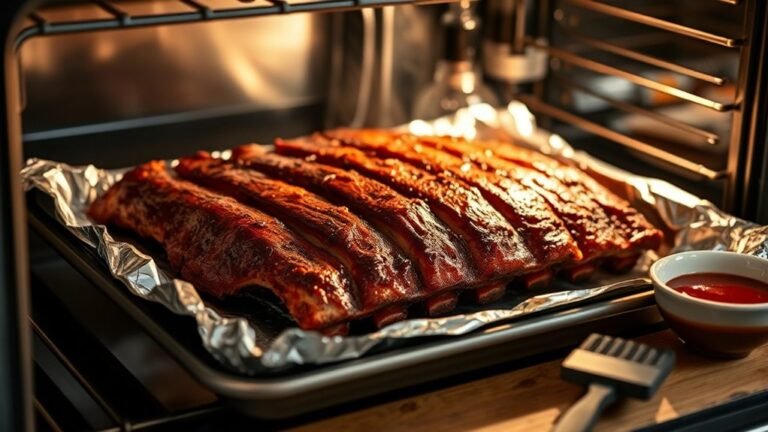
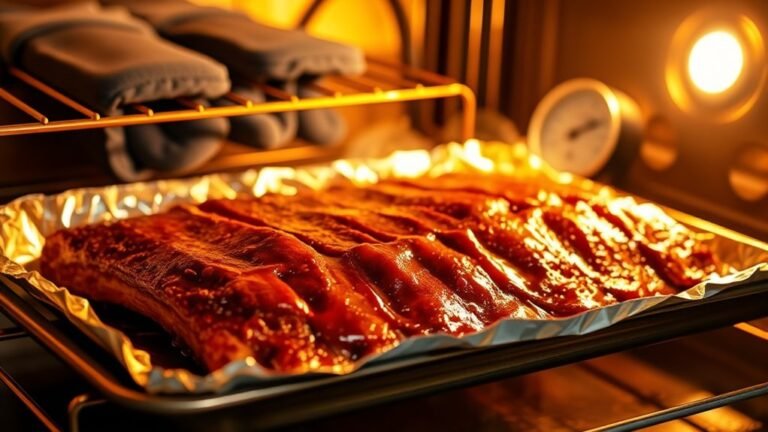
Place the foil-wrapped ribs on a baking sheet, making sure there’s some space between each piece so heat circulates well.
Bake the ribs for 20 to 35 minutes, or until they reach an internal temperature of 145°F to 155°F. For that nice, crispy bark, take off the foil during the last 10 to 15 minutes of heating.
Once done, let the ribs rest a bit before serving to let the juices settle. Follow these easy steps, and your reheated ribs will taste just like they did fresh off the grill!
Preparing the Ribs for Reheating
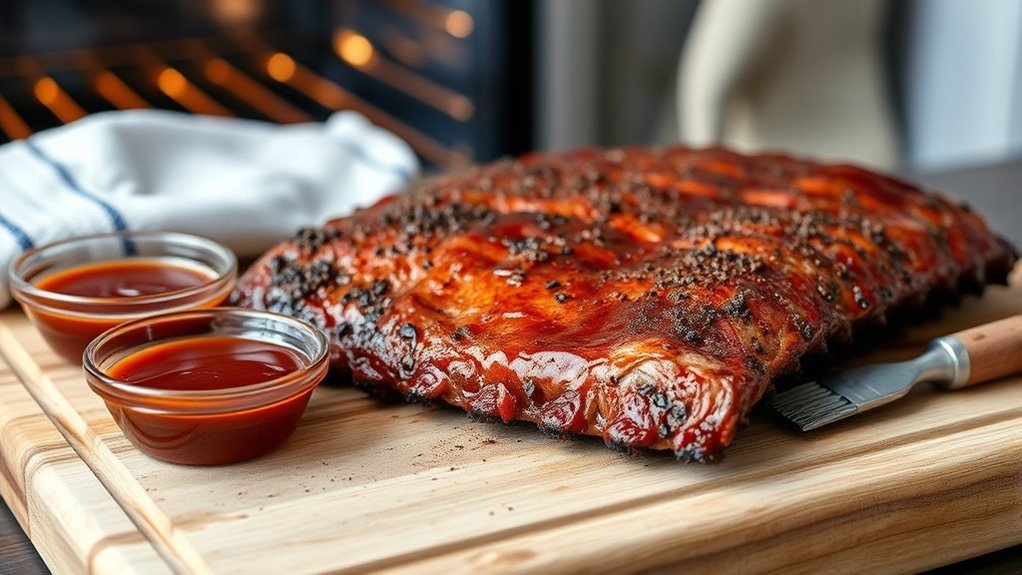
Before reheating your ribs, let them cool at room temperature for about 20 minutes to guarantee even heating. If your ribs came from the fridge, let them sit out for 10-15 minutes to reduce chill and promote uniform warming.
Next, check the ribs for excess moisture; if they’re too wet, pat them dry with paper towels to prevent steaming in the oven. Remove any extra sauce or dry rub that might burn or spatter.
Then, wrap the ribs tightly in aluminum foil—this locks in moisture and keeps the ribs juicy while reheating. Proper preparation at room temperature ensures your ribs heat evenly and stay tender, making the oven reheating process much more effective and delicious.
Choosing the Right Oven Temperature
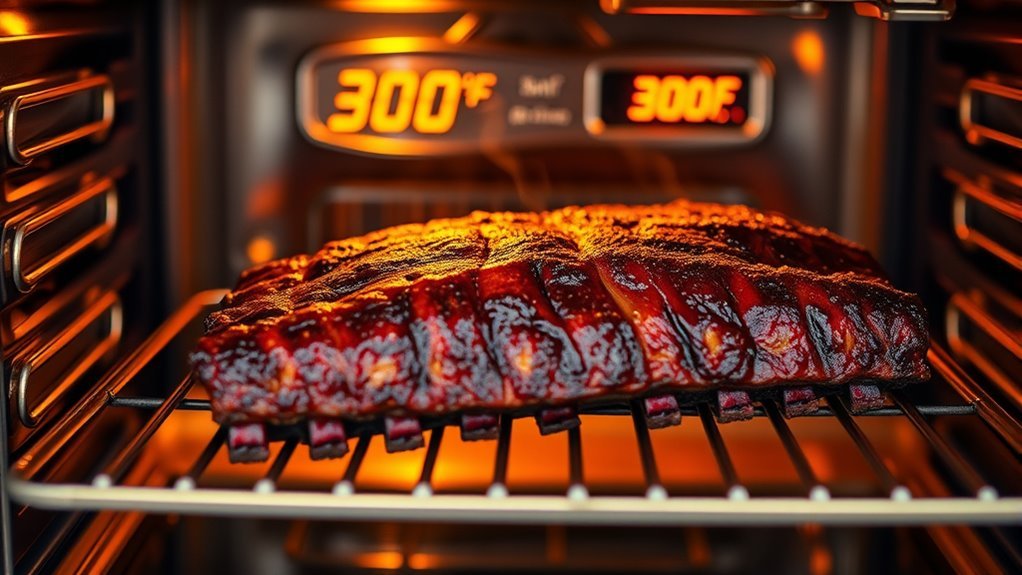
Although it might be tempting to crank up the heat for faster reheating, choosing a low oven temperature between 250°F and 275°F helps keep your ribs tender and juicy.
When reheating ribs, the right oven temperature is key for even heating and moisture preservation.
Follow these steps for best results:
- Always oven preheat to the chosen low temperature before placing your ribs inside.
- Select a temperature closer to 275°F for thicker or larger rib portions to ensure thorough warming.
- Avoid higher temperatures above 300°F, which dry out and overcook ribs quickly.
Using a low temperature lets heat penetrate evenly, protecting moisture and flavor, so your reheated ribs come out delicious every time.
Adding Moisture to Prevent Drying
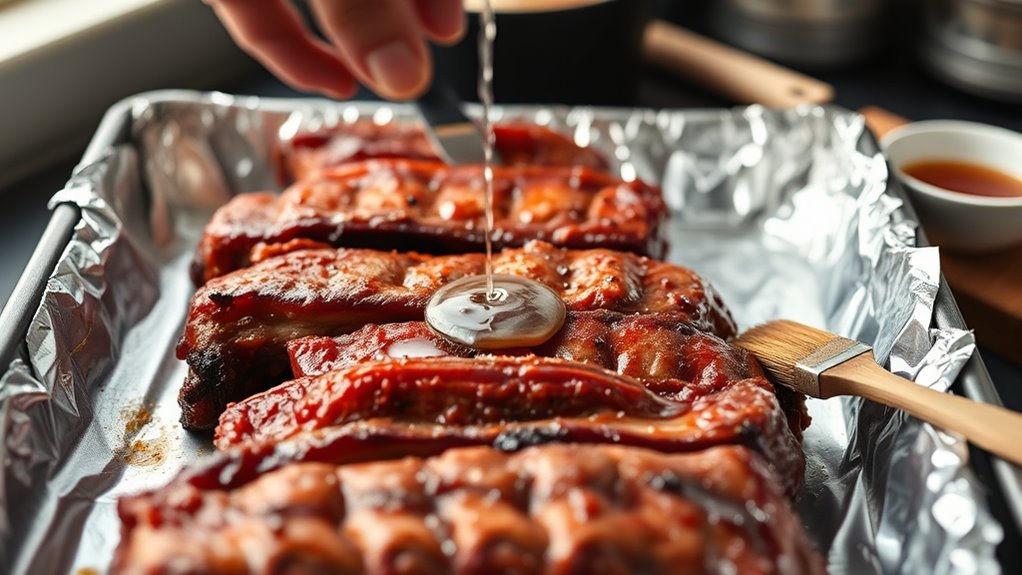
Since reheating can easily dry out ribs, you’ll want to add moisture to keep them tender and juicy. Before you reheat ribs, brush or spritz them with barbecue sauce, apple juice, or broth. This adding liquid step creates steam that locks in moisture during cooking.
Placing a small amount of liquid in the baking dish also helps maintain humidity around the ribs. When you wrap the ribs in foil, it traps this moisture and evenly distributes heat, which prevents drying.
Avoid skipping these steps if you want your ribs to stay moist and flavorful. By focusing on adding moisture and using foil properly, you’ll reheat ribs that taste almost as good as freshly cooked without losing their juicy texture.
Wrapping the Ribs Properly
To keep your ribs juicy while reheating, you’ll need to wrap them tightly in aluminum foil. This step is vital for trapping moisture and creating steam that warms the meat evenly during oven reheating.
Here’s how to wrap ribs properly:
- Use heavy-duty aluminum foil to prevent tearing and ensure durability.
- Add a splash of apple juice, broth, or water before sealing to boost moisture.
- Seal the foil tightly around the ribs, making sure there are no gaps or punctures to keep steam inside.
Arranging Ribs on the Baking Sheet
Start by lining your baking sheet with foil to keep things tidy and prevent sticking.
Arrange the ribs in a single layer, making sure to leave space between each piece for even heat circulation. This setup helps the ribs reheat evenly and stay juicy.
Single Layer Placement
When you arrange ribs on the baking sheet, lay them out in a single, flat layer to guarantee even heating throughout. This single layer ensures even heat distribution during oven reheating, preventing cold spots.
To maximize moisture retention and prevent sticking, place the ribs bone-side or cut-side down. Avoid overlapping or stacking ribs, as this can block heat and lead to uneven warming.
Here’s how to properly arrange your ribs:
- Use a rimmed baking sheet to catch any escaping juices.
- Leave space between each rib to allow hot air circulation.
- Position ribs cut-side down to retain moisture and prevent sticking.
Following these steps helps you reheat ribs evenly and juicy every time.
Use Foil Liner
Although arranging ribs in a single layer is essential, lining your baking sheet with foil enhances heat distribution and keeps the ribs moist during reheating. Using a foil liner helps you reheat ribs in the oven more efficiently by promoting even heat across the surface.
Make sure the foil extends beyond the baking sheet edges to create a tight seal. This traps moisture and prevents the ribs from drying out.
For an improved reheating method, lightly spray or brush the foil with oil to avoid sticking and preserve the crust’s texture. Plus, the foil liner makes it easy to lift and remove the ribs after reheating, simplifying cleanup.
This simple step ensures your ribs come out juicy and evenly heated every time. It’s a small trick that makes a big difference!
Leave Space Between
After lining your baking sheet with foil to keep the ribs moist, you’ll want to arrange them properly to get the best results. Proper spacing is key for even heat and effective reheating in the oven.
Avoid crowding your ribs, especially if reheating a full rack. Here’s what to do:
- Leave at least 1 inch of space between each rib to promote air circulation.
- Ensure ribs aren’t touching to prevent sogginess and sticking.
- Arrange ribs evenly so heat can penetrate all sides, reducing cold spots.
This spacing helps the oven distribute heat uniformly, speeding up reheating and maintaining the ribs’ texture.
Setting the Timer for Reheating
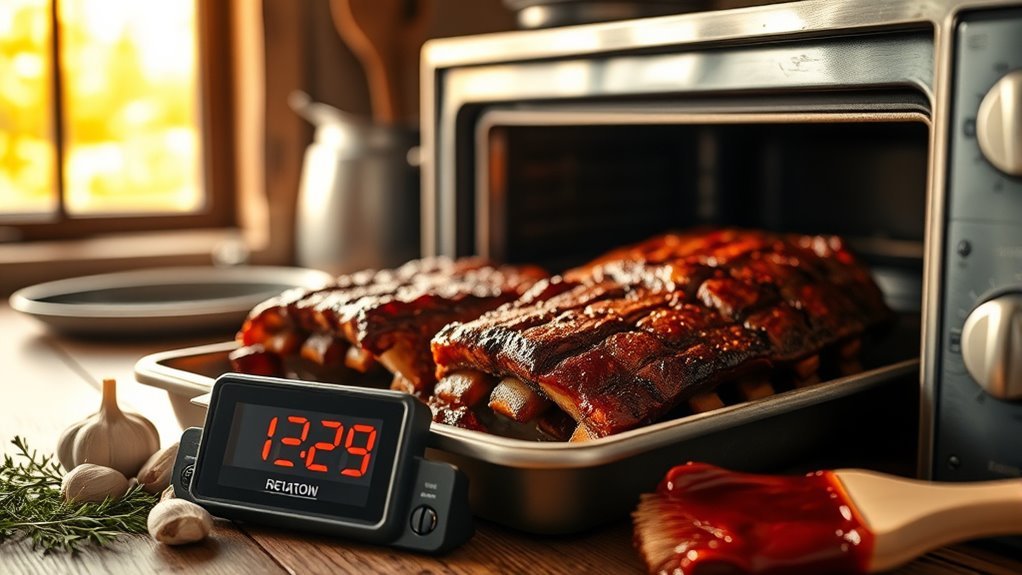
You’ll want to set your timer for about 20 minutes at 250–275°F to start reheating your ribs. Keep in mind, thicker or larger portions may need an extra 5 to 10 minutes to heat through evenly.
Use a meat thermometer to check the internal temperature and adjust the time as needed for the best results. That way, you’ll make sure your ribs are perfectly warmed without drying out.
Ideal Reheating Duration
When reheating ribs in the oven, setting the timer correctly guarantees they warm through without drying out. To achieve the ideal reheating duration, preheat your oven to 250°F to 275°F and follow these guidelines:
For smaller portions, reheat ribs for 20-25 minutes, covering tightly with foil to retain moisture. Larger racks require up to 35 minutes to ensure even heating throughout.
Use a meat thermometer to check the internal temperature reaches at least 145°F before removing from the oven. During reheating, keep the ribs covered tightly to prevent moisture loss.
In the last 5 minutes, uncover the ribs briefly to restore the bark’s texture. This method guarantees your ribs reheat evenly in the oven without sacrificing juiciness or flavor.
Adjusting Time Factors
Since rib thickness and starting temperature vary, adjusting your reheating timer is essential to guarantee they warm evenly without drying out. At an oven temperature of 250°F, thinner or pre-cooked ribs usually need about 15 minutes of reheating time.
Thicker ribs or those taken straight from the fridge or freezer require up to 35 minutes to reach the ideal internal temperature of 145–155°F. Cover your ribs tightly with foil to trap moisture, which helps reduce reheating time and keeps the meat juicy.
Use a meat thermometer to check the internal temperature periodically, so you can adjust the timer as needed. By considering thickness and whether ribs are pre-cooked, you’ll set the perfect reheating time every time.
Checking Internal Temperature
Although reheating ribs might seem straightforward, checking their internal temperature is essential to guarantee they’re both safe and delicious. Using a reliable meat thermometer during oven reheating ensures you hit the safe temperature without overcooking.
For an accurate doneness check, follow these steps:
- Insert the meat thermometer into the thickest part of the ribs, avoiding bones to prevent false readings.
- Aim for an internal temperature between 145°F and 155°F to ensure the ribs are thoroughly reheated and safe.
- Let the ribs rest 3-5 minutes after reheating, allowing the temperature to stabilize or rise slightly.
Try not to surpass 155°F to keep your ribs juicy and tender during reheating. It really makes a difference!
Removing the Foil to Restore Bark
When reheating ribs, remove the foil during the last 10-15 minutes to let the bark crisp back up. This timing prevents the crust from becoming soggy while keeping the meat juicy.
You can even finish under the broiler for a few minutes to boost that smoky, caramelized texture. It really brings the ribs back to life!
Timing for Foil Removal
If you want to bring back the ribs’ crispy bark, you’ll need to remove the foil during the last 10 to 15 minutes of reheating. This timing is essential for effective foil removal and bark restoration without drying out the meat.
Here’s what to keep in mind:
- Heat the ribs covered at 250–275°F until heated through, ensuring even reheating time and moisture control.
- Remove the foil in the final 10-15 minutes to expose the ribs to direct oven heat, which caramelizes the surface and restores the crispy exterior.
- Keep the ribs uncovered during this phase to prevent excess moisture buildup, locking in that smoky, crusty bark you love.
Following this method balances reheating time and oven temperature perfectly for delicious results. Easy, right? Just a little patience and you’re set.
Effects on Bark Texture
Because removing the foil exposes the ribs directly to oven heat, you’ll help the bark regain its crispiness and rich texture.
Uncovering the ribs during the last few minutes of reheating allows the heat to re-crisp the bark, restoring the smoky, caramelized crust that makes ribs so irresistible.
This step prevents the bark texture from becoming soggy or soft, which often happens when foil traps moisture.
By carefully removing the foil near the end of your reheat, you’ll re-establish the bark’s signature crunch without drying out the meat.
Letting the Ribs Rest Before Serving
Allowing the ribs to rest for at least 5 minutes after reheating helps the juices redistribute evenly, guaranteeing the meat stays moist and tender. When you reheat ribs, don’t cut into them right away; doing so causes juice loss and dryness.
Rest ribs for 5 minutes after reheating to keep them juicy and tender without losing moisture.
Instead, follow these simple resting tips:
- Cover the ribs loosely with foil to trap heat and moisture.
- Let them rest between 5 to 10 minutes to maximize tenderness.
- Avoid pressing or moving the ribs during resting to maintain juice distribution.
This resting period after reheating preserves the ribs’ moisture and enhances their tenderness. By covering and letting them rest, you ensure every bite stays juicy and flavorful.
Serving Tips for Reheated Ribs
Once the ribs have rested and the juices have settled, it’s time to focus on serving them to maximize flavor and enjoyment. After oven reheating, let your ribs rest for about 5 minutes to allow moisture retention and redistribute juices evenly.
Aim to serve ribs at an internal temperature of 140–145°F to ensure tenderness and safety. For added flavor, brush on extra barbecue sauce right before serving.
Present your ribs on a warm platter or plate to keep them hot and juicy longer. Complement your reheated ribs with classic sides like coleslaw, baked beans, or cornbread for a complete meal.
Following these serving tips will help you enjoy perfectly reheated ribs every time, enhancing both taste and texture after oven reheating and resting time.
Conclusion
Now that you know how to prepare, wrap, and heat your ribs, you can enjoy tender, juicy meat every time. You’ll avoid dryness, preserve flavor, and restore that perfect bark.
You’ll check the temperature, let the ribs rest, and serve them hot and delicious. Follow these simple steps, and reheating ribs in the oven will be quick, easy, and rewarding.
Bringing back all the smoky goodness with every bite, these techniques help ensure your ribs stay flavorful and moist. So next time you wonder how long to reheat ribs in the oven, just remember these easy steps for a mouthwatering result. Enjoy your ribs like they just came off the grill!