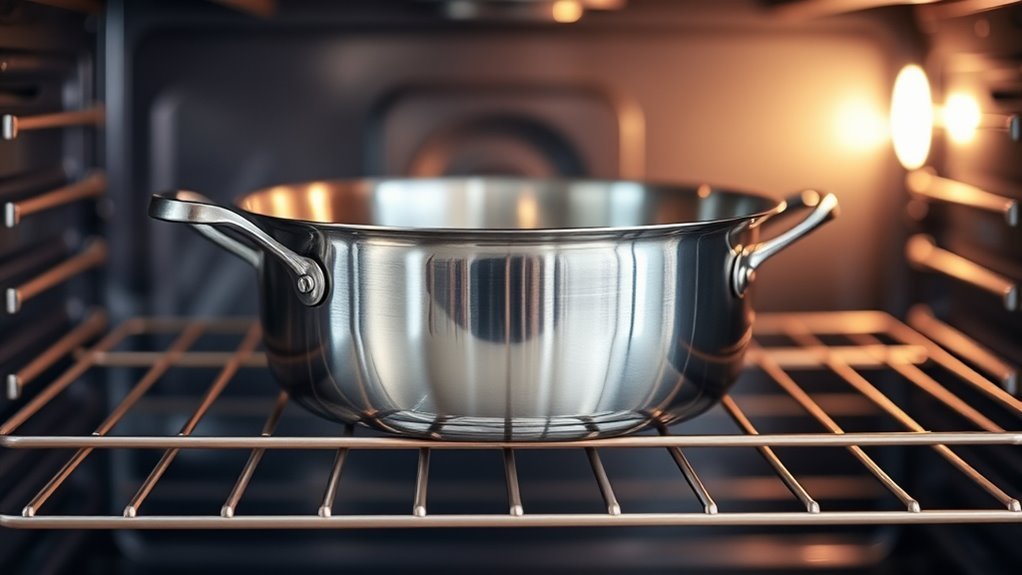
How All Clad Pans Go in the Oven Safely
You can safely use your All-Clad pans in the oven by keeping the temperature within limits—usually up to 600°F for stainless steel and 450°F for nonstick ones. This is important because different materials handle heat differently, and knowing these details helps you protect your cookware.
Always check your pan’s handle material before popping it in the oven. Metal handles can withstand high heat, but plastic ones need lower temps to avoid melting or damage. Also, remember to remove glass lids before broiling or high-heat cooking to prevent them from cracking.
Taking these precautions makes sure your pans stay in great shape. After using your pans in the oven, giving them proper cleaning and care is key to keeping them durable.
Follow these simple steps, and your All-Clad pans will not only last longer but also cook your meals perfectly every time. It’s a small effort for great cooking results!
Oven Safety Guidelines for All-Clad Cookware
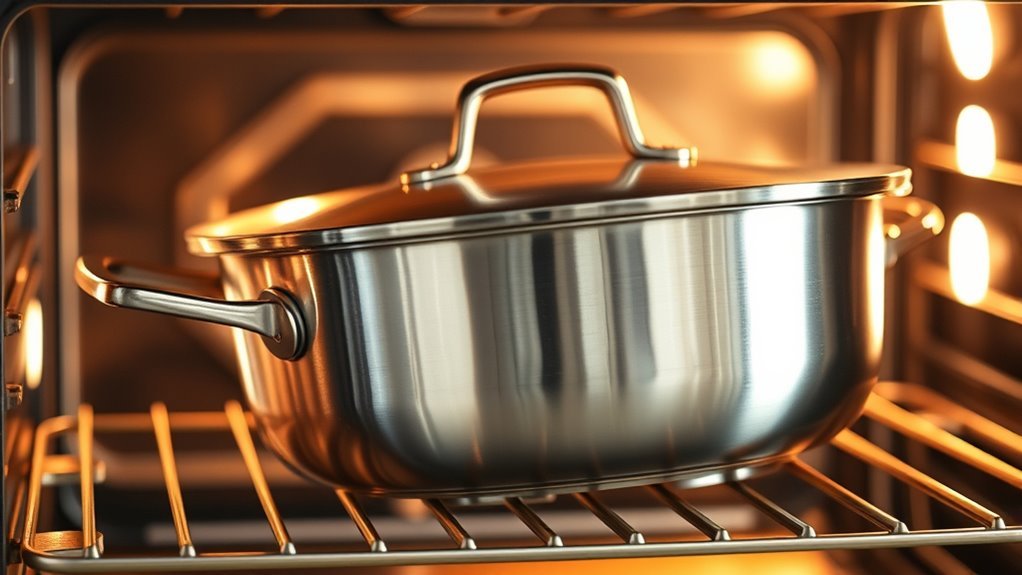
Although All-Clad pans are designed for oven use, you should always check your specific cookware’s temperature limits before placing it inside. Most stainless steel All-Clad cookware is oven safe up to 600°F, while nonstick pans usually tolerate up to 450°F.
Pay close attention to your cookware’s handles—metal handles are typically safe for both oven and broiler use, but plastic handles have lower limits, often no higher than 400°F. Also, remove glass lids during high-temperature cooking or broiling since they’re generally oven safe only up to 350°F.
Following these oven safety guidelines helps you avoid damage and ensures safe cooking. Always verify the temperature ratings of your particular cookware and its components before use to maintain performance and longevity.
Best Practices for Cleaning and Maintaining All-Clad Pans
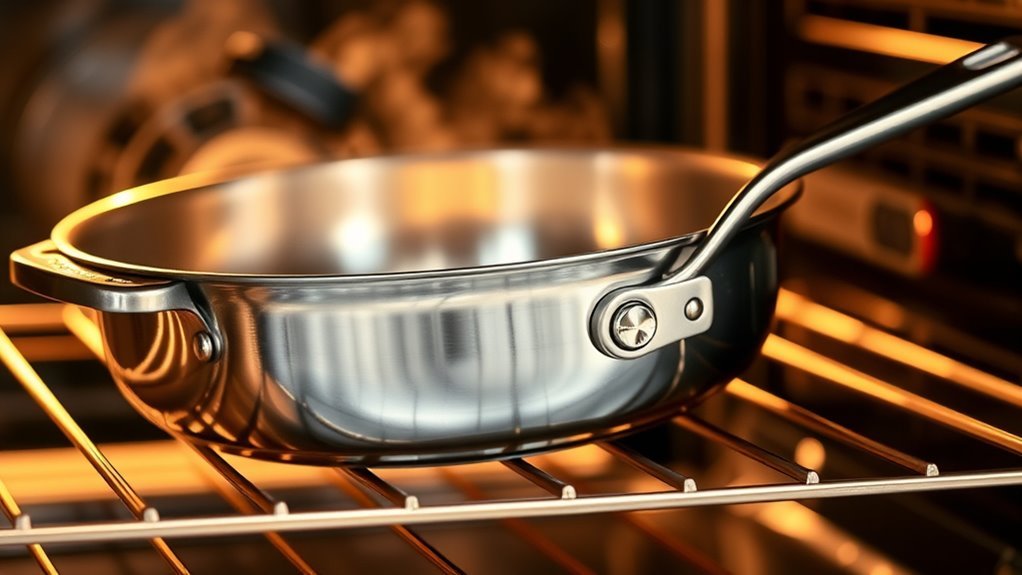
After using your All-Clad pans in the oven, proper cleaning and maintenance will keep them performing at their best. Since All-Clad cookware is oven safe, you want to clean it safely too.
Hand wash your stainless steel pans with warm, soapy water using a soft sponge—avoid harsh detergents or steel wool to prevent damage. To remove stains or burnt food, boil water mixed with white vinegar in the pan, then scrub gently.
Hand wash with warm, soapy water and a soft sponge; use vinegar and boiling water for stubborn stains.
For tough discoloration, use nonabrasive cleansers like Bar Keepers Friend and rinse thoroughly. Always wash thoroughly after each use and dry immediately to prevent rust or water spots.
Taking these steps will maintain your All-Clad pans’ shine and functionality, ensuring they remain safe and reliable for oven cooking. It’s worth the little extra effort to keep your pans looking great and working perfectly!
Conclusion
So, you’ve learned how to safely pop your All-Clad pans in the oven without turning your kitchen into a disaster zone. Who knew that something designed for cooking could actually handle the heat?
Just remember, while your pan can brave the oven’s fiery depths, your patience might not—so keep an eye on cooking times and avoid sudden temperature shocks.
After all, your All-Clad deserves to be treated like the durable superstar it is! Using All-Clad pans in the oven is a great way to unlock versatile cooking options, but always follow the manufacturer’s guidelines to ensure safety and longevity. With the right care, your All-Clad cookware will continue to deliver fantastic results, oven after oven.