10 Tips to Keep Pizza Warm in the Oven
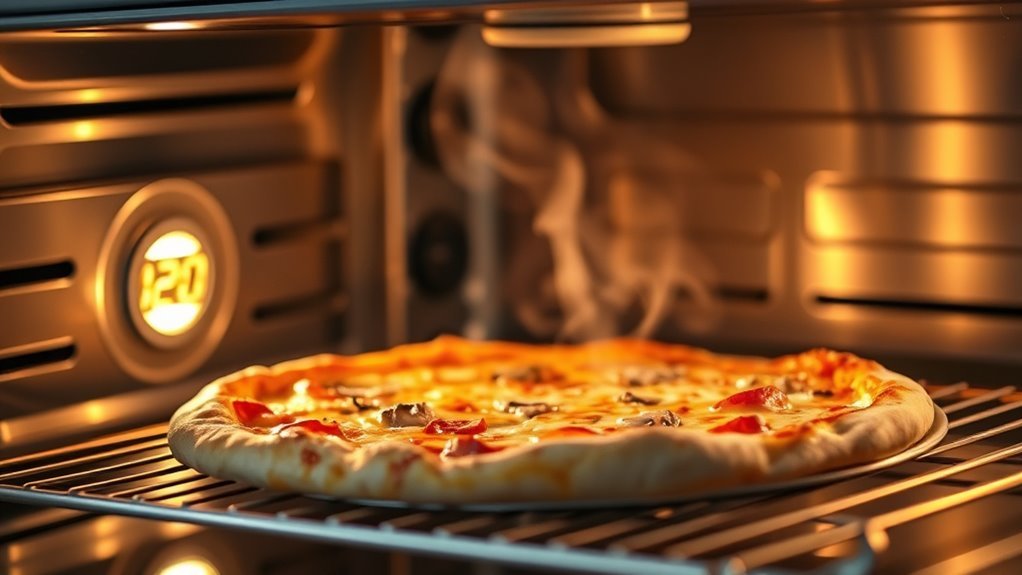
To keep your pizza warm and crispy in the oven, set it to a low temperature between 170°F and 200°F. This range is perfect because it keeps the pizza warm without overcooking it.
Using a baking sheet or wire rack helps air circulate, which prevents sogginess and keeps the crust nice and crisp.
Make sure to keep the slices spaced apart and uncovered. This avoids moisture buildup that can make your pizza soggy.
If you need to wrap the slices, do it loosely with foil, but remember to remove the foil briefly to let the crust crisp up again.
When you’re ready to serve, remove the pizza promptly to enjoy it at its best.
Follow these simple steps, and you’ll discover even more tips for keeping your pizza perfectly warm with the ideal texture every time!
Set Your Oven to a Low Temperature
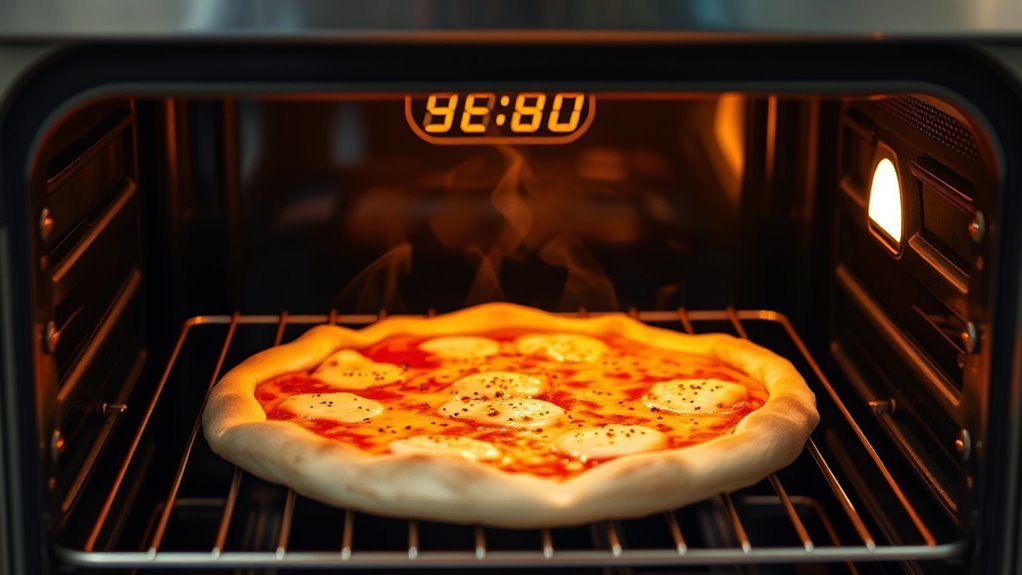
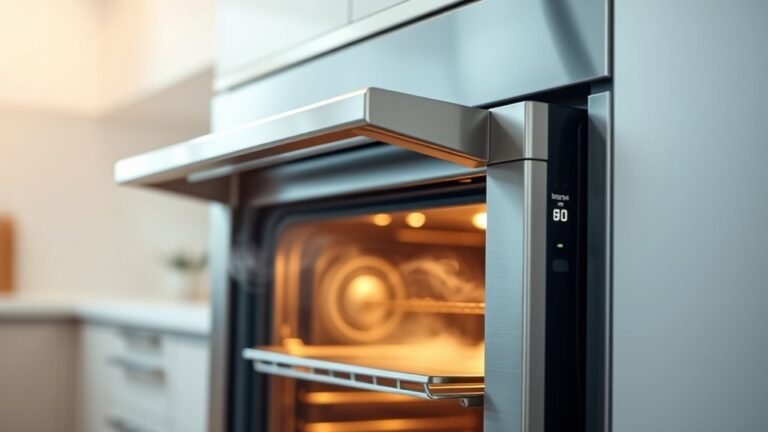
When you set your oven to a low temperature between 170°F and 200°F, you can keep your pizza warm without overcooking it. This low heat makes sure your crust won’t get too crispy or burnt while keeping the pizza perfectly warm.
To avoid moisture buildup, try leaving the oven door slightly open. Or, if your oven has a “keep warm” setting, that works great too.
Leave the oven door ajar or use the “keep warm” setting to prevent moisture buildup.
Using the oven at this gentle heat helps your pizza stay hot longer without losing its texture or turning soggy.
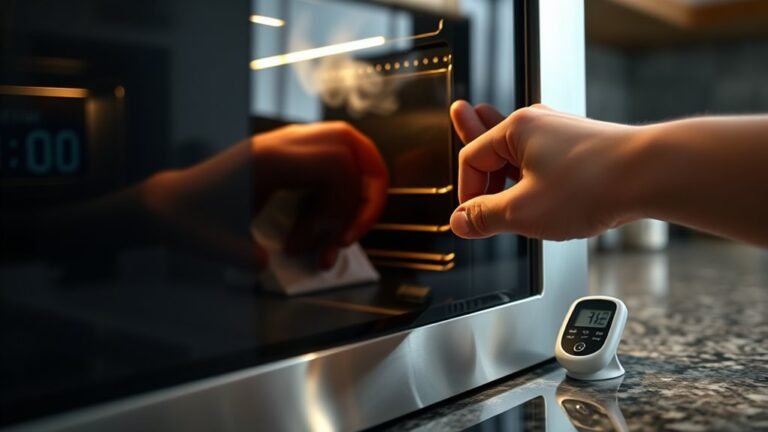
Just remember to keep an eye on the temperature with a thermometer. That way, you’ll know it stays in the ideal range.
Use a Baking Sheet or Oven-Safe Dish
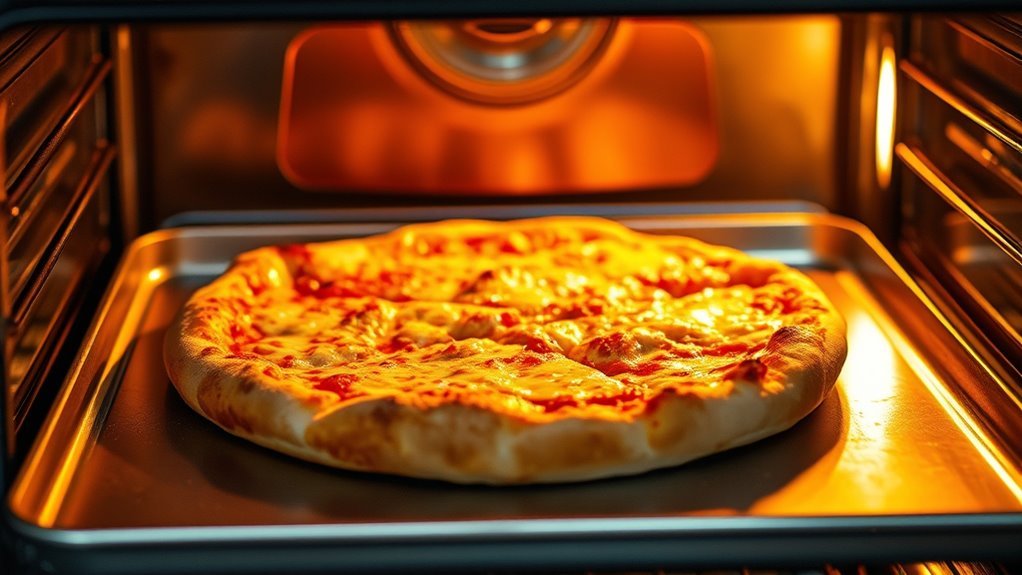
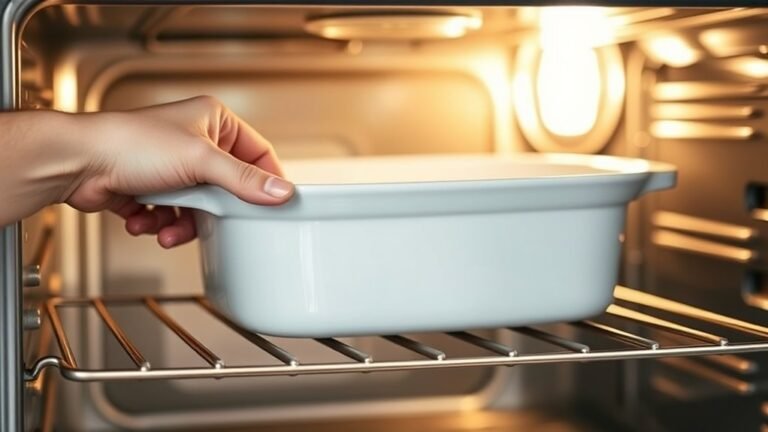
Choose a rimmed baking sheet or oven-safe dish that suits the number of pizza slices you’re warming. Arrange the pieces evenly to guarantee each slice heats consistently.
Avoid soggy bottoms by preheating your bakeware. Cover it loosely with foil to lock in moisture and keep your pizza deliciously warm.
Choose Suitable Bakeware
Although it might seem simple, picking the right bakeware plays an essential role in keeping your pizza warm without drying it out. Choose an oven-safe dish or baking sheet that distributes heat evenly. This helps prevent hot spots that can dry your pizza.
A shallow dish works best since it promotes better heat transfer without trapping moisture. That way, the crust stays crisp instead of soggy.
Make sure your bakeware can handle temperatures up to at least 400°F to avoid warping or melting. For easier cleanup and to prevent sticking, line your baking sheet with parchment paper or a silicone mat.
Always place pizza directly on the oven-safe dish without stacking. This helps maintain uniform warming and preserves that delicious texture you want.
Arrange Pizza Evenly
Placing your pizza slices evenly on a baking sheet or oven-safe dish guarantees each piece heats consistently and stays delicious. When you arrange slices with small gaps between them, you promote even heat distribution, allowing hot air to circulate freely around every slice.
Avoid stacking slices on top of one another, as this leads to uneven warming and sogginess. For oven safety, choose a rimmed baking sheet to prevent slices from sliding or falling during reheating.
Position the baking sheet in the center of the oven to ensure consistent exposure to heat across all slices. By following these simple steps, you’ll enjoy perfectly warmed pizza with a satisfying texture, every time.
Prevent Bottom Sogginess
When you warm pizza directly on a solid surface without ventilation, moisture gets trapped underneath and makes the crust soggy. To keep your pizza crisp, you need proper airflow and moisture control.
Here’s how to prevent bottom sogginess:
- Place the pizza on a preheated baking sheet or an oven-safe dish. This elevates the pizza, allowing ventilation and preventing direct contact with a solid surface.
- Use a perforated or wire rack set on a baking sheet to let moisture escape freely. This helps maintain a crisp bottom.
- Avoid placing pizza directly on a solid baking sheet without ventilation, as trapped moisture softens the crust. Just a little airflow goes a long way!
Keep the Pizza Uncovered to Prevent Sogginess
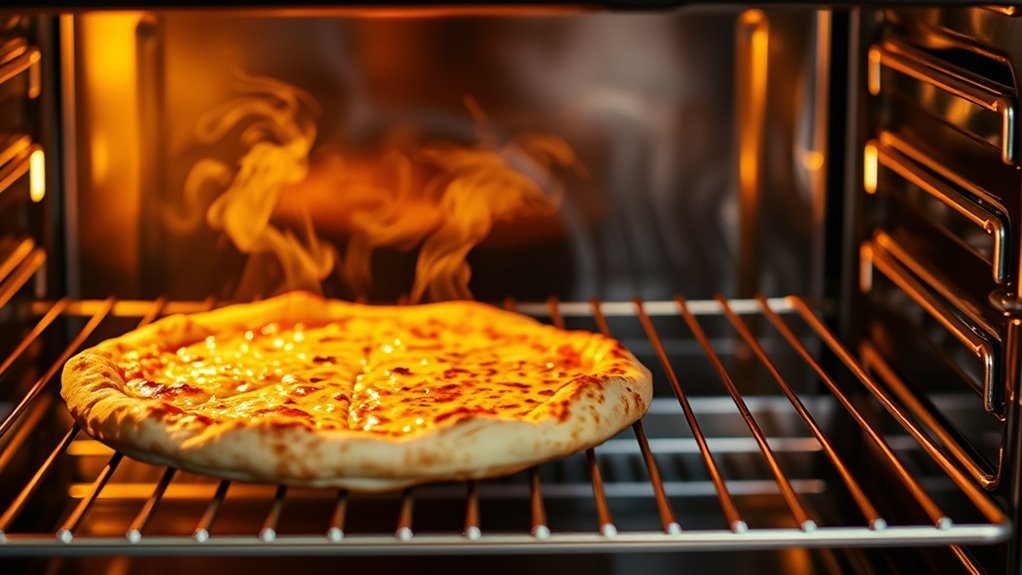
Keep your pizza uncovered in the oven to let steam escape and prevent moisture buildup. Trapping the pizza with foil can make the crust soggy and limp instead of crispy.
Avoid Moisture Buildup
Although it might be tempting to cover your pizza while warming it, leaving it uncovered in the oven helps moisture escape and keeps the crust crisp. When you trap moisture by covering the pizza, steam builds up and sogginess follows.
To avoid moisture buildup and preserve texture, follow these tips:
- Keep the pizza uncovered on a pizza stone or baking sheet to promote even heat and ventilation.
- Avoid sealing the pizza tightly with foil or plastic wrap, which traps humidity and softens the crust.
- Regularly check the pizza during warming and remove any visible moisture to maintain that perfect crispness.
Maintain Crispy Crust
Since moisture causes sogginess, you’ll want to leave your pizza uncovered while reheating it in the oven. Keeping it uncovered allows steam to escape, preventing the crust from getting soft and soggy.
Place your pizza on a wire rack or baking sheet to promote airflow around the crust. This helps maintain that crispy crust you love. Avoid covering the pizza with foil or plastic wrap, as trapped steam will ruin the texture.
Set your oven to a low temperature, around 200°F, to gently warm the pizza without creating excess moisture. Reheating your uncovered pizza on the middle rack ensures even heat distribution. That way, you get a golden, crispy crust every time.
This simple step keeps your pizza tasting fresh and perfectly crisp. Easy, right?
Avoid Overcrowding the Oven With Multiple Slices
When you pile multiple pizza slices too close together in the oven, you block heat circulation and trap moisture. This makes the crust soggy and unevenly warmed.
Overcrowding also reduces the oven temperature, making it harder to keep your pizza hot without overcooking. So, to avoid this, follow these tips:
- Space slices evenly to allow proper heat circulation around each piece.
- Heat pizza in small batches to maintain consistent oven temperature.
- Avoid stacking slices on top of each other, which traps steam and softens the crust.
Preheat the Oven Before Placing Pizza Inside
To keep your pizza warm without drying it out, you should preheat the oven to a low temperature between 170°F and 200°F before placing the slices inside. Make sure to allow the oven to fully reach the desired temperature to provide consistent, gentle heat that preserves your pizza’s texture.
Using an oven thermometer helps confirm accuracy, since home ovens can vary. Avoid preheating at high temperatures, as this risks overcooking or drying out your pizza. Once the oven is preheated, you can place the pizza inside to warm evenly.
If you prefer, turn off the oven and rely on residual heat to keep the pizza warm without further cooking it. Preheating the oven properly guarantees your pizza stays deliciously warm without losing moisture.
Wrap Slices in Aluminum Foil for Extra Insulation
Although you can keep pizza warm in the oven alone, wrapping slices in aluminum foil adds extra insulation that traps heat and moisture effectively.
Using aluminum foil helps maintain the pizza’s warmth by creating a barrier that prevents it from drying out.
To get the best results, follow these tips:
- Wrap slices while they’re still hot to lock in maximum warmth.
- Don’t wrap too tightly; allow some air to avoid condensation and soggy crust.
- Use aluminum foil to keep pizza hot for 20-30 minutes without losing texture or temperature.
This simple step enhances insulation, ensuring your pizza stays deliciously warm longer without becoming cold or soggy.
Place the Pizza Box in the Oven at Low Heat
How can you keep your pizza warm without compromising its texture? One effective way is to place the pizza box in the oven set to the lowest temperature, usually between 170°F and 200°F. This method helps keep warm the pizza without overcooking it or drying out the crust.
Make sure not to exceed 200°F, as higher temperatures risk damaging the cardboard box or even causing a fire. To maintain crispiness, keep the oven door slightly ajar or create a small vent for moisture to escape.
Set a timer for 20 to 30 minutes to avoid overheating. Once your pizza reaches the desired warmth, turn off the oven to keep the pizza warm safely and deliciously until you’re ready to eat.
Monitor the Pizza to Avoid Drying Out
Keep the oven temperature low to around 200°F to prevent your pizza from drying out. Wrap it loosely in foil to hold in moisture while letting some steam escape.
Check the pizza regularly to make sure it stays moist and doesn’t get leathery. It’s all about keeping that perfect texture, you know? Just keep an eye on it!
Check Moisture Levels
When you reheat pizza, monitoring its moisture level is essential to prevent it from drying out or becoming too crispy. You want to keep the crust just right without losing that fresh taste.
Here’s how to keep moisture in check:
- Keep the oven temperature low, around 200°F (93°C), to warm the pizza gently without evaporating too much moisture.
- Loosely cover the pizza with aluminum foil to help retain moisture while avoiding sogginess.
- Regularly check the pizza’s surface for dryness or excessive crispiness. Use visual cues or a thermometer to adjust the oven temperature if needed.
Use Foil Wrapping
One effective method to maintain your pizza’s warmth and texture is wrapping each slice individually in aluminum foil. Foil wrapping traps heat while shielding your pizza from dry air that can make it tough or stale.
Be sure to wrap each slice loosely, allowing some moisture to escape. This balance helps keep it warm without sacrificing a crisp crust.
Keep an eye on your pizza as it warms—overheating inside foil can dry it out or soften the crust too much. If the pizza seems soggy, just remove the foil briefly to crisp the crust before serving.
Using foil wrapping alongside a low oven temperature around 200°F ensures your pizza stays warm and enjoyable without overcooking or drying out. It’s a simple trick that really works!
Control Oven Temperature
Although maintaining warmth is key, you’ll want to set your oven between 170-200°F (77-93°C) to avoid drying out your pizza. Controlling the oven temperature carefully helps you keep warm without overcooking.
Use an oven thermometer to monitor the actual heat inside, ensuring the oven temperature doesn’t spike unexpectedly. Check your pizza frequently to catch any signs of excessive crisping or dryness.
Follow these simple steps to maintain ideal warmth:
- Set the oven between 170-200°F (77-93°C) to keep warm without drying out.
- Use an oven thermometer for accurate temperature monitoring.
- Turn off the oven once the pizza reaches your preferred temperature to prevent dryness.
Use a Cooling Rack to Maintain Crispness
Since maintaining a crispy crust is key to enjoying your pizza, placing it on a cooling rack can make all the difference. A cooling rack elevates your pizza, allowing air circulation underneath and around the slices. This airflow helps keep the crust crispy by preventing moisture from building up beneath the pizza, which often leads to sogginess.
Most cooling racks feature a metal grid design that promotes even heat dissipation, preserving the pizza’s texture after baking. Using a cooling rack immediately after cooking guarantees the crust stays firm instead of turning chewy or limp.
Remove Pizza Promptly When Ready to Serve
After using a cooling rack to keep your pizza crisp, make sure you remove it from the oven as soon as it reaches the right temperature. Removing pizza promptly helps prevent overcooking and keeps the crust crisp and toppings fresh.
If you delay, the pizza can dry out or become soggy, ruining its texture and flavor. So, it’s best to act quickly once it’s done.
To serve immediately and maintain quality, follow these steps:
- Use a timer or watch for visual cues to know when your pizza is perfectly cooked.
- Remove pizza promptly once it hits the desired temperature to lock in heat and taste.
- Serve immediately to enjoy ideal texture and warmth before the pizza cools or loses crispness.
Conclusion
Keeping your pizza warm in the oven is easier than you think! Did you know that reheating pizza at low heat can preserve up to 90% of its original flavor and texture?
By setting a low temperature, avoiding overcrowding, and using tools like a baking sheet or cooling rack, you’ll enjoy that fresh-out-of-the-oven taste every time. Just remember to keep an eye on it and remove it promptly to prevent drying out.
Your perfect slice awaits! Keeping pizza warm in the oven not only maintains its delicious flavor but also ensures the ideal texture. Using simple tips like low heat and proper placement helps avoid sogginess or dryness. So next time you want to savor your pizza longer, try these easy oven tricks to keep it warm and tasty. Enjoy that hot, melty slice just like it was freshly baked!