7 Easy Steps to Cook Mahi Mahi in the Oven
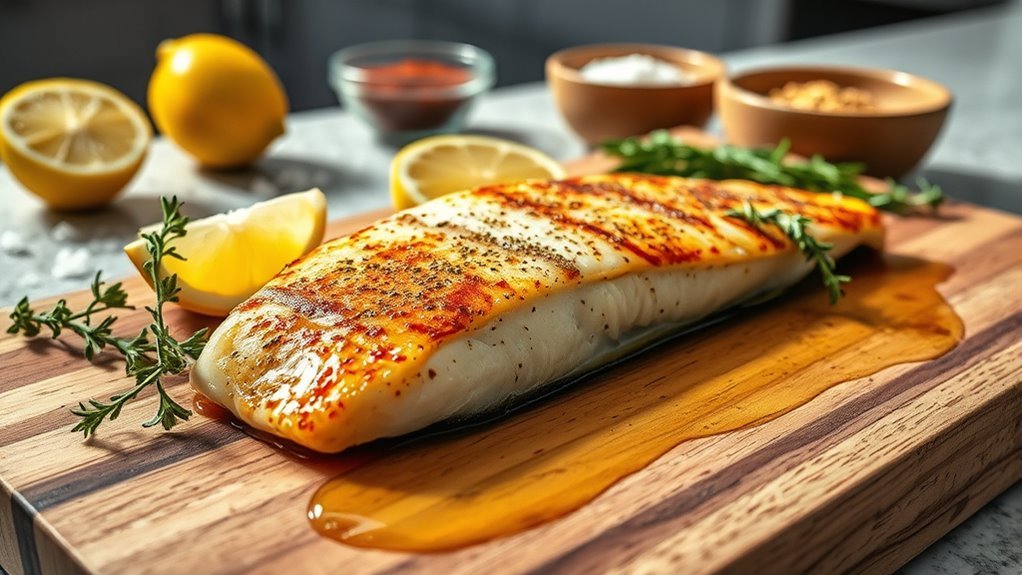
Gather fresh mahi mahi fillets and preheat your oven to 400°F. Pat the fish dry, brush with melted butter, and season with a flavorful spice rub.
This simple preparation sets the stage for a delicious, oven-baked mahi mahi that’s both tender and flavorful.
Place the fillets on a foil-lined baking sheet, then bake for 10–13 minutes until the fish flakes easily and reaches 135–140°F internally.
To add a perfect caramelized crust, finish under the broiler for 1–2 minutes. Serve immediately for the best taste and texture.
Keep going to master every step perfectly. With these easy steps, you’ll have a tasty mahi mahi dinner ready in no time!
Gather Your Ingredients and Tools
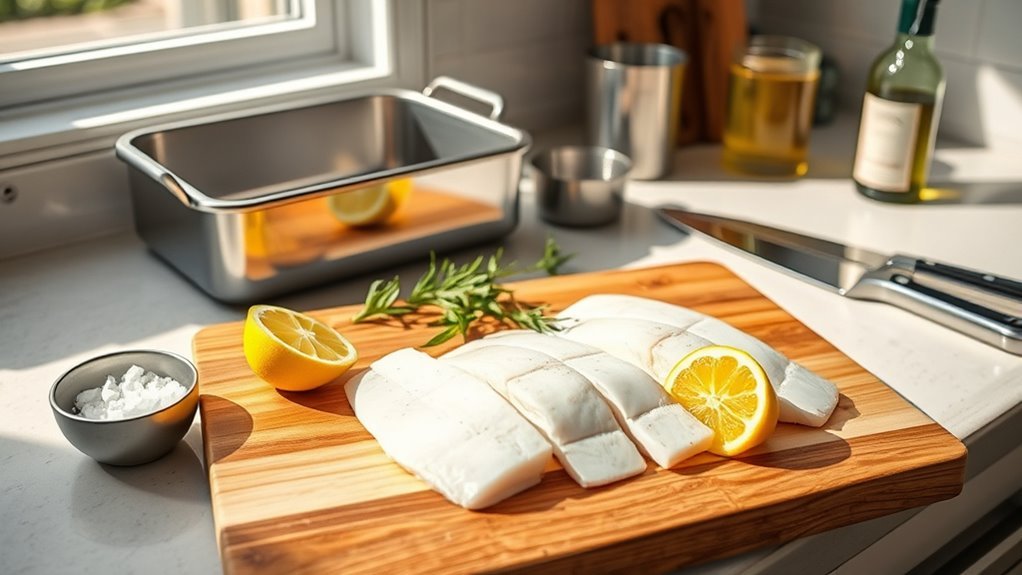
Before you start cooking, gather fresh or fully thawed mahi mahi fillets that are at least 3/4 inch thick to guarantee even cooking. You’ll want to measure out 1/2 tablespoon of melted butter to brush on the mahi mahi fillets before applying your seasoning mixture.
This mix typically includes smoked paprika, garlic powder, salt, onion powder, and brown sugar. Prepare a baking sheet by lining it with foil and lightly spraying it with cooking spray to make cleanup easier.
Keep a meat thermometer handy to ensure the fish reaches an internal temperature of 145°F, ensuring it’s perfectly cooked. Having all these tools and ingredients ready before you begin will streamline your prepared baking process and help you achieve delicious, evenly cooked mahi mahi every time.
Preheat the Oven and Prepare the Baking Sheet
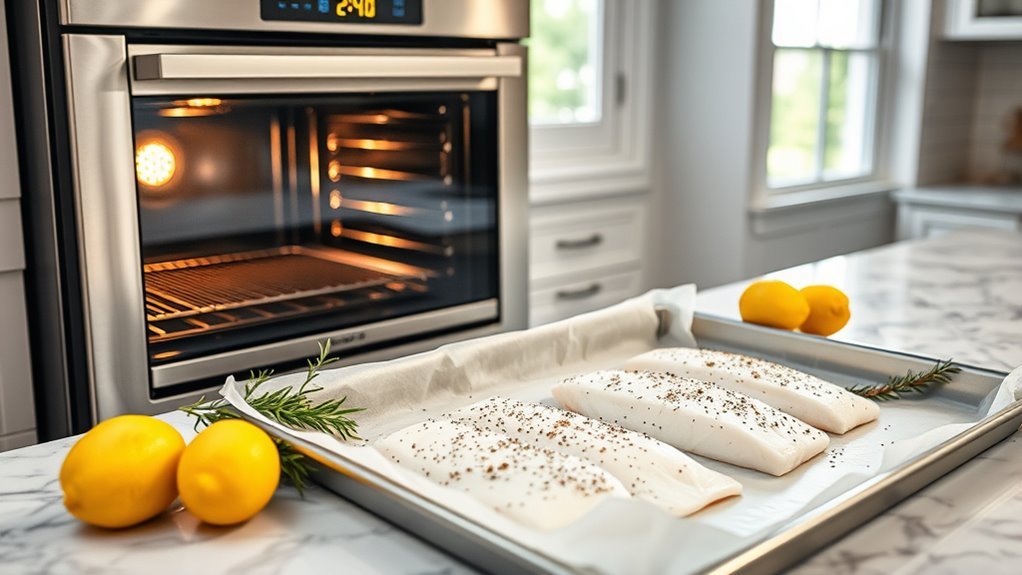
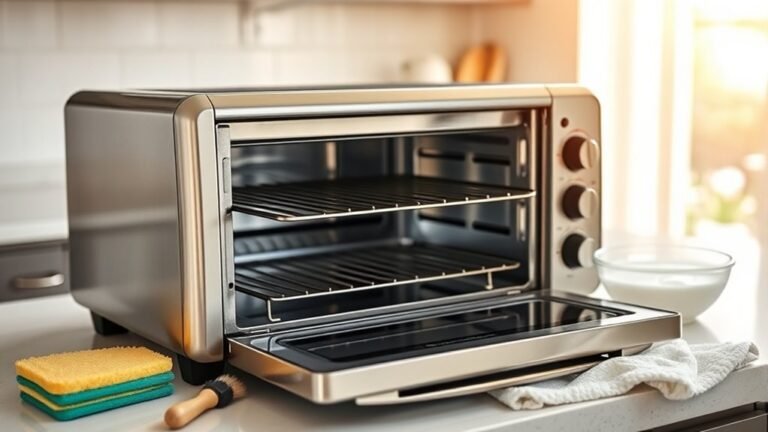
Start by setting your oven to 400°F (200°C) and let it fully preheat for even cooking. Choose a baking sheet large enough to hold your fillets in a single layer without crowding.
To prevent sticking and make cleanup easier, line the sheet with foil and lightly coat it with cooking spray or olive oil. This way, your fillets won’t stick, and cleaning up afterward will be a breeze.
Oven Temperature Settings
You are trained on data up to October 2023. To bake mahi mahi perfectly, start by preheating your oven to 400°F (204°C). Setting the right oven temperature is essential for ideal cooking temperature and even heat distribution.
Position the oven rack in the center to make sure the fish cooks evenly. Allow the oven to fully preheat for 10-15 minutes before placing your mahi mahi inside.
Using an oven thermometer can help confirm your oven settings are accurate, preventing undercooked or overcooked fish. Meanwhile, line your baking sheet with aluminum foil and lightly spray it with cooking spray to prevent sticking.
These steps guarantee you maintain consistent oven temperature and promote even cooking, leading to delicious, flaky mahi mahi every time.
Choosing Baking Sheet
After preheating the oven to 400°F (204°C), focus on selecting the right baking sheet to guarantee your mahi mahi cooks perfectly. Choose a rimmed baking sheet or sheet pan to catch any juices and prevent spills.
Line it with aluminum foil for easy cleanup and to protect the surface. Lightly spray the foil with cooking spray to keep the fish from sticking.
Make sure your baking sheet is placed in the preheated oven to promote even cooking. When arranging the mahi mahi fillets, lay them in a single layer with enough space between each piece.
This fillet arrangement allows proper heat circulation, ensuring your fish cooks evenly and achieves the perfect texture.
Preparing for Nonstick
While the oven preheats to 400°F (200°C), prepare your baking sheet by lining it with aluminum foil. Then, lightly spray it with cooking spray or brush it with oil to prevent the mahi mahi from sticking.
You could also use parchment paper as a nonstick alternative. But honestly, foil with oil or cooking spray works best for easy cleanup.
Make sure the foil is smooth and fully covers the baking sheet. Once your oven reaches the set temperature, place the baking sheet on the middle rack. This helps ensure even heat distribution.
Double-check that the oven has fully preheated before adding the mahi mahi fillets. Taking these steps guarantees a nonstick surface, so your fish cooks perfectly and lifts off the foil easily without breaking apart.
Dry and Butter the Mahi Mahi Fillets
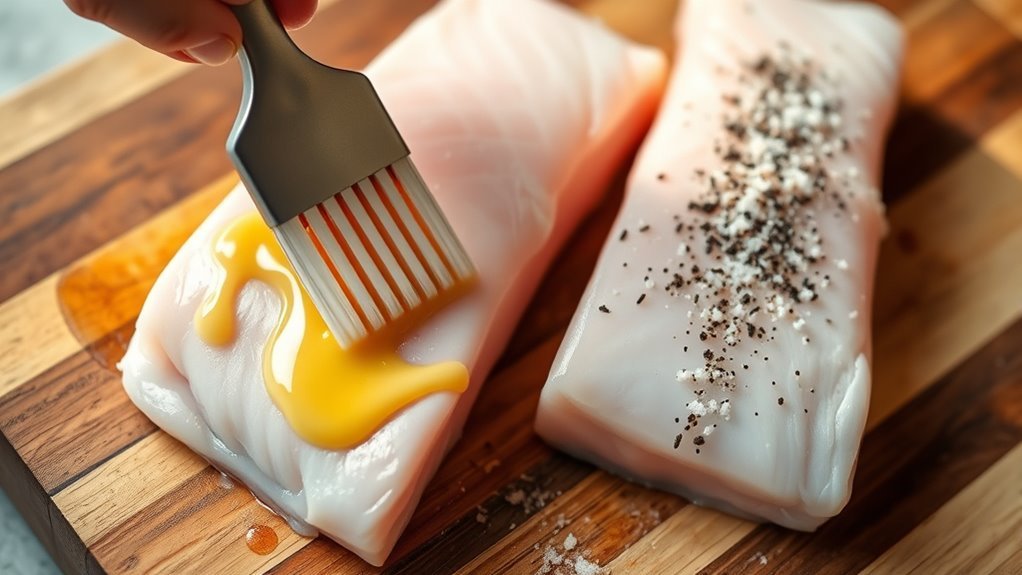
Start by patting your mahi mahi fillets dry with paper towels to remove any excess moisture; this step is key for a crispy finish.
Next, brush melted butter over all sides to lock in moisture and help your spices stick better.
Letting the butter soak in for a few minutes before seasoning guarantees your fillets stay tender and flavorful.
Importance of Drying
Why does drying your mahi mahi fillets matter before cooking? Patting the fillets dry removes excess moisture and surface water, which is key to achieving a crisp exterior.
Without this step, the trapped moisture can steam the fish, resulting in a soggy texture instead of a firm, tender one. Dry fillets also help spices stick better and promote even cooking, making your dish look and taste better.
| Benefit | Reason |
|---|---|
| Crisp Exterior | Removes surface water |
| Better Spice Adherence | Dry surface holds seasoning |
| Even Cooking | Prevents steaming |
| Less Oil Splatter | Reduces moisture during butter |
Benefits of Butter
After drying your mahi mahi fillets, brushing them with melted butter locks in moisture and boosts flavor during baking. Melting butter before applying creates a natural barrier that keeps your fish from drying out, especially at high oven temperatures.
This step not only preserves moisture but also helps spices stick better, forming a delicious crust packed with flavor. As the butter melts into the fish, it promotes a tender, flaky texture that rivals pan-searing.
For an extra touch of richness, you can add a pat of butter on top just before serving. Using butter this way guarantees your mahi mahi stays juicy and flavorful every time, making your oven-baked fish irresistibly tender and perfectly flaky.
Mix and Apply the Spice Rub
Before seasoning your mahi mahi, pat the fillets dry with paper towels to help the spice rub stick better. Next, mix smoked paprika, garlic powder, salt, onion powder, brown sugar, oregano, thyme, and black pepper to create a flavorful fish seasoning.
Brush melted butter onto all sides of each fish fillet; this not only helps the spice rub adhere but also keeps the fish moist. Sprinkle the spice rub generously over one side, then flip the fillet and season evenly on the other side.
Gently press the spices onto the fish fillets to make sure they stick well and you get an even coating. Finally, place the seasoned fillets on a prepared baking sheet, and you’re all set for the next step in your mahi mahi recipe.
Bake the Fish at 400°F
Once your oven reaches 400°F, line a baking sheet with foil and spray it lightly to prevent the mahi mahi from sticking. Place your seasoned fish fillets on the foil sprayed sheet, making sure they’re spaced out.
Now, follow these steps for perfectly baked mahi mahi:
- Set the oven temperature to 400°F for even cooking.
- Bake the fish fillets for 10-13 minutes, depending on thickness.
- Check that the internal temperature hits 135-140°F and that the fish flakes easily with a fork.
This baking time and temperature guarantee your mahi mahi cooks through while staying moist and flaky. Keeping the foil sprayed and fish fillets separated prevents sticking and uneven cooking.
That way, it’s easier to serve delicious, tender baked mahi mahi every time!
Broil for a Crispy, Caramelized Finish
To give your baked mahi mahi an irresistible golden crust, finish it under the broiler for 1-2 minutes on high heat. Before you broil, make sure the fish reaches an internal temperature of 145°F.
Pat it dry to help the surface crisp up and develop that rich caramelized finish. Keep a close watch since high heat can burn the fish quickly.
Remove it as soon as the crust turns golden.
| Step | Tip |
|---|---|
| Preheat broiler | Set to high heat |
| Internal temperature | 145°F before broiling |
| Dry the fish | Pat dry to prevent steaming |
| Broil duration | 1-2 minutes |
| Watch closely | Avoid burning, remove promptly |
Check for Doneness and Serve Immediately
Although your mahi mahi may look tempting, you should check its internal temperature with an instant-read thermometer to make certain it reaches 145°F. This guarantees it’s safely cooked and perfectly flaky. Oven doneness isn’t just about time; it’s about temperature and texture.
- Insert the instant-read thermometer into the thickest part to verify the internal temperature hits 145°F.
- Look for opaque fish that flakes easily when you gently press with a fork—fish flakes indicate it’s done.
- Remember to serve immediately to enjoy the best texture and prevent drying out.
If your mahi mahi reaches 140°F, remove it from the oven and allow carryover heat to finish cooking. This method ensures moist, flaky fish flakes every time.
Conclusion
Now that you’ve mastered these simple steps, you’re ready to enjoy a perfectly cooked mahi mahi every time. Remember, “the proof is in the pudding”—your delicious, flaky fish will show just how well you followed the process.
Don’t rush; take your time with each step. You’ll impress yourself and anyone you serve with this easy oven-cooked mahi mahi recipe. So, dig in and savor the flavors you’ve created with ease and confidence!
Cooking mahi mahi in the oven doesn’t have to be complicated. Just follow these 7 easy steps, and you’ll have a tasty, healthy meal on the table in no time. Enjoy your perfectly baked mahi mahi!