7 Tips to Keep Food Warm in the Oven Perfectly
To keep food warm perfectly in the oven, start by preheating it to a low temperature between 170°F and 200°F. This gentle heat keeps your dishes warm without overcooking them.
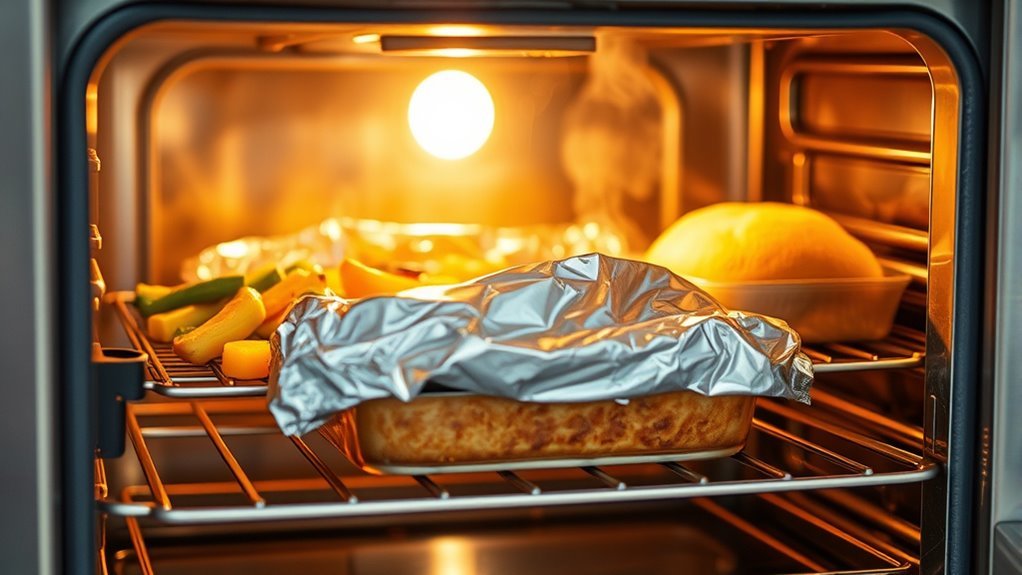
Using oven-safe containers covered with foil or lids helps lock in moisture, so your food stays juicy and delicious.
Make sure to space dishes evenly inside the oven to allow proper airflow. Avoid stacking containers on top of each other because that can cause uneven warming.
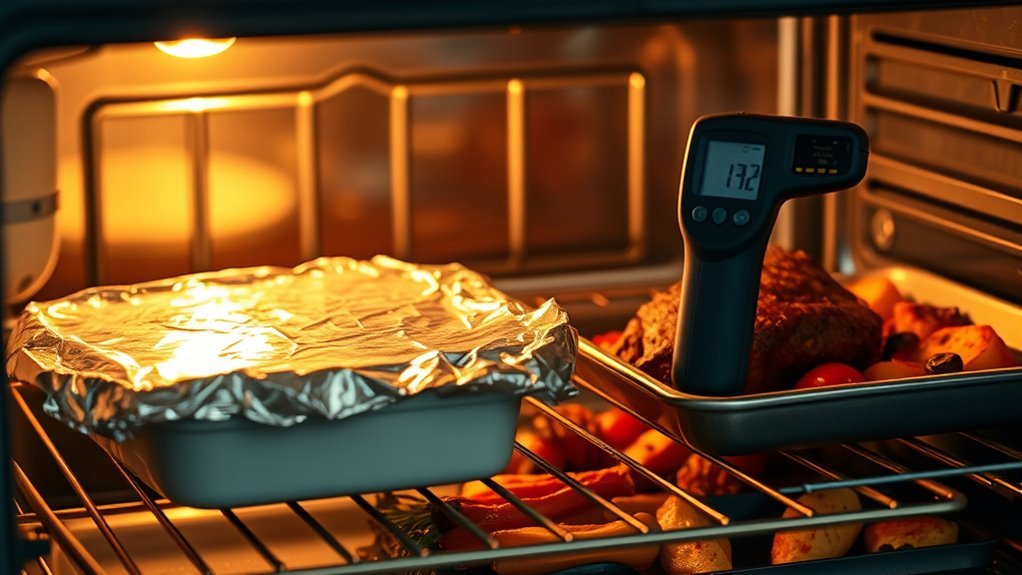
It’s a good idea to use a food thermometer to keep the temperature above 140°F for safety.
Also, try to limit the warming time to 1–2 hours to prevent drying out or overcooking your meal.
Keep these simple tips in mind, and you’ll serve dishes that taste fresh and delicious every time. Want to get even better results? There’s plenty more to explore for perfect food warming in your oven!
Prepare Food Properly Before Warming
Before you start warming food in the oven, make sure it’s fully cooked to the right internal temperature to guarantee food safety. Never try to finish cooking meat, poultry, or seafood in the oven’s keep warm setting, as undercooked items can pose health risks.
Use only oven-safe containers and remove any plastic or non-heat-resistant materials before placing food inside. Cover your dishes with oven-safe lids or aluminum foil to keep moisture in and prevent drying out.
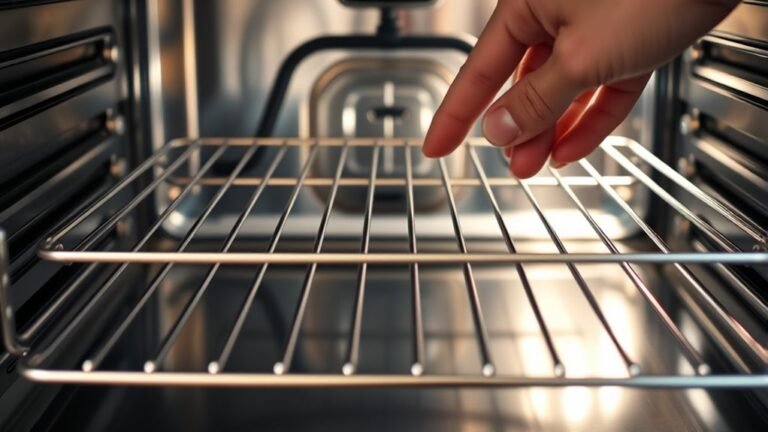
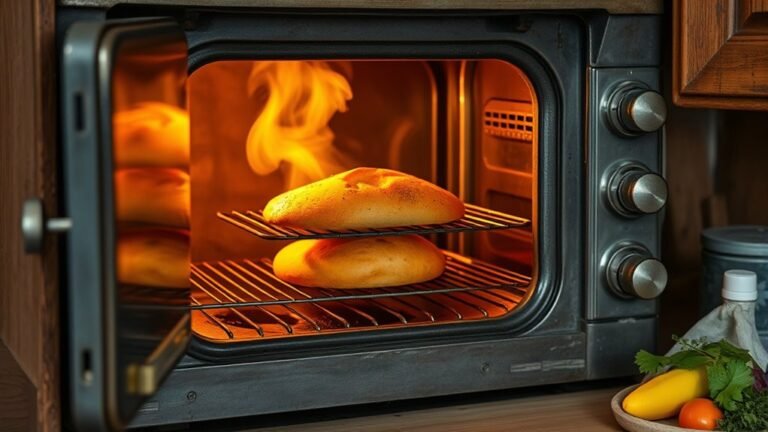
If you want crispy items to stay crisp, place them in a single layer on a cooling rack instead of a container. Proper preparation before warming helps maintain food quality and safety, so always check that your food is fully cooked and in appropriate containers before using your oven to keep it warm.
Choose the Right Oven Temperature
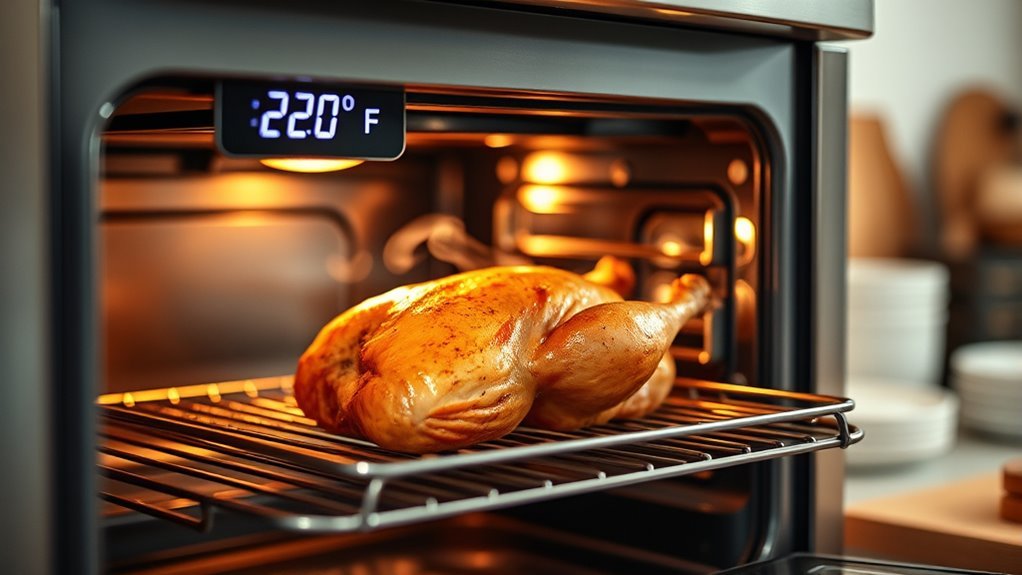
Once your food is properly prepared and placed in the oven, setting the right temperature is key to keeping it warm without compromising quality. Aim for an oven temperature between 170°F and 200°F to maintain warmth safely and effectively.
If your oven has a keep warm setting, use it—it typically holds a steady temperature within this ideal range. For more control, manually set the oven to about 180°F to 190°F for best warming.
Always use an oven thermometer to verify the actual temperature, as oven dials can be inaccurate. Make sure the oven is preheated before placing your food inside to keep the warming consistent.
And one more thing—avoid exceeding 200°F. Going over that can dry out or overcook your meal, which nobody wants.
Use Oven-Safe Containers and Cover Food
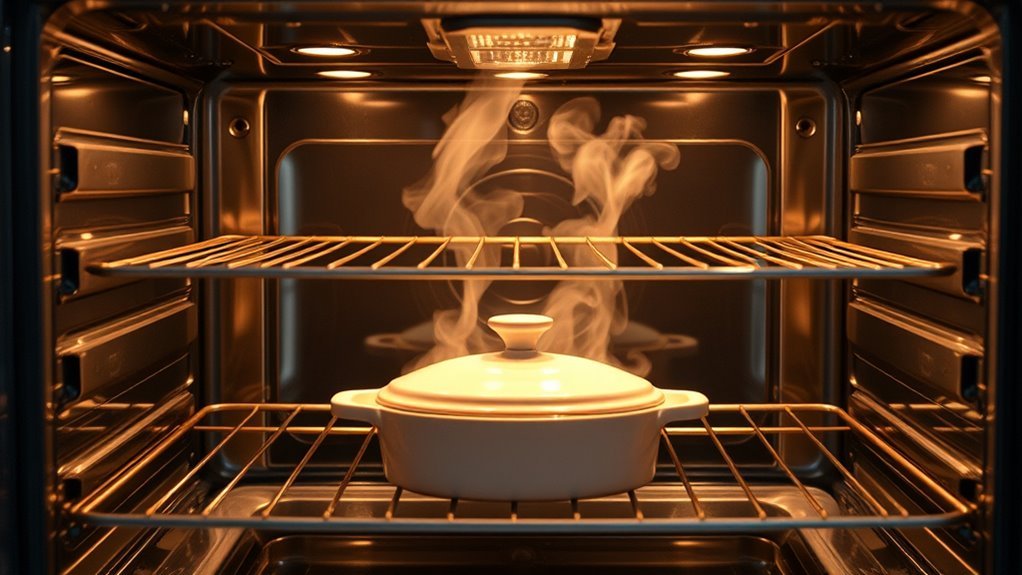
While keeping your food warm in the oven, make sure you use oven-safe containers like glass, ceramic, or metal dishes to avoid damage or melting. Using heatproof containers designed for oven use guarantees safety and maintains food quality.
Always use oven-safe glass, ceramic, or metal containers to safely keep food warm without damage.
To keep your food moist and prevent drying, always cover food with oven-safe lids or aluminum foil. Here’s what to keep in mind:
- Choose oven-safe containers that tolerate temperatures between 170°F and 200°F.
- Remove any plastic or foam before warming to avoid harmful fumes.
- Cover food tightly with aluminum foil or heatproof lids to lock in moisture.
- Place containers on a baking sheet to catch drips and handle hot dishes safely.
Following these steps helps you keep food warm and delicious without drying out or damaging your cookware. It’s a simple way to make sure your meal stays tasty and your kitchen safe.
Space Dishes Evenly for Consistent Heat
Make sure to space dishes evenly in the oven to allow hot air to circulate properly and avoid overcrowding. This prevents cold spots and helps all your food warm consistently.
Don’t forget to rotate the dishes halfway through for the best results. It really makes a difference!
Arrange Dishes With Gaps
If you want your food to warm evenly, you need to space your dishes at least 1-2 inches apart on the oven rack. Proper spacing promotes air circulation, which is essential for even heating.
Here’s how to arrange dishes with gaps effectively:
- Place dishes with at least 1-2 inches between them to allow heat to flow freely.
- Use multiple oven racks and leave enough space between shelves for consistent warmth.
- Avoid stacking dishes, as trapped moisture can cause sogginess and uneven heating.
- Leave room around each dish to prevent hot spots that can overcook or dry out food.
Avoid Overcrowding Oven
Because overcrowding the oven restricts airflow, you won’t get the consistent heat your dishes need to warm evenly. When you cram too many items inside, oven space becomes tight, limiting heat circulation and causing uneven warming.
To avoid this, leave at least 1-2 inches of clearance around each dish so hot air can flow freely. Use multiple oven racks and stagger dishes vertically to maximize space without crowding.
Proper airflow guarantees every dish heats uniformly, preventing cold spots and temperature fluctuations. By giving your dishes room to breathe, you help maintain steady heat circulation, which is essential for keeping food warm perfectly.
Rotate for Even Heating
Giving your dishes enough space to breathe sets the stage for even heating, but rotating them during warming takes it a step further. To guarantee your food stays perfectly warm with uniform temperature, follow these steps:
Arrange dishes spaced apart on oven racks to allow even heat circulation and prevent hot spots.
Rotate trays or dishes halfway through the warming process to expose all areas to consistent heat.
Use multiple oven racks at staggered heights to distribute heat evenly across dishes.
Position larger, denser dishes closer to the heat source and rotate them periodically for uniform temperature.
Monitor Temperature With a Food Thermometer
You’ll want to use a food thermometer to keep your dishes at safe temperatures, ideally above 140°F (60°C).
Just stick the probe into the thickest part of the food to get an accurate reading.
It’s a good idea to check and calibrate your thermometer regularly. That way, you can be sure your food stays warm without risking any bacterial growth.
Importance of Temperature Accuracy
When keeping food warm in the oven, monitoring its internal temperature with a reliable food thermometer is vital to guarantee safety and quality. Accurate readings help prevent foodborne illnesses and maintain ideal texture and flavor.
To verify temperature accuracy, you should:
- Calibrate your food thermometer regularly to avoid false readings. This way, you can trust the numbers you see.
- Insert the thermometer into the thickest part of the food, steering clear of bones or fat. That ensures you’re getting the most accurate temperature.
- Check the internal temperature at intervals to catch any drops early. It’s better to be safe than sorry, right?
- Use a digital or instant-read thermometer for quick and precise measurements. They make checking temperature easy and reliable.
Recommended Temperature Ranges
Maintaining the right temperature in your oven plays a key role in keeping food warm without compromising safety or quality. The ideal temperature range to use in your warming oven or keep warm setting is between 170°F and 200°F. This range prevents bacterial growth and keeps food tasting fresh.
To ensure food safety, always keep hot foods above 140°F, as recommended by USDA guidelines. Using a food thermometer, you can accurately monitor internal temperatures and avoid over-drying or overcooking your dishes.
Some ovens offer customizable temperature controls within this range, allowing you to adjust based on the type of food. Regularly checking temperatures with your food thermometer will help you maintain the perfect warmth while ensuring safety in every meal.
Tools for Temperature Monitoring
Although keeping food warm in the oven is important, accurately monitoring its temperature is vital to guarantee safety and quality. Using the right tools helps you maintain food safety and prevent overcooking.
Here’s how to optimize temperature monitoring:
- Use a digital thermometer for precise internal temperature readings, ensuring food stays above 140°F.
- Choose a wireless thermometer to check temperatures remotely, avoiding oven door openings.
- Insert the probe into the thickest part of the food to detect even heating and avoid hot spots.
- Regularly calibrate your thermometer to maintain accurate and reliable measurements over time.
Limit Warming Time to Preserve Quality
Since keeping food warm too long can dry it out or overcook it, you should limit oven warming to 1 to 2 hours. To keep food warm effectively, maintain a low oven temperature that prevents overcooking while keeping the food above 140°F for safety.
Use a timer or set alarms to remind yourself when warming time is up. This helps you limit warming time and preserve food quality.
Exceeding two hours in the oven risks compromising texture, flavor, and safety, so avoid prolonged warming. If you need to keep dishes warm longer, consider alternative methods like warming trays or slow cookers.
These options maintain quality without exposing food to excessive heat. Monitoring oven temperature and timing is key to preventing overcooking and ensuring your meal stays delicious.
Prevent Drying and Maintain Food Texture
When you want to keep food warm without drying it out, covering dishes with oven-safe lids or aluminum foil helps lock in moisture. To prevent drying and maintain food texture, follow these tips:
- Cover foods with oven-safe lids or loose aluminum foil to trap moisture without making crispy items soggy.
- Warm baked goods at lower temperatures and wait to slice until serving to keep them moist.
- Place foods on a cooling rack inside the oven to allow air circulation, which preserves a crisp exterior.
- Avoid long warming times to reduce dehydration and texture loss.
Conclusion
By following these tips, you’ll keep your food warm and delicious, like a cozy blanket wrapping every bite. Imagine pulling a perfectly heated dish from the oven—moist, tender, and ready to enjoy.
With the right temperature, timing, and care, your meals stay just right, never dry or overcooked. So, treat your oven like a gentle guardian, and your food will greet you warm, flavorful, and inviting every time.
Keeping food warm in the oven isn’t just about heat; it’s about preserving the quality and taste. These simple steps ensure your dishes maintain their moisture and texture until you’re ready to serve. Trust these oven warming tips to make every meal an enjoyable experience, keeping your food perfectly warm and delicious.