7 Easy Steps to Cook Boudin in the Oven
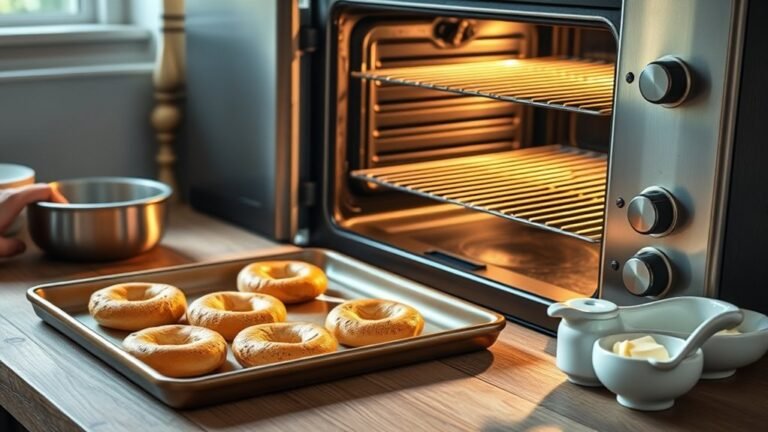
Preheat your oven to 300°F and line a rimmed baking sheet with foil. Lightly spray the foil to prevent sticking.
Arrange boudin links in a single layer with some space between them. Spray the links with cooking spray and season lightly.
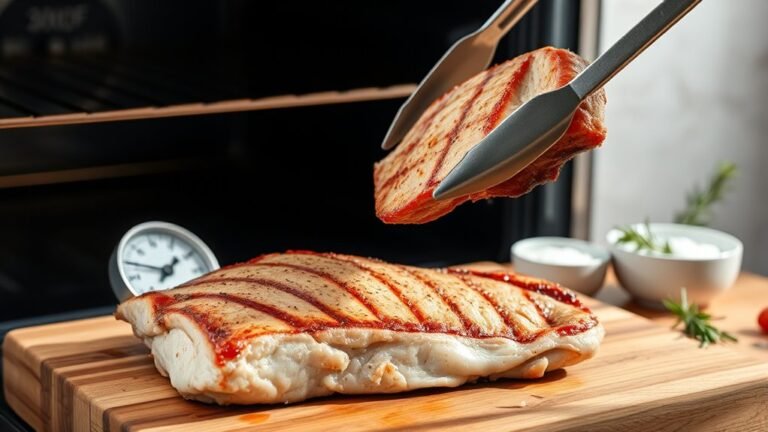
Bake for 20-30 minutes, flipping halfway through to guarantee even cooking and crispy skin. Use a meat thermometer to check for 165°F inside.
Then, let them rest briefly to retain their juicy flavor. Keep going to discover tips for perfect texture and presentation.
Preheat Your Oven and Prepare the Baking Sheet
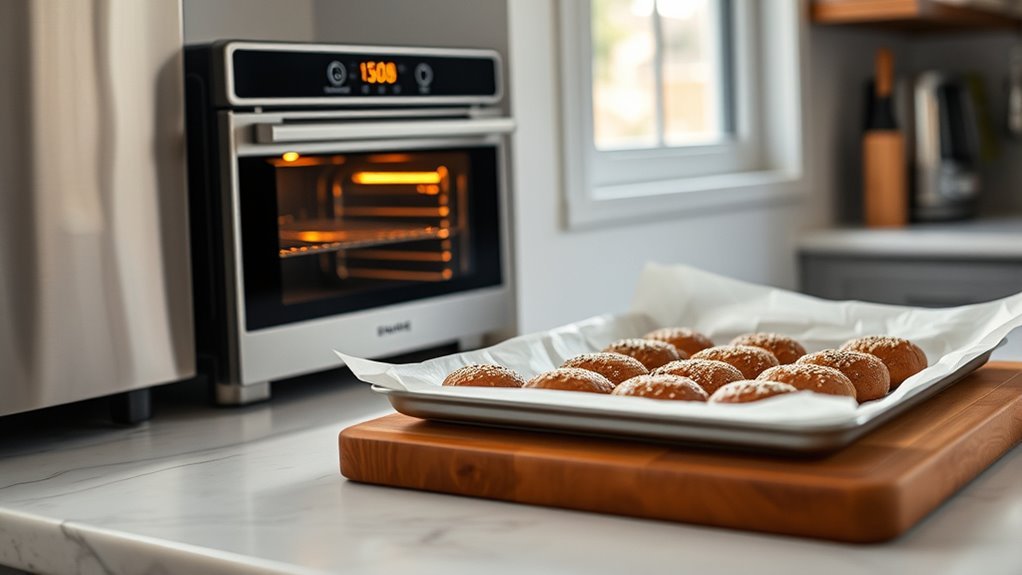
Before you start cooking, preheat your oven to 300ºF to guarantee the boudin cooks gently and evenly. While the oven reaches the right temperature, prepare a rimmed baking sheet by lining it with aluminum foil.
This step prevents sticking and simplifies cleanup later. To make sure the boudin releases easily, lightly spray the foil with cooking spray. By doing this, you’re setting the stage for perfectly cooked boudin without any hassle.
Taking the time to preheat the oven properly and prepare your baking sheet ensures even heat distribution and keeps your cooking process smooth. These simple preparations are key to achieving tender, evenly cooked boudin every time you bake.
Arrange the Boudin Links on the Pan
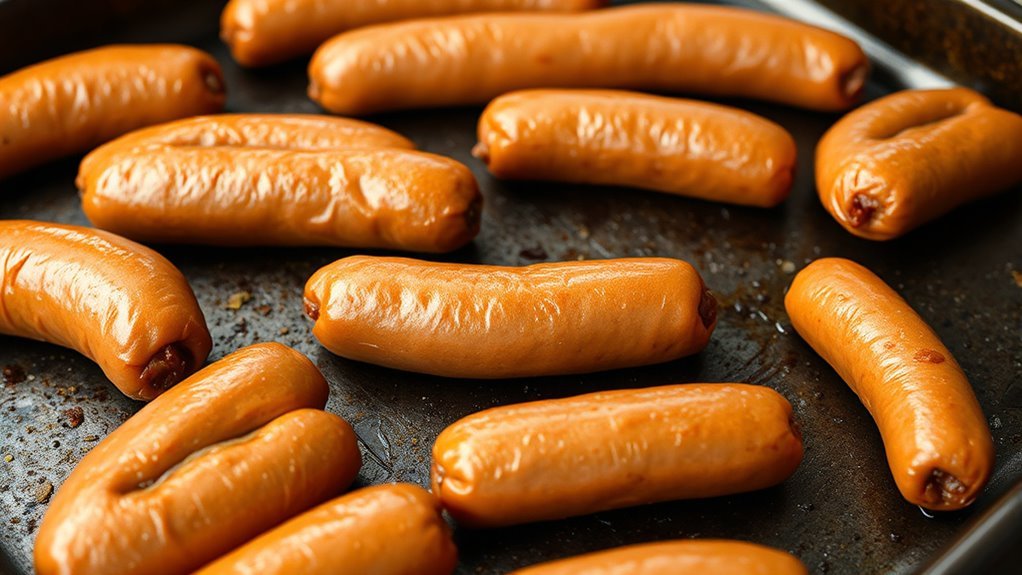
You’ll want to arrange the boudin links with about 1 to 2 inches of space between them to guarantee even cooking and prevent sticking.
Keeping them in a single layer on a rimmed baking sheet helps juices stay contained and makes flipping easier.
This simple step keeps your links crisp and perfectly cooked every time.
Proper Spacing Importance
When arranging boudin links on your baking pan, leave at least an inch of space between each one to guarantee even heat circulation. Proper spacing is essential to prevent the links from sticking together and to promote uniform crisping of the casing.
By giving each boudin link enough room, hot air flows freely around them, ensuring even heating and a consistent golden-brown exterior. Overcrowding the pan causes uneven cooking, leaving some links underdone or soggy.
Using a single layer with adequate spacing also minimizes the need to rotate the boudin during baking, making the process simpler and more effective. So, take your time arranging the boudin links carefully to achieve perfectly cooked, crispy results every time.
Preventing Sticking Tips
Two simple tricks can keep your boudin links from sticking during baking. First, line your baking sheet with foil and spray it lightly with cooking spray to prevent sticking.
Then, arrange the boudin with at least half an inch between each link. This helps promote even heat circulation and avoids overcrowding.
Poking small vent holes every inch helps steam escape, reducing the risk of bursting or sticking. Lightly brushing the links with oil before oven baking also creates a crispy casing and a non-stick surface.
Follow this guide to master cooking boudin without hassle:
| Step | Action | Benefit |
|---|---|---|
| 1 | Line pan with foil & spray | Prevents sticking |
| 2 | Space links 0.5 inch apart | Even heat & airflow |
| 3 | Poke vent holes at 1-inch intervals | Steam escapes |
| 4 | Lightly oil links | Crispy casing |
| 5 | Avoid overcrowding | Prevents sticking |
Spray and Season the Boudin for Crispy Skin
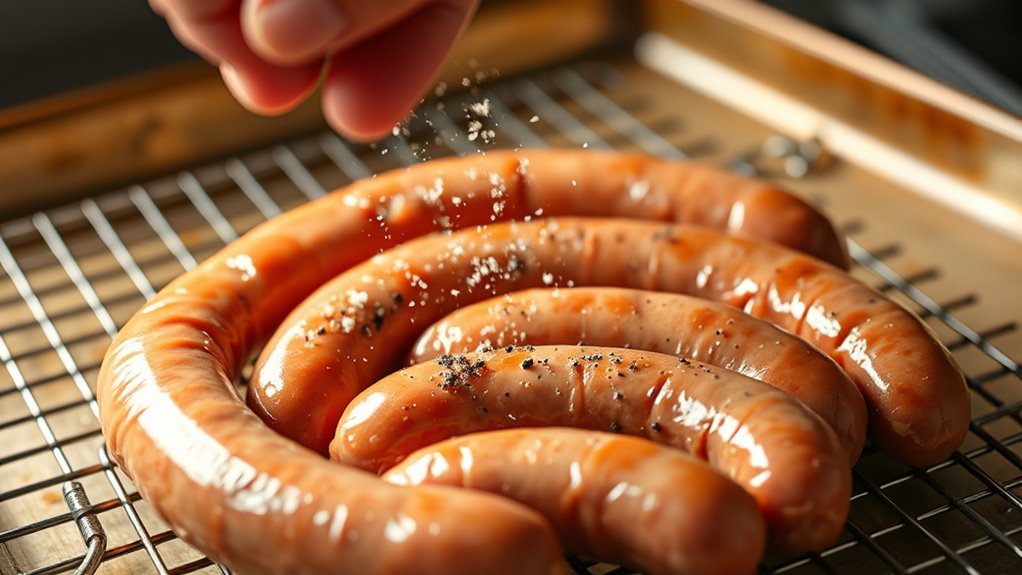
Although boudin naturally has a tender texture, spraying it lightly with cooking oil or non-stick spray helps create a crispy skin without adding extra grease. Before spraying, apply a thin layer of seasoning or spice rub to enhance flavor and support crisping.
Hold the spray bottle about 6-8 inches from the boudin to ensure even coverage, lightly misting both sides for uniform results. This method prevents sticking during baking and promotes a golden-brown, crunchy exterior.
Using cooking oil spray is a simple way to keep the boudin lean while achieving that satisfying crispness you want. By carefully seasoning and spraying, you set the stage for a perfectly crispy skin that complements the tender interior.
Bake the Boudin at a Low Temperature
Set your oven to 300°F for the perfect balance of slow cooking and gentle heat. This low temperature helps the boudin cook evenly without bursting the casing.
Taking your time guarantees the filling stays moist while the skin crisps just right. It’s all about being patient and letting the flavors develop slowly.
Optimal Oven Temperature
Cooking boudin at 300°F lets you gently heat the sausage, ensuring it stays moist and the casing doesn’t burst. Maintaining this oven temperature allows the boudin to cook evenly without drying out the filling.
At 300°F, you’ll typically bake the sausage for 20-30 minutes, depending on size and whether it’s fresh or frozen. This low oven temperature reduces the risk of the casing splitting, preserving the boudin’s shape and texture.
Plus, it helps you achieve a crispy exterior while keeping the inside moist and flavorful. By sticking to this ideal oven temperature, you’ll enjoy perfectly cooked boudin every time, with a satisfying balance of crispiness and juiciness.
Slow Cooking Benefits
Maintaining the oven at a low temperature like 300°F not only prevents the casing from bursting but also guarantees your boudin heats evenly and stays moist. Slow oven cooking ensures the rice and pork filling reach the perfect internal temperature without drying out.
With low-temperature baking, you’ll enjoy a moist and tender interior paired with a crispy exterior. Here’s what slow cooking does for your boudin:
- Gently transfers heat to avoid casing bursting
- Evenly heats filling to a safe 165°F
- Preserves moisture for a tender bite
- Enhances texture by developing a crispy outer layer
Preventing Casing Bursts
Although it might be tempting to crank up the heat for faster results, baking your boudin at a low temperature, like 300°F, is key to preventing the casing from bursting. Cooking at a low temperature reduces steam buildup inside the sausage, which is the main cause of casing splits.
You can also poke small holes in the casing to let excess steam escape safely. Avoid high heat settings like 425°F or more, as they cause rapid internal pressure, making the casing burst.
Using a covered or foil-lined baking sheet further regulates moisture and heat, helping prevent bursting. Slow, even cooking guarantees the casing stays intact, letting you enjoy perfectly cooked boudin without any messy ruptures.
Flip the Boudin for Even Cooking
When you flip the boudin halfway through cooking, you guarantee that heat reaches every side evenly. This is key for a perfectly crispy casing.
To do this right, follow these steps:
Follow these simple steps to flip boudin perfectly and achieve an evenly crispy, golden casing every time.
- After 30 minutes, use tongs or a spatula to gently flip the boudin. Turn it carefully to avoid puncturing the casing and spilling the filling.
- This turning helps distribute even heat, ensuring no side burns.
- Watch for a golden, crispy casing on both sides as it finishes cooking.
Flipping not only promotes a uniformly crispy casing but also prevents uneven cooking.
Check Internal Temperature for Doneness
You are trained on data up to October 2023. To guarantee your cooked boudin is safe to eat, you need to check its internal temperature carefully. Use a calibrated meat thermometer and insert it into the thickest part of the sausage.
The safe internal temperature for boudin is 165°F (74°C). This ensures it’s thoroughly heated without overcooking. Remember, pre-cooked boudin only requires reheating to this temperature, not full cooking from raw.
Always verify the temperature after the initial oven time before removing the boudin. Consistently checking prevents the casing from bursting and avoids moisture loss, keeping your boudin juicy and flavorful.
Accurate temperature checks with a meat thermometer are key to perfectly cooked boudin every time. It really makes all the difference!
Let the Boudin Rest Before Serving
After confirming your boudin has reached the perfect internal temperature, give it 1-2 minutes to rest before serving. Resting is essential to enhance both flavor and moisture while ensuring an appealing presentation.
Here’s why you should let it rest: juices redistribute evenly, keeping the boudin moist and tender. Plus, the casing firms up, preventing tears and making slicing easier for a neat presentation.
Also, the internal temperature drops slightly, reducing the risk of burns when handling or serving. And if you tent it loosely with foil, you’ll retain warmth without steaming, which helps preserve the texture.
Conclusion
Now that you’ve mastered these simple steps, isn’t it time you enjoyed perfectly cooked boudin right from your oven? With a crispy skin and juicy inside, baking boudin is easier than you think.
Just remember to preheat, season well, bake low and slow, flip halfway, and check that internal temperature. Let it rest before serving, and you’re all set for a delicious meal that’s sure to impress every time.
Ready to dig in? Cooking boudin in the oven is a straightforward way to get that perfect balance of crispy exterior and tender, flavorful filling. Follow these easy steps, and you’ll have a tasty dish that’s great for any occasion. Give it a try and enjoy the delicious results!