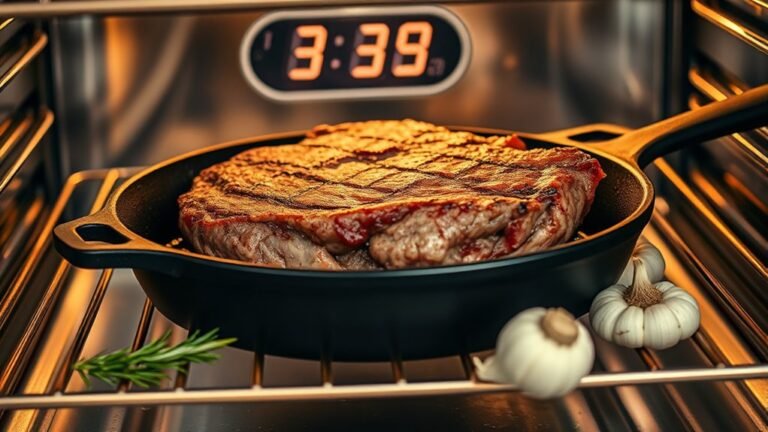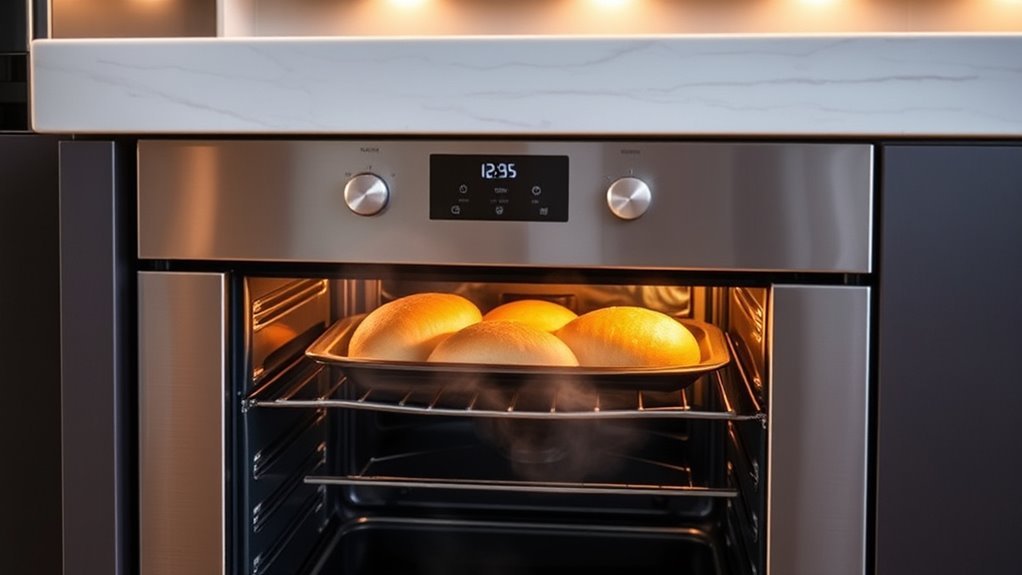
What’s a Conventional Oven?
A conventional oven heats your food using radiant heat from the top and bottom elements. Unlike convection ovens, it doesn’t have a fan to circulate the air, so the heat comes directly from the heating elements. This means you might find some uneven temperature spots inside.
Because of this, rotating your dish halfway through cooking can help your food cook more evenly.
Conventional ovens are great for delicate recipes like custards or yeast breads that need gentle, consistent heat. They’re perfect when you want traditional baking results without drying out moisture.
If you’re looking for a straightforward way to bake or roast with classic results, a conventional oven is your best bet. Keep exploring to see how this method suits different cooking needs and recipes!
Features and Operation of Conventional Ovens
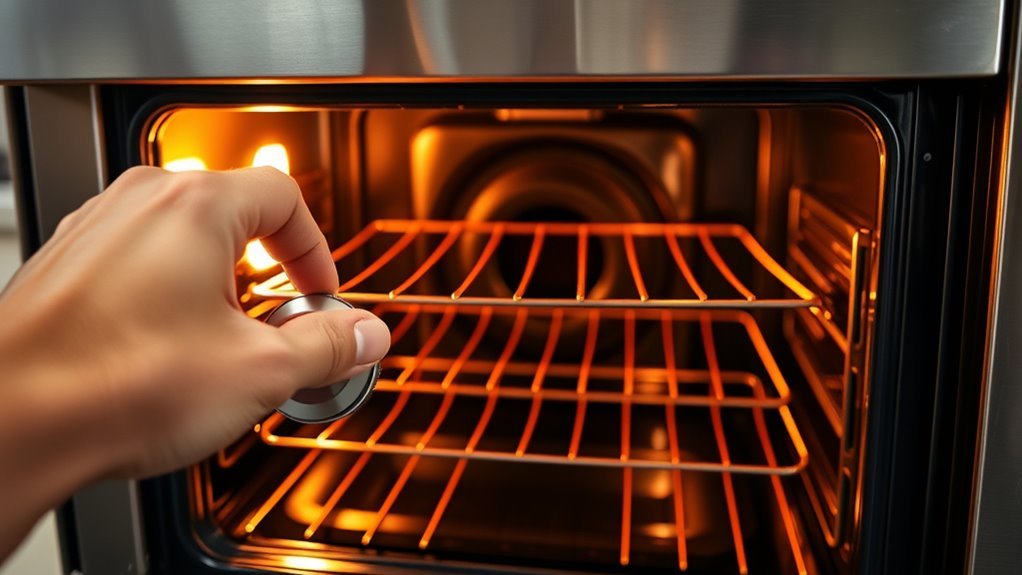
Although conventional ovens don’t have a built-in fan, they rely on two heating elements—one at the top for broiling and one at the bottom for baking and roasting—to cook your food. These heat sources use radiant heat transfer, which can cause uneven temperature distribution inside the oven.
Because of this, you’ll often need manual operation like rack rotation to achieve cooking uniformity. Since food closer to the heating elements cooks faster, rotating racks helps avoid hot spots.
Conventional ovens excel in traditional cooking, making them ideal for familiar recipes designed specifically for broiling and baking without needing adjustments. Their straightforward setup relies solely on the heating elements, giving you reliable results with a simple, hands-on approach to manage heat and ensure even cooking throughout.
When to Use a Conventional Oven
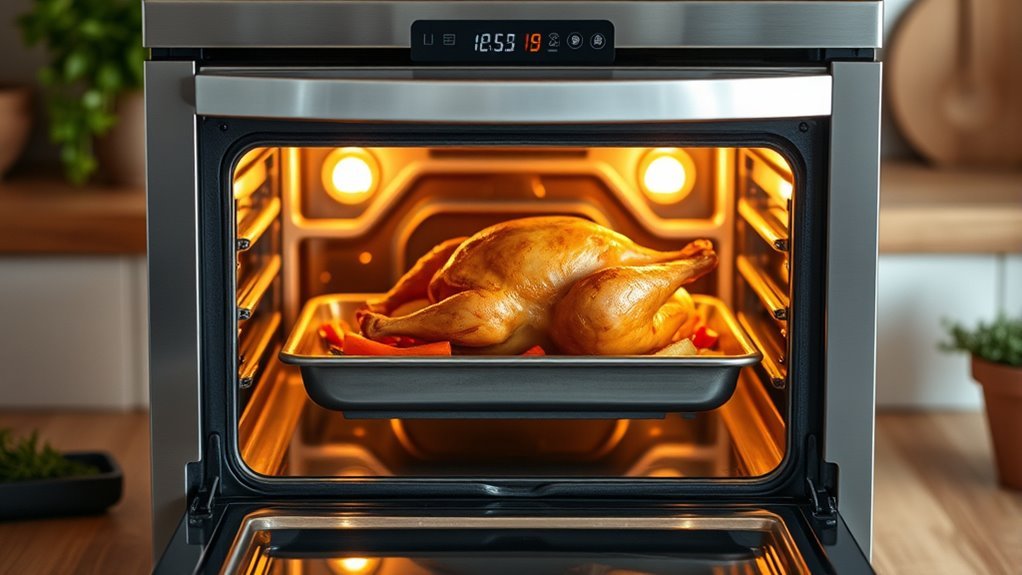
Understanding how conventional ovens use radiant heat and require manual adjustments helps you decide when they’re the best choice. You should use a conventional oven for delicate items like soufflés, custards, or yeast breads that thrive in a gentle heat and still environment.
This type of oven provides even baking without the air circulation found in convection ovens, which is essential for moisture retention and proper rise. When a recipe-specific approach calls for radiant heat, such as with certain cakes and pastries, a conventional oven ensures the best results.
You’ll want to adjust rack placement and rotate your dishes manually to optimize heat exposure. If you prefer traditional baking outcomes or need to protect sensitive recipes, conventional ovens are your go-to option for consistent, gentle baking.
Conclusion
Now that you know how a conventional oven works, you can confidently choose it for your baking needs. Imagine you’re making a classic chocolate chip cookie tray—using a conventional oven ensures even heat from all sides.
This gives you that perfect golden-brown edge and soft center. So next time you want consistent results without fancy features, trust your conventional oven to provide delicious, reliable meals every time.
A conventional oven is great for everyday cooking and baking because it uses radiant heat from the top and bottom elements. It’s simple, effective, and perfect for classic recipes like cookies, roasts, and casseroles. When you want dependable, even cooking without the complexity of newer ovens, a conventional oven is your best bet.