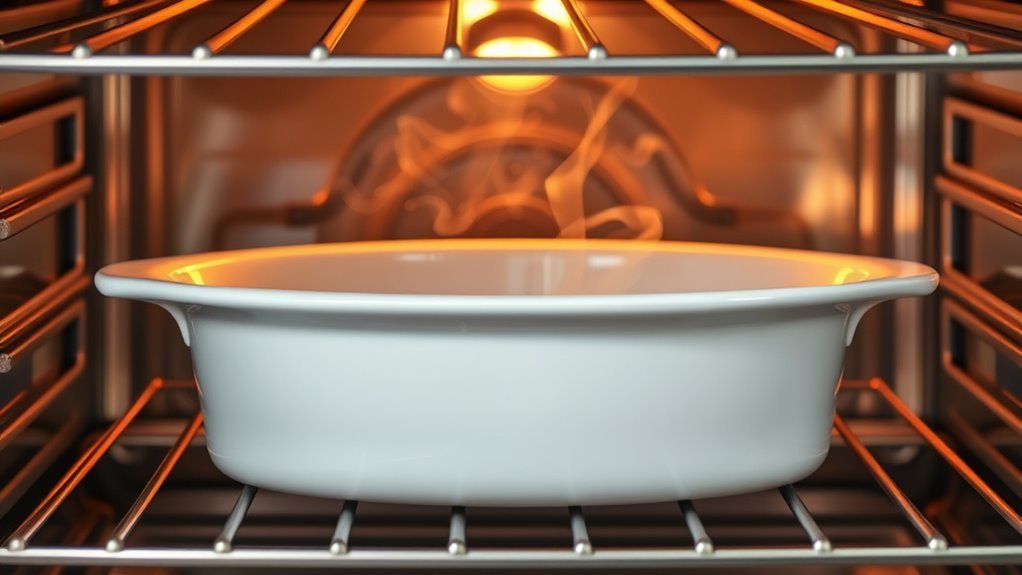
Can Porcelain Go in the Oven?
You can use porcelain in the oven if it’s labeled oven-safe by the manufacturer. Porcelain is a popular choice for cookware and dinnerware because it vitrifies at high temperatures, making it strong and non-porous. This means it can handle heat well, but only up to a point.
However, sudden temperature changes can cause it to crack. So, avoid putting cold porcelain straight into a hot oven or moving it from the freezer directly to the oven without warming it gradually.
Always follow the temperature limits specified by the manufacturer, which are usually up to 650°F.
Handle your porcelain cookware carefully to keep it in good shape. Keep these tips in mind, and you’ll learn how to use porcelain safely every time without any surprises!
What Is Porcelain and How Is It Made?
What makes porcelain so special? You’re looking at a type of ceramic crafted from kaolin clay and other minerals, fired at a high temperature in a kiln.
This firing process, reaching between 2200°F and 2600°F, causes the clay to vitrify — transforming it into a hard, dense, and non-porous surface. This vitrification is key to porcelain’s impressive durability and resistance to wear.
After firing, manufacturers often apply a glaze, giving porcelain its smooth, glossy finish which not only enhances its appearance but also makes it easy to clean.
Because of this unique combination of materials and intense firing, porcelain stands out from other ceramics with its strength, waterproof nature, and timeless beauty.
Guidelines for Using Porcelain Safely in the Oven
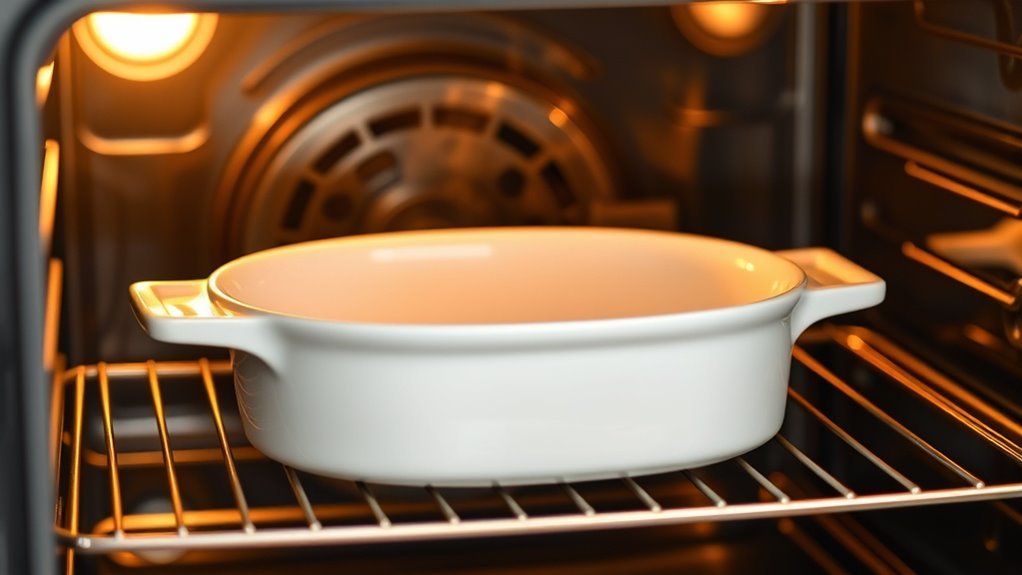
Although porcelain can withstand high temperatures, you should always handle it with care when using it in the oven. First, check the manufacturer specifications to verify your porcelain dish is oven-safe and know its temperature limits—typically up to 650°F (343°C).
Avoid sudden temperature changes by preheating the oven gradually, preventing thermal shock that can cause cracking. Never place a cold porcelain dish directly into a hot oven or transfer it straight from the freezer; allow gradual heating instead.
Also, steer clear of porcelain with metallic trims or decorative glazes, as these may not be oven-safe. When removing the dish, use oven mitts and let it cool slowly to maintain its integrity.
Following these guidelines ensures safe oven use and preserves your porcelain’s durability. It’s really worth taking these simple steps to keep your dishes looking great and lasting longer.
Conclusion
So, you’re thinking of tossing your delicate porcelain into the oven like it’s a pizza? Hold up! Porcelain isn’t a stunt double for your baking trays—it’s more like the diva of dinnerware, needing gentle heat and respect.
Sure, some oven-safe pieces exist, but treating porcelain like a superhero cape risks a tragic shatter. Remember, your porcelain wants a spa day, not a fire drill. Handle with care, or face a ceramic meltdown!
In short, while some porcelain can go in the oven, it’s crucial to check if it’s labeled oven-safe. Avoid sudden temperature changes, and never assume all porcelain is made for the heat. Proper handling ensures your porcelain stays beautiful and intact, making it perfect for serving, not just baking. So, yes, porcelain can go in the oven—but only when you treat it right!