How to Use Porcelain Safely in the Oven
You can safely use porcelain in the oven by first checking its heat tolerance—most can handle up to 260°C (500°F).
It’s important to avoid sudden temperature changes; don’t put cold porcelain straight into a hot oven or cool it rapidly afterward.
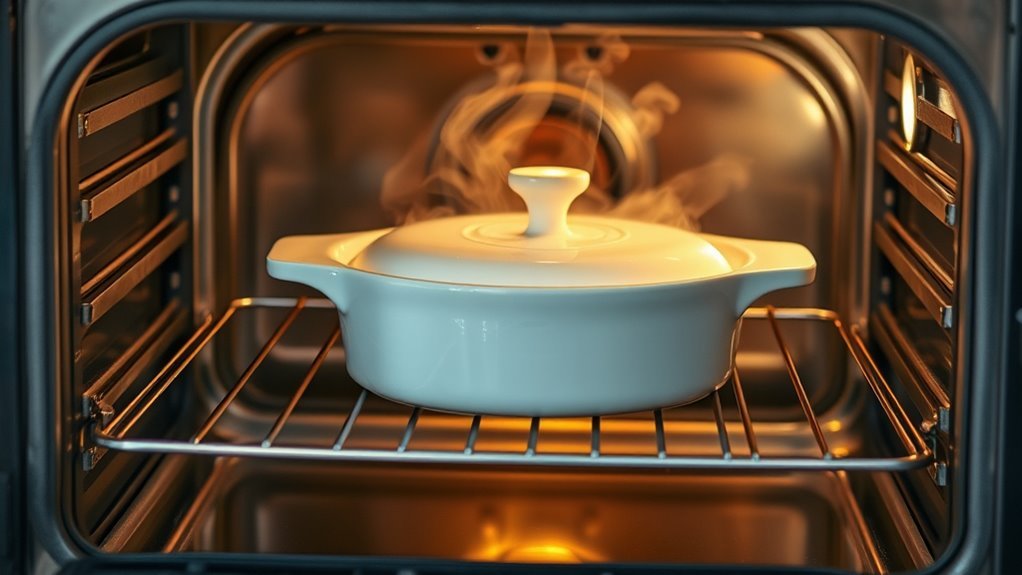
Always preheat the oven with your porcelain inside to reduce stress. This helps prevent cracks and ensures even heating.
Handle your pieces gently using oven mitts to prevent accidents.
Follow these tips, and you’ll keep your porcelain safe while cooking.
There’s more to learn about preventing damage and maximizing its use, so take your time getting to know your porcelain’s specific care instructions.
Types and Temperature Limits of Oven-Safe Porcelain
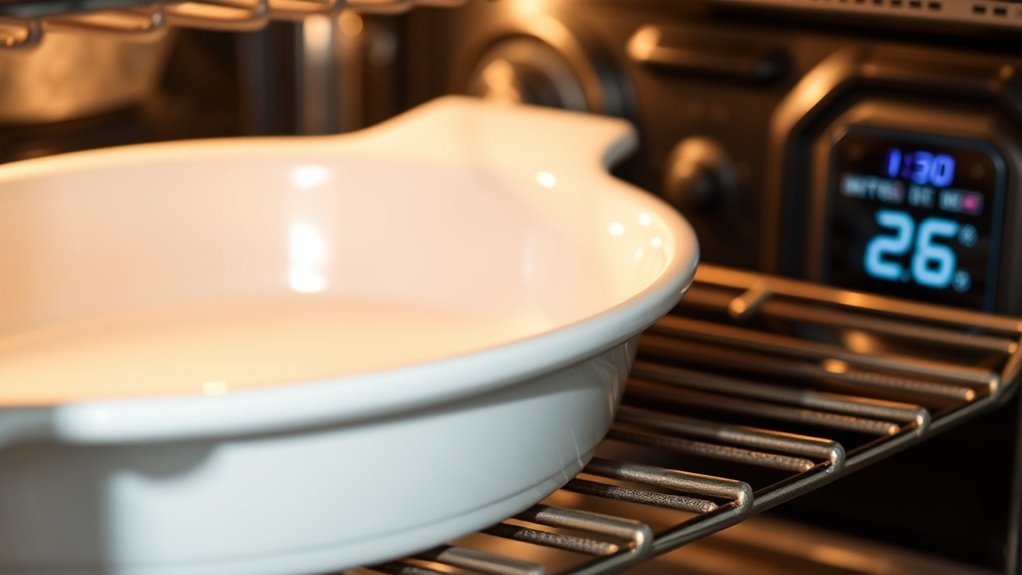
Although porcelain is known for its durability, you should always check the manufacturer’s guidelines before placing it in the oven. Oven-safe porcelain varies by porcelain types and coatings, each with specific temperature limits.
Pure porcelain cookware typically withstands oven temperatures up to 260°C (500°F). Porcelain-coated stoneware handles between 220°C and 260°C (425°F to 500°F), while porcelain-coated metal with enamel coatings can tolerate up to 315°C (600°F).
Decorative porcelain, however, often lacks sufficient heat resistance and isn’t recommended for oven use. Exceeding these temperature limits risks damage such as cracking or warping.
To guarantee safe oven use, always verify the heat resistance and manufacturer guidelines for your porcelain cookware. Understanding these differences helps you avoid thermal shock and prolong your porcelain’s lifespan.
Preventing Thermal Shock and Best Handling Practices
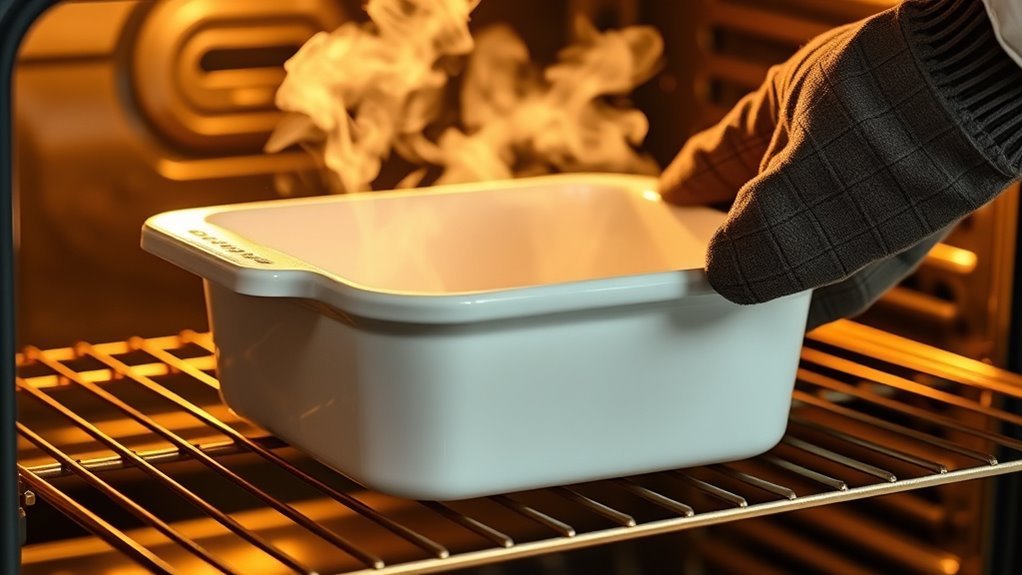
When you use porcelain in the oven, preventing thermal shock is essential to avoid cracks and damage. To guarantee safe oven use and effective thermal shock prevention, always introduce gradual temperature change.
Never place cold or frozen porcelain directly into a hot oven; instead, preheat porcelain alongside the oven. Handle hot porcelain carefully with oven mitts and avoid impact fractures by setting it on a stable, heat-resistant surface.
Keep these tips in mind:
- Preheat your oven gradually to prevent porcelain cracking from sudden heat.
- Avoid rapid cooling by letting porcelain cool naturally in the oven or at room temperature.
- Don’t transfer porcelain straight from the freezer or fridge into the oven.
- Always handle hot porcelain cautiously to prevent damage and injury.
Conclusion
When using porcelain in the oven, think of it as a delicate dancer—you want to treat it with care to keep it performing beautifully. Always check the temperature limits and avoid sudden heat changes to prevent cracks.
Handle your porcelain gently, letting it warm up or cool down gradually. This helps avoid stress on the material and keeps it intact.
By following these simple steps, you’ll keep your porcelain safe and stunning, ready to shine in your oven like a star on center stage. Remember, using porcelain safely in the oven means respecting its delicate nature while enjoying its elegant beauty. With a little care, your porcelain will last for many oven adventures to come!