10 Easy Tips to Clean Your Oven Without Scrubbing
You can clean your oven without scrubbing by first removing the racks and soaking them in soapy hot water overnight. This makes it easier to get rid of grime without any heavy scrubbing.
Next, mix baking soda and water into a paste and spread it over your oven’s interior, but be careful to avoid the heating elements. Let this sit overnight to loosen up all the stubborn dirt and grease.
The next day, spray vinegar onto the dried baking soda paste. You’ll see a foaming reaction that helps lift away residue. Then, simply wipe it clean with a damp cloth.
To finish, naturally clean the oven glass using the same baking soda paste and vinegar method. Keep going to uncover more effortless, natural cleaning hacks that make maintaining your oven a breeze!
Gather Your Natural Cleaning Supplies
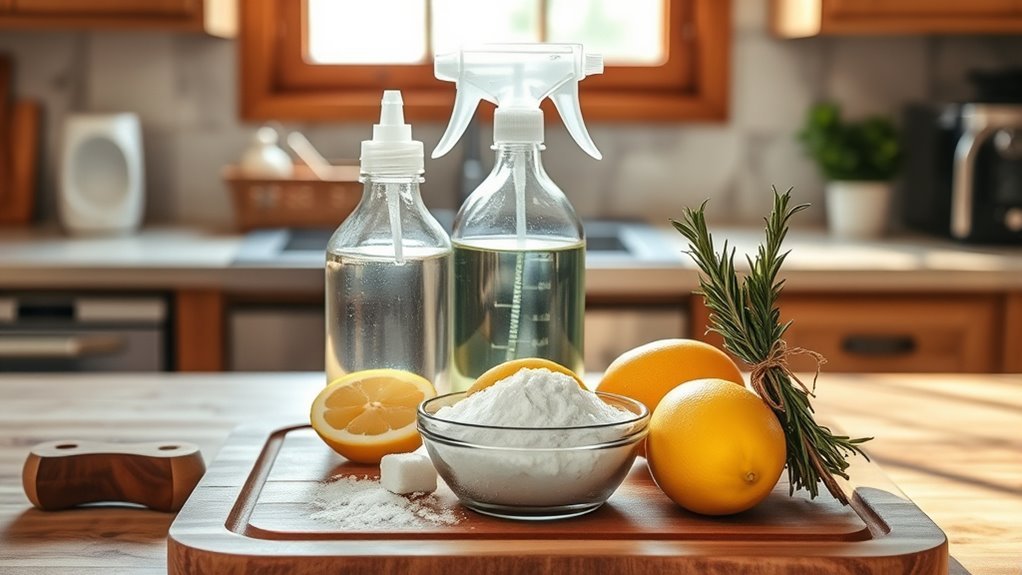
Before you start scrubbing, gather your natural cleaning supplies to make the process easier and safer. You’ll need baking soda and white vinegar as your main agents—both are effective and gentle alternatives to harsh chemicals.
Mix 1/2 cup of baking soda with a few tablespoons of water to form a thick paste that you’ll spread over the oven interior. Keep a spray bottle filled with white vinegar handy; when sprayed onto the baking soda, it creates a foaming action that helps loosen baked-on grime.
Don’t forget a bowl for mixing, a damp cloth or sponge for wiping, and rubber gloves to protect your hands. Adding lemon juice or slices is optional but great for deodorizing and leaving a fresh scent while you clean.
Remove and Soak Oven Racks
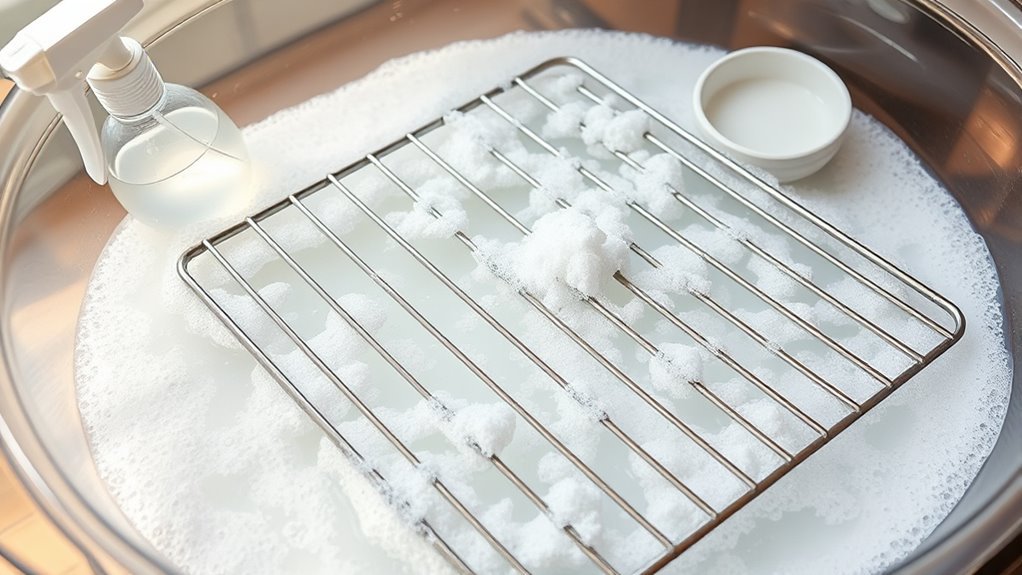
Once you’ve gathered your cleaning supplies, take out the oven racks and place them in a bathtub or large sink filled with hot water and a few drops of dish soap or a dishwasher tablet to soak overnight. Soaking the oven racks in hot water with dish soap helps loosen baked-on grease and grime, making cleanup much easier without scrubbing hard.
If your racks are heavily soiled, consider adding a cup of ammonia to the soak for extra grease-fighting power—just be sure to keep the area well-ventilated. After soaking, gently scrub the racks with a non-abrasive pad or brush to remove any remaining residue, then rinse thoroughly with clean water.
Let the racks dry completely before putting them back in the oven to prevent rust and keep them looking clean longer. It’s a simple step, but it really helps keep your oven racks in great shape.
Make a Baking Soda Paste
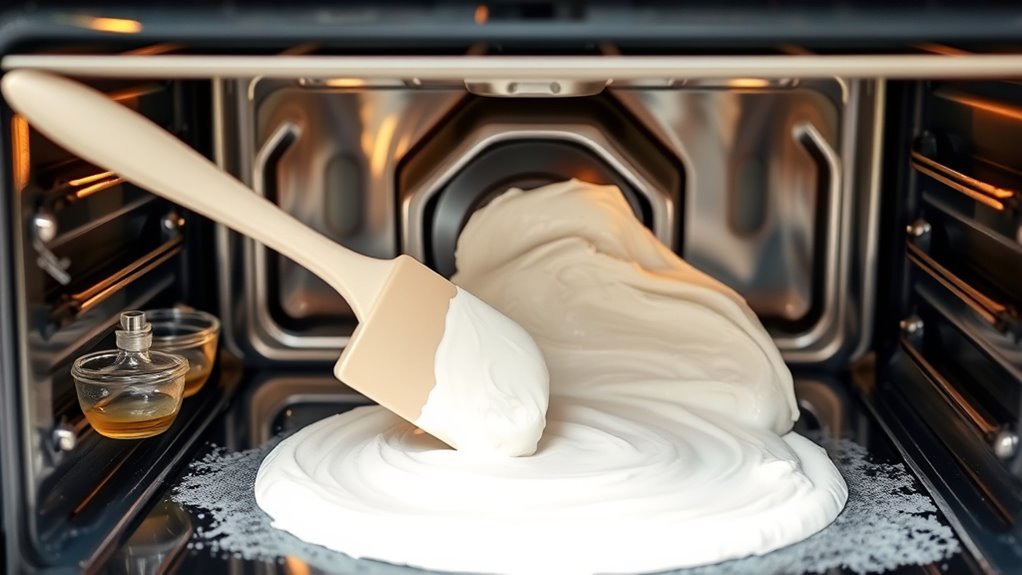
Although cleaning an oven can feel intimidating, making a baking soda paste is a simple and effective way to tackle stubborn grease. Start by mixing 1/2 cup of baking soda with a few tablespoons of water until you get a thick, spreadable paste.
Mix half a cup of baking soda with water for a simple, effective oven grease remover.
Make sure the paste is smooth and free of lumps before you apply it. Using a spatula or your fingers, evenly spread the baking soda paste over the oven’s interior surfaces, avoiding heating elements.
This paste will work its magic by loosening baked-on grime over time. Let it sit for at least 12 hours or overnight to break down tough stains, making cleanup easier without harsh scrubbing.
This natural method is gentle yet powerful for a cleaner oven. Give it a try and see how much easier your oven cleaning can be!
Apply the Paste to Oven Surfaces
Spreading the baking soda paste evenly across your oven’s interior is key to loosening tough grime. Use a spatula or your fingers to apply a thick layer of the cleaning paste on all oven surfaces, focusing on greasy spots and baked-on food.
Work in small sections with a clean cloth or sponge to keep the paste moist and effective. Just be sure to avoid spreading the baking soda mixture on heating elements or vents to prevent any damage.
Make sure the paste fully covers the interior walls for the best results. If some stains seem stubborn, don’t hesitate to add more paste in those areas.
This careful application sets the stage for a thorough, scrub-free oven clean that tackles grime efficiently. It’s all about giving the paste time and space to do its magic!
Let the Paste Sit Overnight
To get the best results, you should let the baking soda paste sit in your oven overnight or for at least 12 hours. This soaking period allows the paste to deeply penetrate baked-on grime and grease, loosening stubborn residues without any scrubbing.
By giving the baking soda paste time to work, chemical reactions break down tough grime, making the cleaning process much easier. Just be sure to avoid turning on the oven during this time to prevent the paste from drying or hardening prematurely.
Patience here really pays off, as the extended soak reduces the effort needed later on, leaving your oven cleaner with less elbow grease. So, letting the paste sit overnight is key to efficient, hassle-free oven cleaning.
Wipe Away the Baking Soda Paste
After letting the baking soda paste sit overnight, you’re ready to wipe it away. Use a damp microfiber cloth and gentle, circular motions to remove the residue without spreading it.
For stubborn spots, grab a plastic scraper to lift the dried paste without scratching your oven. It’s easier than it sounds, and your oven will look great in no time!
Timing for Paste Removal
While you wait for the baking soda paste to work its magic, let it sit for at least 12 hours or overnight to loosen grime effectively. This wait time is essential for easy paste removal without scrubbing.
When you’re ready, gently wipe the paste away using a damp microfiber cloth or soft sponge. Start from the edges and move inward to avoid spreading residue.
If you find any stubborn spots, carefully lift the dried paste with a spatula or plastic scraper. This will help protect your oven’s surface.
Moisten your cloth with warm water to dissolve any leftover paste for a thorough clean. Just repeat wiping and rinsing as needed until all the baking soda residue is gone.
In the end, your oven will be fresh and shiny without any harsh scrubbing. Easy, right?
Effective Wiping Techniques
Although the baking soda paste loosens grime effectively, you’ll need a gentle touch to wipe it away without scratching your oven’s surface. Use a damp microfiber cloth and apply light pressure as you wipe in circular motions. This technique lifts the paste efficiently and helps you achieve a streak-free wipe.
Rinse the cloth frequently in clean water to avoid spreading grime and ensure thorough cleaning. For any spots that resist removal, switch to a slightly dampened sponge or soft scrub pad. Just remember to keep using gentle motions to protect your oven.
Finally, finish by wiping with a dry microfiber cloth to remove excess moisture. This will leave your oven interior shiny and spotless without any harsh scrubbing.
Handling Stubborn Residue
Once you’ve gently wiped away most of the baking soda paste using a damp microfiber cloth, some stubborn residue may still cling to your oven’s surface. To tackle these stubborn spots, use a plastic spatula or scraper to carefully lift off the remaining baking soda residue.
Spraying vinegar onto the area creates a foaming reaction that loosens grime, making it easier to wipe away. For oven door glass, moistening the microfiber cloth with warm water and wiping in circular motions helps prevent streaks and leftover residue.
Repeat these cleaning tricks as needed for persistent spots. It’s pretty handy to know these little steps when the grime just won’t quit!
| Task | Tool Used | Tip |
|---|---|---|
| Remove stubborn spots | Plastic scraper | Avoid scratching the surface |
| Loosen residue | Vinegar spray | Use for foaming reaction |
| Final wipe | Microfiber cloth | Wipe in circles, warm water moisten |
Spray Vinegar to Loosen Remaining Residue
Spray white vinegar directly onto any leftover baking soda in your oven to trigger a foaming reaction that loosens grime. Let it sit for 5 to 10 minutes so the bubbles can break down stubborn residue.
Then, wipe away the foam with a damp cloth. You might need to repeat this a few times until your oven is spotless. Easy, right?
Vinegar Application Technique
When you heat the oven slightly before applying vinegar, it helps the solution penetrate and break down baked-on grime more effectively. Fill a spray bottle with white vinegar for easy, even coverage over the areas with baking soda residue.
Spray the vinegar directly onto the residue, where it will react and loosen stubborn grime without any scrubbing. Let the vinegar sit for 5 to 10 minutes to maximize its grease-cutting power.
The warm surface accelerates the vinegar’s ability to dissolve baked-on dirt, making cleanup quicker. Afterward, simply wipe the oven interior with a damp cloth to remove the loosened residue and leftover grime.
This vinegar application technique guarantees a thorough clean while keeping the process hassle-free and efficient. Easy, right?
Foaming Reaction Benefits
Although vinegar and baking soda are common household staples, combining them in your oven cleaning routine triggers a powerful foaming reaction that lifts stubborn grime effortlessly. When you spray vinegar onto baking soda residue, this fizzing action breaks down grease and baked-on food, enhancing grime removal without harsh scrubbing.
The foaming reaction also reaches crevices and tight spots, making cleanup easier. Here’s why this works so well:
- Vinegar’s acidity reacts with baking soda’s alkalinity, causing fizz.
- The fizzing lifts and loosens stuck-on grime naturally.
- It reduces the need for vigorous scrubbing.
- The process is chemical-free, safe, and eco-friendly.
Using vinegar after baking soda maximizes cleaning efficiency and makes your oven shine with minimal effort. It’s a simple trick that really pays off!
Effective Residue Removal
If you want to tackle any stubborn baking soda residue left in your oven, applying white vinegar directly onto the surface will trigger a foaming reaction that loosens grime effectively. This natural cleaning method uses the acidity of vinegar to react with baking soda, creating fizz that breaks down grease and baked-on food particles without harsh scrubbing.
Let the vinegar sit for 5 to 10 minutes to maximize residue removal. Afterward, use a damp cloth or sponge to wipe away the bubbling mixture along with the loosened grime.
Repeat spraying vinegar and wiping as needed until all residue and dirt vanish, leaving your oven clean and fresh. This simple vinegar and baking soda combo offers an efficient, eco-friendly way to maintain your oven without heavy-duty chemicals or elbow grease.
Use a Damp Cloth for Final Cleaning
Since the cleaning paste loosens grime effectively, you can wipe down your oven interior immediately with a damp cloth to remove residue. To achieve a clean oven with a streak-free finish, follow these steps:
Use a clean, slightly moist damp cloth to gently wipe all surfaces, including corners and edges. For stubborn spots, dampen the cloth with a water-vinegar mix to boost cleaning power.
Regularly rinse the cloth to avoid spreading dirt and ensure thorough residue removal. Finish by drying the oven interior with a dry microfiber cloth to prevent streaks and water spots.
Clean the Oven Door Glass Naturally
You can clean your oven door glass naturally by making a thick baking soda paste and spreading it evenly over the glass. After letting it sit, spray vinegar on the paste to create a foaming action that breaks down grime.
Then, finish by wiping it clean and buffing for a streak-free shine. It’s pretty simple, and you don’t need any harsh chemicals. Give it a try next time your oven door needs a little TLC!
Baking Soda Paste
When you mix half a cup of baking soda with a few tablespoons of water, you create a thick paste that works wonders on oven door glass. This natural method tackles baked-on grease without harsh chemicals.
Here’s how to use it for effective oven cleaning:
- Spread the baking soda paste evenly over the glass, steering clear of metal parts or heating elements.
- Let it sit for 30 minutes to an hour to break down stubborn grease and grime.
- Wipe off the dried paste gently with a damp cloth or a non-abrasive scrub pad.
- Repeat the process on tough spots until the glass is perfectly clean and streak-free.
Using baking soda paste not only cleans but also brightens your oven door glass naturally and safely. It’s a simple trick that really makes a difference!
Vinegar Spray Shine
Although baked-on grease can be tough to remove, spraying undiluted white vinegar directly onto your oven door glass breaks down grime effectively and naturally. Let it sit for 10-15 minutes, then wipe with a damp microfiber cloth using circular motions to avoid scratching the glass.
If you’ve got stubborn spots, just apply the vinegar a little thicker and let it soak for about 20 minutes. Finally, buff it with a dry, lint-free cloth or paper towel to get that streak-free shine.
Doing this regularly keeps your oven glass clear and shiny, and it helps prevent buildup from forming in the first place.
| Step | Action |
|---|---|
| Spray | Apply undiluted vinegar on oven glass |
| Wait | Let sit for 10-15 minutes |
| Wipe | Use damp microfiber cloth in circles |
| Buff | Dry cloth or paper towel for streak-free shine |
Maintain Your Oven With Regular Light Cleanings
Since grease and spills can quickly build up inside your oven, wiping it down with a damp cloth after each use keeps grime at bay and makes deep cleaning less intimidating. Regular light cleanings play a vital role in effective oven maintenance and preventative care.
To minimize grease buildup and maintain a fresh oven, follow these simple steps:
- Clean splatters immediately once the oven cools to avoid baked-on stains.
- Use a vinegar and water spray weekly to break down spills and add shine.
- Place an oven liner or foil on the bottom rack to catch drips and simplify cleanings.
- Schedule light cleanings every 1-2 weeks to keep your oven in top shape.
Consistent care reduces heavy scrubbing and extends your oven’s lifespan. So, keeping up with these little chores really pays off in the long run!
Conclusion
By gathering simple supplies and letting nature do the hard work, you’ll find cleaning your oven isn’t the chore you dreaded. It’s funny how a little baking soda paste and vinegar can turn stubborn grime into a quick wipe.
As you soak those racks and watch the paste work overnight, you’ll realize keeping your oven fresh is easier than you thought. So, why not start today and enjoy a cleaner oven tomorrow?
With these easy tips to clean your oven without scrubbing, you can save time and effort while still achieving great results. Just a bit of baking soda, vinegar, and patience can make your oven sparkle again. Give it a try and see how simple oven cleaning can be!