10 Steps to Reheat Food Perfectly in the Oven
To reheat food perfectly in the oven, start by preheating it to 350°F. Make sure to pick an oven-safe dish so your food heats evenly and safely.
Cover your food with foil or a lid to lock in moisture—this keeps it from drying out. If your dish seems a bit dry, add a splash of broth or water before covering.
Spread the food evenly in the dish and adjust the reheating time depending on how thick your food is. It’s important to make sure the food reaches 165°F for safety.
Once heated, let your food rest briefly before serving. This step helps keep the flavors balanced and ensures your meal tastes delicious.
Follow these simple steps, and you’ll find even more tips to keep your meals tasty and safe every time you reheat.
Preheat the Oven to the Ideal Temperature
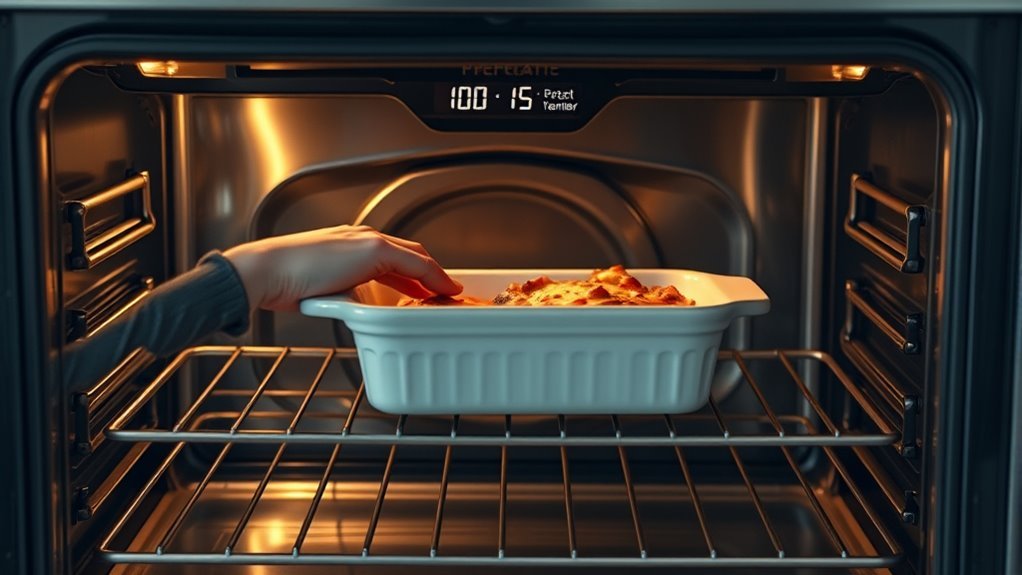
Before you reheat your leftovers, make sure to preheat your oven to the ideal temperature—usually 350°F (175°C). This step is essential for even heating, ensuring your food warms thoroughly without drying out.
Always allow the oven to fully reach the set temperature before placing your dish inside; rushing this can lead to uneven reheating. To be sure, use an oven thermometer, especially if your oven’s built-in gauge isn’t very reliable.
Ensure your oven is fully preheated before reheating to avoid uneven warming; use an oven thermometer if needed.
For dense or larger dishes, you might want to bump up the preheat temperature to 375°F (190°C). This helps heat the food more evenly and thoroughly.
And remember, preheat for at least 10-15 minutes so your oven stabilizes at the right temperature before you start reheating your meal. It really makes a difference!
Choose the Right Oven-Safe Dish
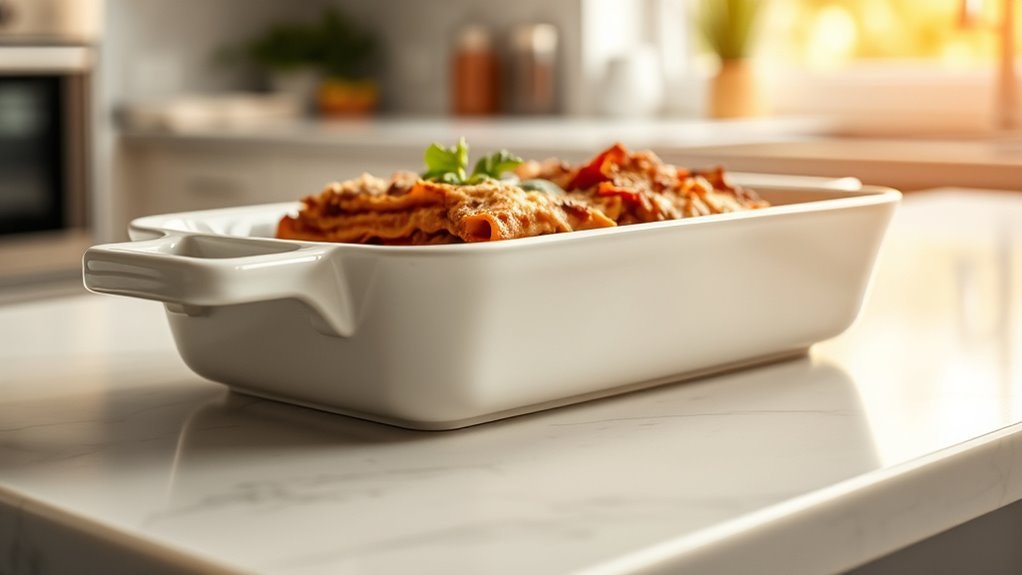
When reheating food in the oven, you’ll want to choose a dish that can safely handle high temperatures without cracking or melting. Opt for an oven-safe dish made of glass, ceramic, or metal. These materials can withstand heat up to at least 400°F.
Avoid plastic or disposable containers since they aren’t designed for oven use and can release harmful chemicals. Before you reheat food, check for any oven-safe labels or manufacturer instructions on your dish.
For larger portions, pick shallow, wide dishes to promote even heat distribution and prevent hot spots. While you’ll cover your dish later to retain moisture, selecting the right oven-safe dish is your first step to ensuring your food heats evenly and stays delicious.
Cover Food to Retain Moisture
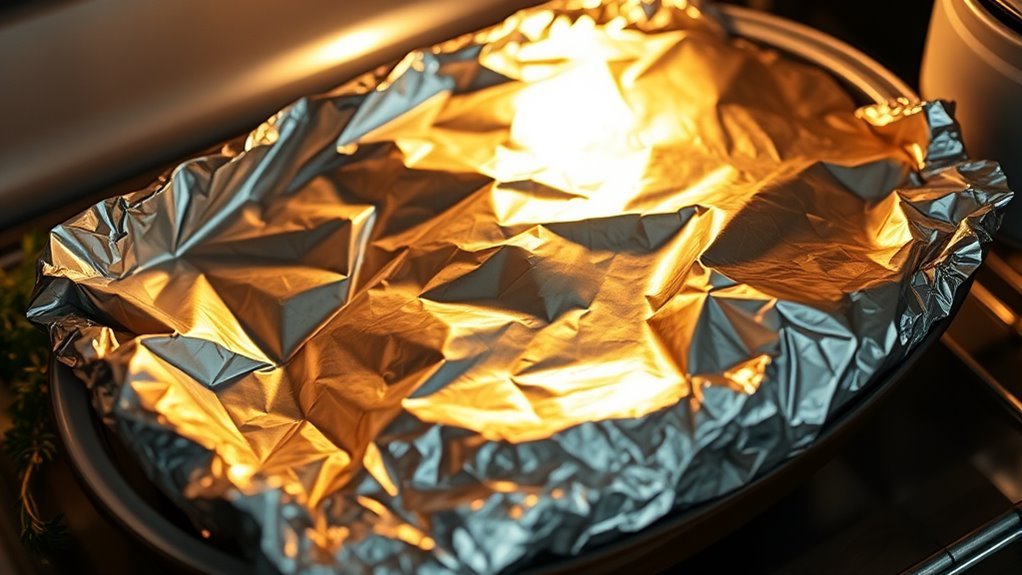
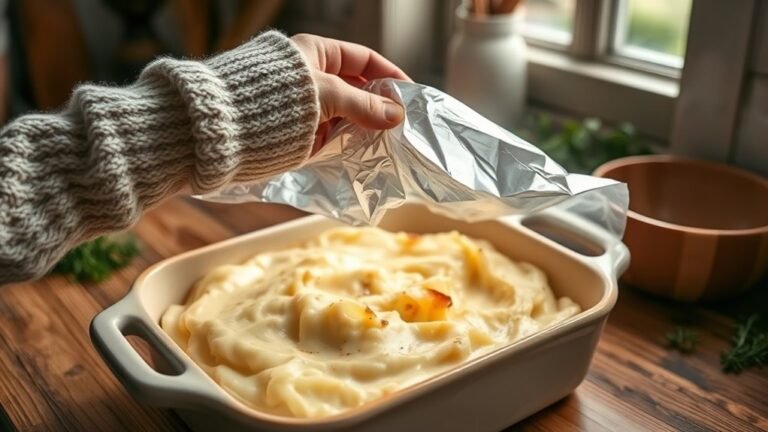
When reheating food, cover it with foil or an oven-safe lid to lock in moisture and prevent drying out. This simple step keeps your dish juicy and preserves its texture.
Just make sure the cover fits snugly to trap steam effectively. It’s a small trick that makes a big difference!
Use Foil or Lid
Although reheating food can often dry it out, covering it with foil or a lid traps steam and keeps moisture locked in. When you use foil to cover your dish, you create a tight seal that holds in steam, preserving the moisture and preventing your leftovers from becoming dry.
This cover also promotes even heating, ensuring every bite tastes just as good as when it was first cooked. For casseroles and baked dishes, foil reduces reheating time by distributing heat evenly while retaining moisture.
Just make sure the cover fits snugly to maintain that steam barrier. If you want a crispy top, remove the foil or lid during the last few minutes of reheating—this lets you enjoy both moist interiors and a deliciously crisp finish.
Prevent Drying Out
If you want to keep your leftovers juicy and flavorful, always cover them with foil or an oven-safe lid before reheating. Covering food traps steam, which markedly improves moisture retention and helps prevent drying out.
Using an oven-safe dish with a tight-fitting lid or wrapping your food in aluminum foil can retain up to 25% more moisture compared to uncovered reheating. For baked dishes, adding a splash of broth or water before sealing the cover further boosts moisture levels.
Wrapping food tightly reduces evaporation, preserving the original texture and taste. If you want a crispy finish, remove the cover during the last few minutes of reheating to let excess moisture escape. This method ensures your food stays moist inside while gaining a desirable outer crispness.
Add Liquid to Prevent Drying Out
To keep your food moist and flavorful during reheating, add a small amount of broth, water, or sauce before placing it in the oven. This liquid helps maintain moisture and prevents drying, especially with lean meats and baked dishes.
Once you’ve added the liquid, cover the dish tightly with foil or use an oven-safe lid. This traps steam inside, locking in moisture and ensuring your food stays tender.
For casseroles or baked meats, pouring liquid over the top before covering rehydrates the ingredients effectively. Wrapping food in foil or using a covered dish creates a moist environment that keeps your meal from drying out during reheating.
Arrange Food Evenly for Uniform Heating
When reheating leftovers, spreading your food in an even layer on an oven-safe dish helps heat reach every bite consistently. To arrange food for even heating, place larger or denser pieces toward the center and leave gaps between items for hot air circulation.
Use a shallow dish to speed up heating and prevent cold spots. Don’t forget to rotate food or rearrange it halfway through reheating for uniform warmth.
| Step | Action | Reason |
|---|---|---|
| 1 | Use shallow oven-safe dish | Promotes uniform heating |
| 2 | Spread food evenly | Ensures consistent heat distribution |
| 3 | Arrange larger pieces in the center | Heats dense parts thoroughly |
| 4 | Leave space between items | Allows hot air circulation |
| 5 | Rotate food midway | Prevents cold spots |
Use Foil to Trap Heat and Moisture
You’ll want to cover your food with foil to lock in moisture and heat, which helps prevent dryness. Foil traps steam and promotes even reheating, keeping dishes tender and flavorful.
Just make sure to tent the foil loosely so your food doesn’t end up soggy. It’s a simple trick, but it really makes a difference!
Benefits of Foil Covering
Although reheating food can sometimes dry it out, covering your dish with foil traps heat and moisture effectively. When you use foil during reheating, it acts as a barrier that reflects heat inward, promoting even heat distribution and reducing hot spots.
This covering helps retain moisture, preventing your food from becoming tough or dry. Foil keeps natural juices and flavors locked in, especially in casseroles, roasts, and baked meats.
It also minimizes the evaporation of sauces and gravies, ensuring they stay rich and moist. By using foil, you can reheat food longer at lower temperatures without worrying about overcooking.
This simple step not only preserves texture and taste but makes your reheated meals taste closer to freshly cooked.
How Foil Retains Moisture
Foil traps steam and moisture inside, creating a humid environment that keeps your food tender and juicy during reheating. When you use foil for covering your dishes, it acts as an effective steam trap, locking in moisture and preventing drying.
This moisture retention is vital, especially for casseroles, meats, and other dishes prone to drying out. Foil reflects heat back into the food, promoting even reheating and preserving texture and flavor.
Tips for Proper Wrapping
When reheating leftovers, wrapping them tightly in aluminum foil helps lock in heat and moisture, ensuring your food stays juicy and flavorful. To do this effectively, always use oven-safe foil and avoid coated or decorative varieties that might melt or release harmful chemicals.
When you wrap your food, make sure to seal it completely, leaving no gaps where heat can escape or moisture can dry out. A tight foil seal traps steam, preserving flavors and preventing your dishes from absorbing unwanted odors from other items in the oven.
If you want a crispy finish, unwrap the foil during the last few minutes of reheating. This allows the surface to crisp up while keeping the moisture inside. Proper foil wrapping is key to perfect oven reheating every time.
Monitor Internal Temperature for Safety
To keep your food safe, you need to reheat it until it reaches an internal temperature of at least 165°F (74°C). Using a food thermometer is crucial—insert it into the thickest part of your dish to ensure accurate readings. This step guarantees you reheat food thoroughly and maintain safety.
Remember, even heating is essential to avoid cold spots where bacteria can thrive.
When monitoring internal temperature, focus on these essentials:
- Check the thickest part of dense foods like casseroles or roasts
- Confirm the entire portion reaches 165°F to prevent foodborne illness
- Let the food rest briefly after heating to allow heat to distribute evenly
Adjust Reheating Time Based on Food Type
Although reheating times vary, you should always modify them based on the type and density of the food. Denser dishes like casseroles or lasagna typically need 15-20 minutes at 350°F, while lighter items such as bread or cookies require just 5-10 minutes.
Portion size also plays a role—larger servings or whole dishes may take 25-30 minutes to heat through. If your food is frozen or thicker, plan on increasing reheating time by 20-40% compared to fresh or smaller portions.
Always use a food thermometer to check that the internal temperature reaches at least 165°F, adding time as needed. Also, consider the food’s initial temperature; refrigerated leftovers heat faster than frozen ones at the same oven temperature.
Adjusting reheating time based on food type ensures even warming without drying out. It’s a simple step that makes a big difference in how your food tastes and feels.
Let Food Rest After Reheating
Since the oven’s heat can be uneven, you should always let your food rest for 2 to 5 minutes after reheating. This resting period promotes even heat distribution and temperature stabilization throughout your dish.
It also helps keep your food juicy and flavorful rather than dry by enhancing moisture retention.
Here’s why resting matters:
- It prevents hot spots, ensuring food safety by reducing uneven temperatures.
- It allows juices to settle, improving texture and taste.
- It stops moisture from escaping too quickly, preserving the dish’s quality.
Serve Immediately for Best Flavor and Texture
After letting your food rest to balance the heat, you’ll want to serve it immediately to lock in the best flavor and texture. Serving immediately ensures you enjoy the ideal flavor and maintain moisture that reheating in the oven preserves.
This quick action keeps the crispness intact and prevents the food from drying out. Even heat distribution during resting means every bite tastes consistent and delicious.
Plus, serving your food right after reheating supports food safety by minimizing the time bacteria can grow. Once your leftovers reach the safe internal temperature of 165°F (74°C), don’t delay—serve immediately to enjoy your meal at its freshest and safest.
Prompt serving guarantees that your reheated food is both tasty and safe to eat.
Conclusion
By following these steps, you’ll reheat your food evenly and keep it juicy, not dry or overcooked. It’s true—covering your dish and adding a splash of liquid really makes a difference in moisture retention.
Letting your food rest after reheating helps flavors settle, so you get the best taste and texture every time. With a little care, your leftovers can taste just as good as when they were fresh.
Reheating food perfectly in the oven is all about patience and the right technique. Using these tips ensures your meals stay delicious, moist, and evenly heated. So next time you’re warming up leftovers, remember these steps to keep that fresh-from-the-kitchen flavor alive.