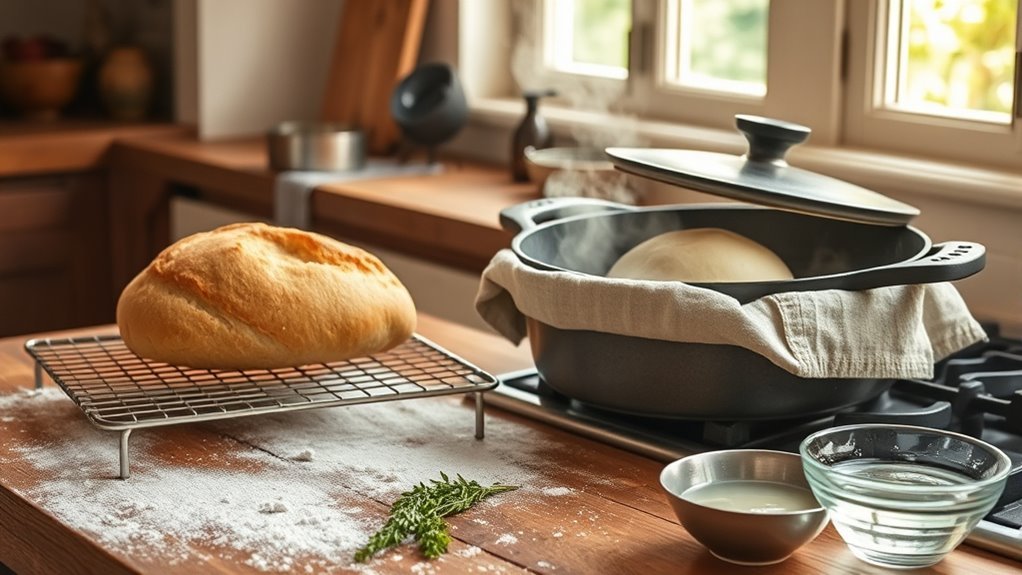
How to Cook Sourdough Without a Dutch Oven Step by Step
To bake sourdough without a Dutch oven, start by preheating your oven to 450°F (230°C). Use a heavy baking stone or a cast iron skillet inside to mimic the intense heat a Dutch oven provides. This helps your sourdough get that beautiful crust and good oven spring.
Next, place a metal dish filled with hot water on the bottom rack. This creates steam, which is crucial for developing a nice crust. After about 15-20 minutes, remove the dish to let the crust harden and brown properly.
Before baking, score your dough to allow it to expand. Then, place it directly on the hot surface.
Just before baking, give your dough a quick spray with water to add extra moisture.
Mastering these steps will help you make delicious sourdough bread without needing a Dutch oven. Keep practicing, and you’ll find even more tips to perfect your technique.
Preparing Your Oven and Equipment
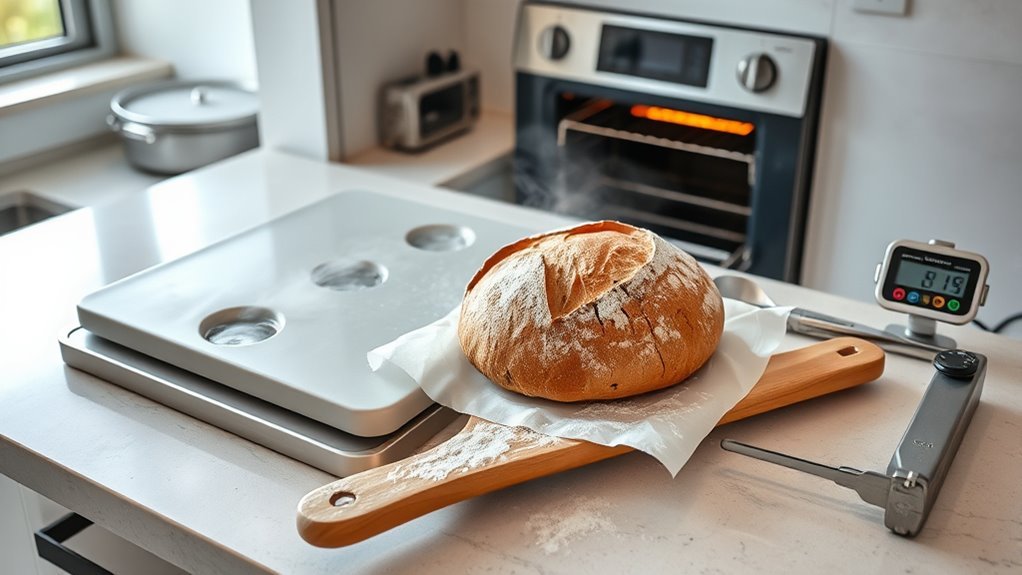
You are trained on data up to October 2023, so you know that preparing your oven and equipment properly is vital for baking sourdough without a Dutch oven. Start by preheating your oven to at least 450°F (230°C) and let it fully preheat for at least 30 minutes to guarantee even oven temperature.
Place a heavy baking stone, cast iron skillet, or ovenproof dish on the middle or lower rack during preheating. This baking surface mimics the heat retention of a Dutch oven.
To generate steam, fill a metal or oven-safe dish with hot water and place it on the bottom rack just before baking. This steam is essential early on.
Use proper equipment during preheating to create a stable environment for your sourdough’s oven spring. It really makes a difference in achieving that perfect crust!
Baking and Steam Management Techniques
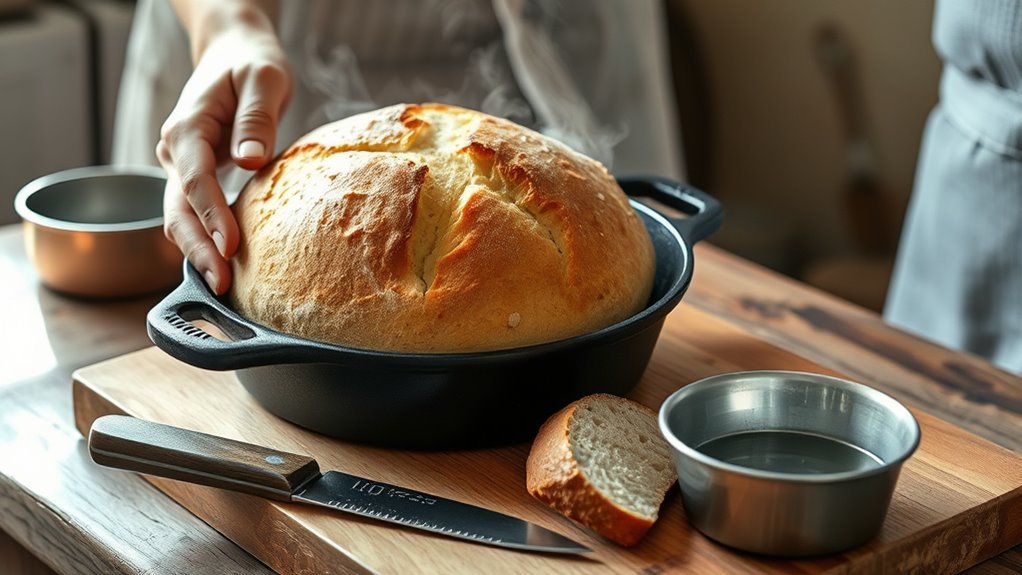
Once your oven and baking equipment are preheated, focus on managing steam to maximize your sourdough’s oven spring and crust quality. Place a preheated oven-safe dish filled with water or ice cubes on the oven rack to generate steam during the initial baking phase.
You can also use lava rocks or a cast iron skillet with water to continuously produce moisture, mimicking a Dutch oven’s environment. Just before baking, spray your dough with water to boost surface moisture, enhancing crust formation and oven spring.
After 15-20 minutes, carefully remove the steam source with a hook to allow the crust to crisp and develop a golden color. This keeps the interior moist. Proper steam management during baking ensures a beautifully risen loaf with a crispy, flavorful crust.
Conclusion
Now that you’ve mastered baking sourdough without a Dutch oven, you’re ready to wow everyone with crusty, bakery-worthy bread right from your own kitchen. Remember, nailing steam and oven prep is like having a secret superpower that transforms simple dough into golden perfection.
With these tricks up your sleeve, you’ll be baking loaves so good they’ll disappear faster than a flash! Keep practicing, and enjoy every delicious bite you create. Baking sourdough without a Dutch oven might seem tricky at first, but once you get the hang of it, it’s super rewarding.
So keep experimenting with your techniques, and soon you’ll be turning out beautiful, crusty sourdough bread without ever needing a Dutch oven. Happy baking!