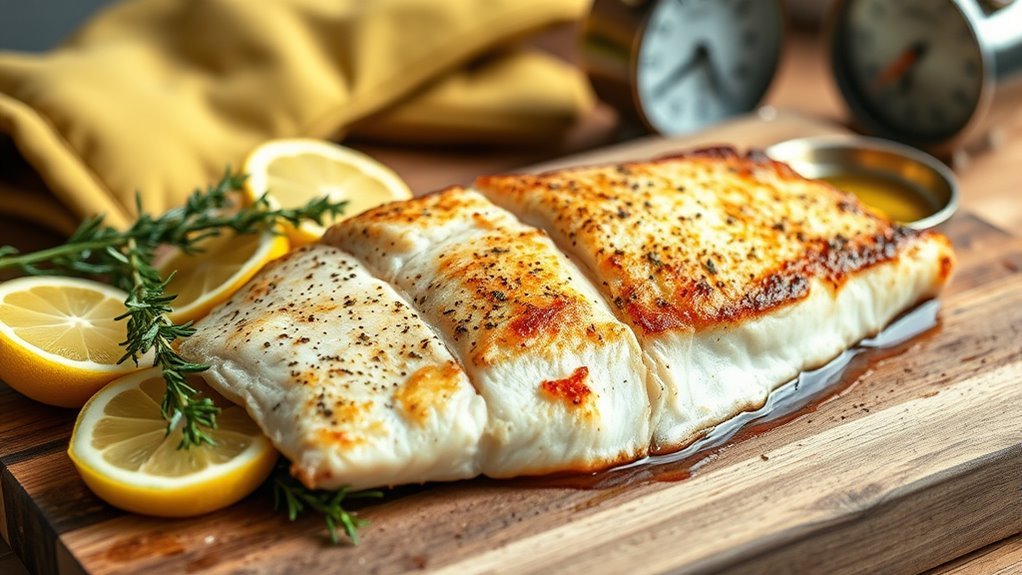
7 Easy Steps to Cook Mahi Mahi in the Oven
To cook mahi mahi in the oven, first gather fresh mahi mahi fillets and your favorite seasonings. Preheat your oven to 400°F and line a baking sheet with foil for easy cleanup.
Pat the fillets dry, then brush them with melted butter to lock in moisture. This step really helps keep the fish tender and juicy.
Next, mix your spice rub and coat the fish evenly for a burst of flavor.
Bake the mahi mahi for 10-13 minutes until the internal temperature reaches 135°F.
To finish, broil the fish for 1-2 minutes to caramelize the crust and add a delicious, slightly crispy texture.
Keep going to discover tips for achieving the perfect texture and flavor every time you cook mahi mahi in the oven. It’s easier than you think, and the results are always impressive!
Gather Your Ingredients and Tools
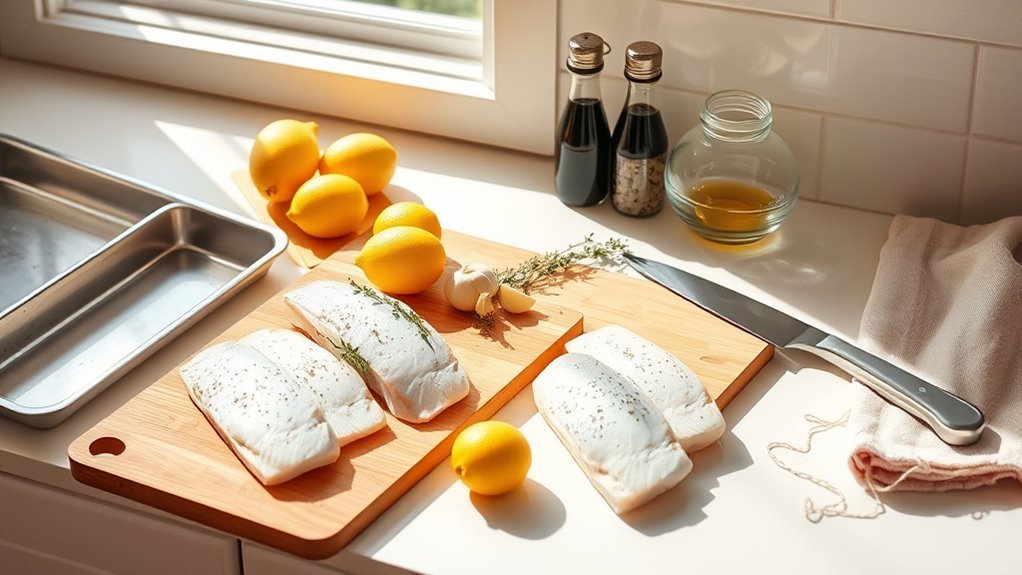
Before you begin cooking, make sure you have fresh or fully thawed mahi mahi fillets that are firm and dry. This guarantees even oven baking and better flavor absorption.
Start with fresh or fully thawed mahi mahi fillets for even cooking and optimal flavor absorption.
Next, gather your seasoning ingredients—smoked paprika, garlic powder, onion powder, salt, brown sugar, oregano, thyme, and pepper—to create a balanced spice mix. Brush each fillet with olive oil or melted butter to help the seasoning stick and keep the fish moist.
Prepare your baking sheet by lining it with aluminum foil for easy cleanup. Don’t forget to have a cooking spray on hand to prevent sticking.
Finally, keep a digital instant-read thermometer nearby to monitor the fillets’ internal temperature, ensuring they cook perfectly without drying out. Having these ingredients and tools ready sets you up for success.
Preheat the Oven and Prepare the Baking Sheet
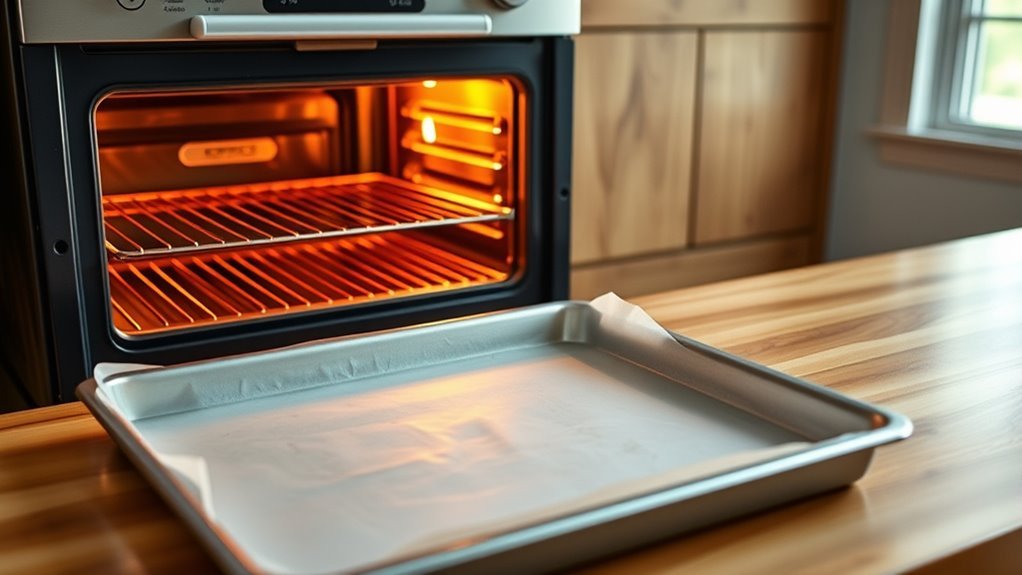
Start by preheating your oven to 400°F (200°C) for the perfect cooking temperature.
Line a baking sheet with foil and lightly spray it to keep your mahi mahi from sticking. Make sure the oven rack is in the middle to cook the fish evenly.
Oven Temperature Settings
To get the perfect mahi mahi fillets, you’ll want to preheat your oven to 400°F (200°C). This oven temperature is ideal for cooking the fish evenly and locking in moisture.
Before you start, position the oven rack in the middle to ensure even heat distribution. This helps prevent the fillets from overcooking or burning.
If you have an oven thermometer, use it to confirm the oven reaches and maintains this cooking temperature accurately. It’s a handy tool to keep things on point.
Remember, always preheat the oven fully before placing your baking sheet inside. This step guarantees the mahi mahi cooks at a consistent temperature, resulting in tender, flavorful fillets.
Proper oven temperature settings combined with correct rack placement make all the difference in your dish’s success. Trust me, these little tips really pay off!
Baking Sheet Preparation
Once your oven hits the ideal 400°F (200°C), focus on preparing your baking sheet correctly. Start by lining a rimmed baking sheet with aluminum foil to catch drips and make cleanup a breeze.
To prevent your mahi mahi from sticking, lightly brush or spray the foil with oil or cooking spray. If you want extra non-stick protection, place a wire rack or parchment paper on top of the foil.
Paper towels can help pat the fish dry before placing it on the sheet, ensuring better searing. Make sure the baking sheet is centered in the oven so heat distributes evenly.
Proper preparation of the baking sheet after you preheat the oven sets you up for perfectly cooked, tender mahi mahi every time.
Using Foil and Spray
Although preheating your oven to 400°F (200°C) is essential for even cooking, preparing your baking sheet with foil and a light spray of oil is equally important to prevent sticking and guarantee easy cleanup.
Start by lining your baking sheet with a piece of foil, which not only makes cleanup effortless but also helps distribute heat evenly around the mahi mahi.
Next, lightly spray the foil with cooking spray or brush it with oil to create a non-stick surface. This step ensures your fish won’t stick during baking, keeping the fillet tender and moist without extra oil.
Using foil and spray together simplifies your process, prevents sticking, and promotes even cooking, making your mahi mahi perfectly cooked every time.
Pat the Mahi Mahi Fillets Dry
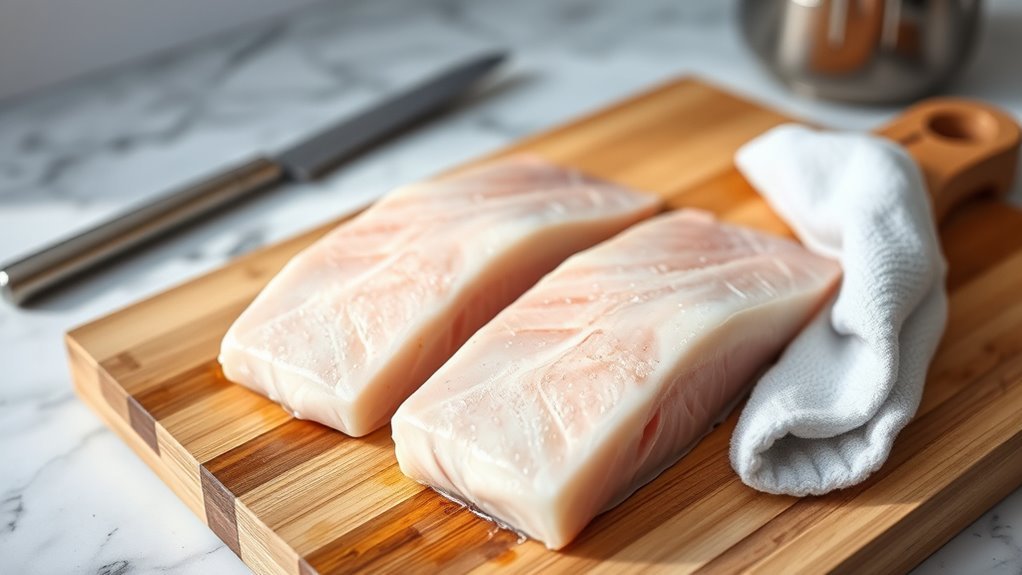
Before cooking, make sure to pat your mahi mahi fillets dry with paper towels. This simple step helps remove excess moisture, which is key to getting a crispy crust and even cooking.
Avoid rinsing the fish under water—just blot it gently to prepare for seasoning and baking. It really makes a difference!
Importance of Drying
If you want your mahi mahi to have a perfectly crisp exterior, you need to pat the fillets dry with paper towels before cooking. Removing surface moisture is vital because excess water causes steaming, which prevents the fish from searing and browning properly.
When you dry with paper towels, you ensure moisture removal that allows the fillets to develop that desirable crisp exterior. Properly dried fish also promotes even cooking, enhancing texture and flavor throughout the fillet.
Additionally, surface moisture can cause seasoning to slide off, reducing seasoning adherence and flavor impact. By taking this simple step, you set the foundation for a beautifully cooked mahi mahi with a satisfying crunch and well-balanced taste.
Don’t skip drying—it’s indispensable for the best results in the oven.
Techniques for Patting
When you pat your mahi mahi fillets dry, use gentle pressure with paper towels to soak up every bit of surface moisture. This drying technique is essential for moisture removal, ensuring the fish fillets develop a crisp exterior when cooked.
Proper patting prevents steaming, enhances butter and seasoning adhesion, and avoids messy splatters. Use fresh paper towels and press lightly but thoroughly.
| Step | Purpose |
|---|---|
| Lay fillet flat | Stabilizes fish for patting |
| Use clean paper towel | Absorbs moisture effectively |
| Press gently | Avoids tearing delicate flesh |
| Change towels | Ensures thorough drying |
| Check dryness | Ready for seasoning and cooking |
Mastering this patting technique guarantees a flaky texture with a perfectly caramelized crust. It’s a simple step, but trust me—it makes all the difference!
Brush Fillets With Melted Butter
Since brushing mahi mahi fillets with melted butter helps spices stick and locks in moisture, you’ll want to coat each fillet evenly with about half a tablespoon. This step guarantees your seafood stays juicy and flavorful during baking.
Here’s how to do it right:
- Melt the butter until fully liquid but not hot.
- Use a brush to evenly spread the melted butter over all sides of each fillet.
- Make sure every inch is coated to create a moist base for seasoning and promote a golden-brown crust.
It’s a simple trick, but it really makes a difference in how your fish turns out. Give it a try!
Mix and Apply the Spice Rub
Although you’ve already brushed your mahi mahi with melted butter, the next key step is mixing and applying the spice rub to infuse your fillets with bold, balanced flavors. Start by combining smoked paprika, garlic powder, salt, onion powder, brown sugar, oregano, thyme, and black pepper in a small bowl.
Mix this spice mixture thoroughly to guarantee an even seasoning throughout. Before applying, pat the dry fish fillets with paper towels to help the spice rub stick better and promote crispiness.
Then, generously sprinkle your spice rub over the mahi mahi fillets, pressing lightly to secure the seasoning. This careful baking preparation assures each fish fillet is perfectly coated, setting the stage for a flavorful and delicious meal.
Bake the Mahi Mahi Fillets
After coating your mahi mahi fillets with the spice rub, it’s time to prepare them for baking. Preheat your oven to 400°F and line a baking sheet with foil, lightly spraying it to prevent sticking.
Coat your mahi mahi with spices, preheat oven to 400°F, and prepare a foil-lined baking sheet.
Then, follow these steps for perfectly baked mahi: Pat the fish fillets dry with paper towels to ensure a crisp exterior. Place the fillets on the foil-lined sheet and brush them with melted butter or olive oil to lock in moisture and help the seasoning adhere.
Bake in the preheated oven for 10-13 minutes, until the internal temperature reaches 135°F.
This oven cooking method guarantees flavorful baked mahi with a tender inside and a seasoned crust that highlights this simple recipe. Easy and delicious!
Broil for a Perfectly Caramelized Finish
To achieve a golden, caramelized crust on your mahi mahi, broil the fillets for 1-2 minutes on high heat right after baking. Before broiling, make sure the fish reaches an internal temperature of 145°F to avoid overcooking.
Pat the fillets dry to promote browning and prevent steaming under the intense heat of the oven’s broiler. Place the mahi mahi close to the heating element and watch it carefully, as the caramelized crust forms quickly.
This quick broil step enhances flavor and texture, giving your mahi mahi a beautifully browned exterior without sacrificing moisture. By finishing your mahi mahi this way, you’ll enjoy a perfect balance of tender interior and crisp, flavorful crust every time.
Conclusion
Now that you’ve mastered these 7 easy steps, you’re all set to enjoy perfectly cooked mahi mahi right from your oven.
Did you know mahi mahi can grow up to 6 feet long and swim at speeds up to 50 mph? Cooking this speedy fish slowly in your oven brings out its delicate flavor beautifully.
Keep practicing, and soon you’ll impress everyone with your flavorful, flaky mahi mahi dishes. Oven cooking mahi mahi is a simple way to get moist, tender results every time.
So go ahead, try these easy steps again and enjoy a delicious, healthy meal that’s sure to become a favorite!