How Long to Reheat Ribs in Oven at 350 in 7 Easy Steps
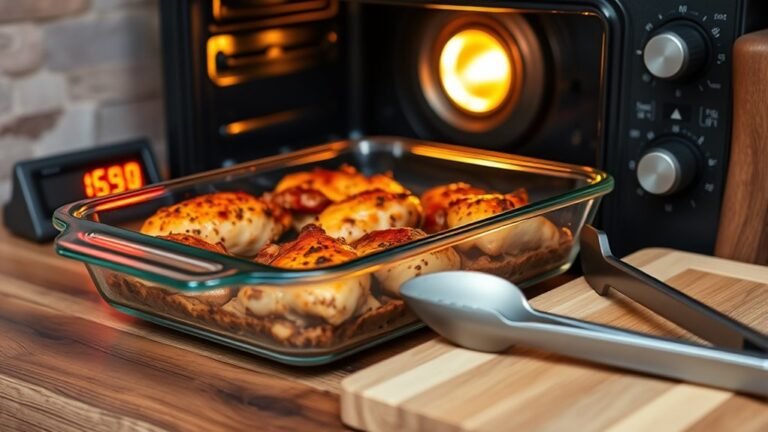
To reheat ribs at 350°F, start by letting them come to room temperature for about 20 minutes. This step helps the ribs warm evenly without drying out.
Next, wrap the ribs tightly in foil. Add a splash of broth or apple juice to keep them juicy during reheating. Place the wrapped ribs on a baking sheet.
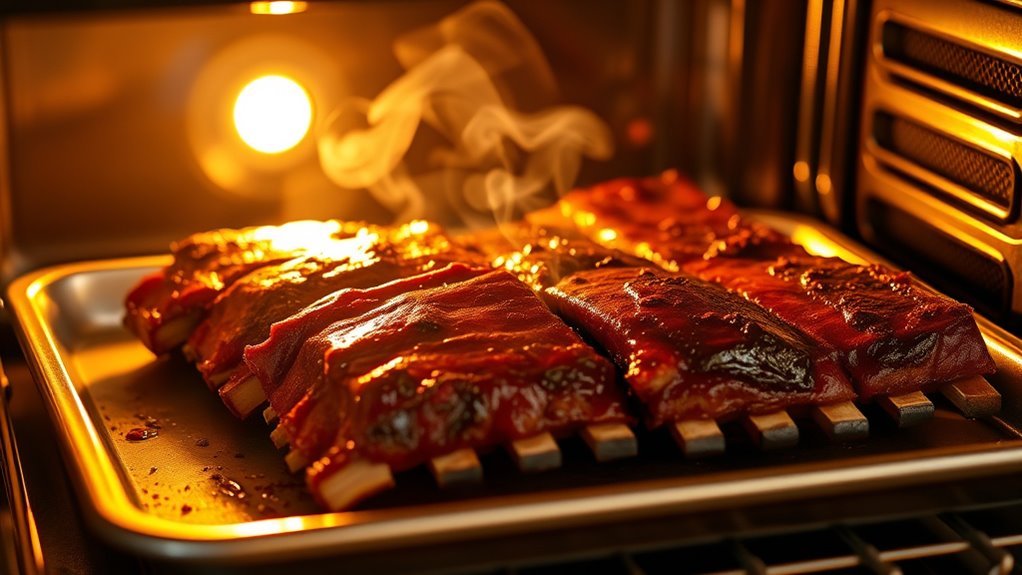
Heat them in the preheated oven for 30 to 40 minutes, depending on the size of your ribs. You want to make sure they get heated through but don’t overcook.
Use a meat thermometer to check—they should reach an internal temperature of 165°F. After reheating, let the ribs rest briefly before serving.
Keep going to master every step perfectly and enjoy juicy, tender ribs every time!
Prepare the Ribs for Reheating
Before you reheat your ribs, take them out of the refrigerator and let them rest at room temperature for about 20 minutes. This little step helps the ribs warm up more evenly once they’re in the oven.
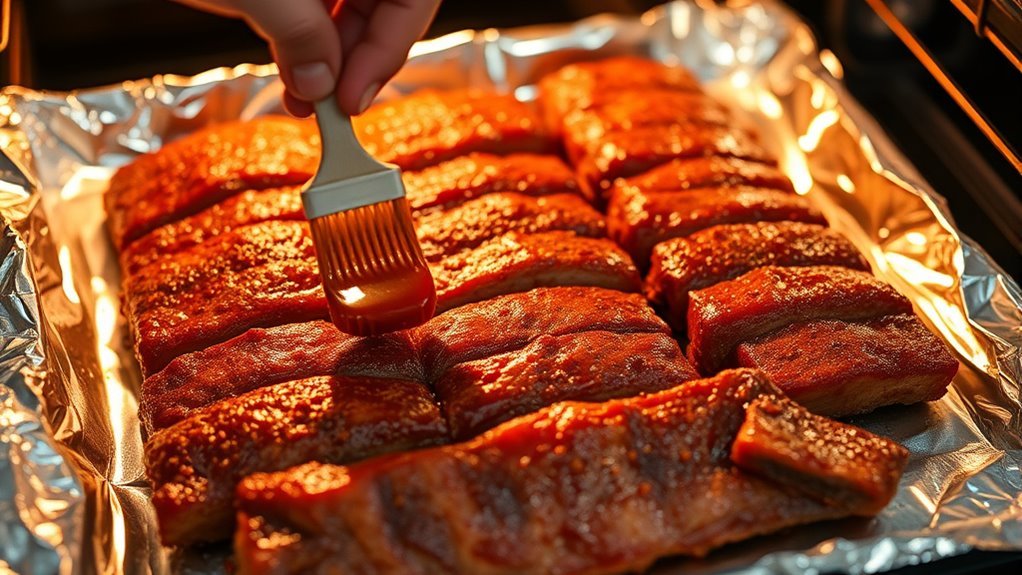
Next, wrap the ribs tightly in foil so they’re completely covered. Wrapping them up like this traps moisture and keeps the meat from drying out while reheating.
Wrap ribs tightly in foil to lock in moisture and prevent drying during reheating.
If you want them extra juicy, try adding a tablespoon of water, broth, or apple juice inside the foil before sealing it up. Once they’re wrapped, place the ribs on an oven-safe dish or baking sheet.
This way, your ribs stay moist and full of flavor when reheated. Oh, and don’t forget to preheat your oven to the right temperature before putting the ribs in – it makes all the difference!
Preheat Your Oven to 350°F
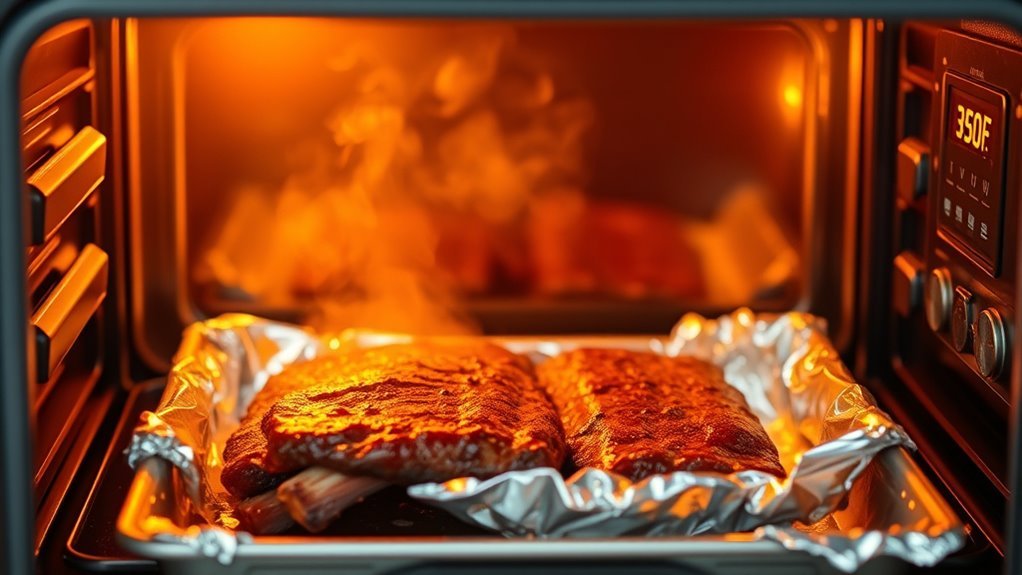
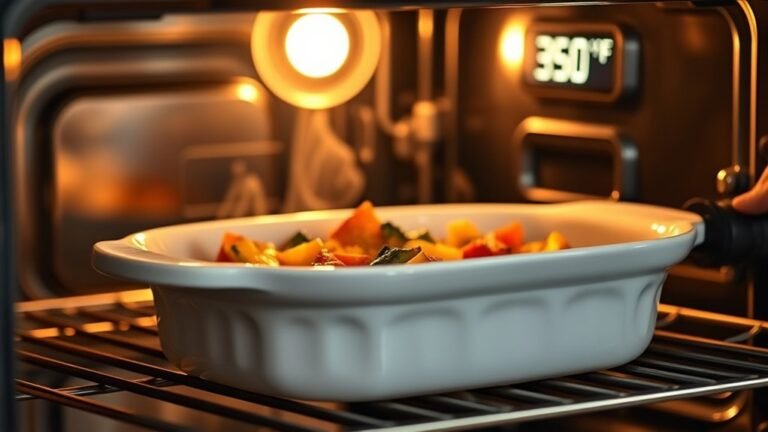
Since even heat is essential for reheating ribs properly, you’ll want to preheat your oven to 350°F. This temperature guarantees the ribs warm evenly without drying out or overcooking.
Before placing your ribs inside, wait for the oven to fully reach 350°F to maintain consistent heat during reheating. If your oven dial isn’t precise, use an oven thermometer to verify the temperature accurately.
Preheating at 350°F not only promotes even heat distribution but also helps preserve the ribs’ moisture and tenderness. Avoid putting the ribs in too early, as this can cause uneven warming and affect the texture.
Taking these steps ensures your ribs reheat perfectly every time. It’s worth the little extra wait to get that perfect, juicy bite!
Wrap the Ribs to Retain Moisture
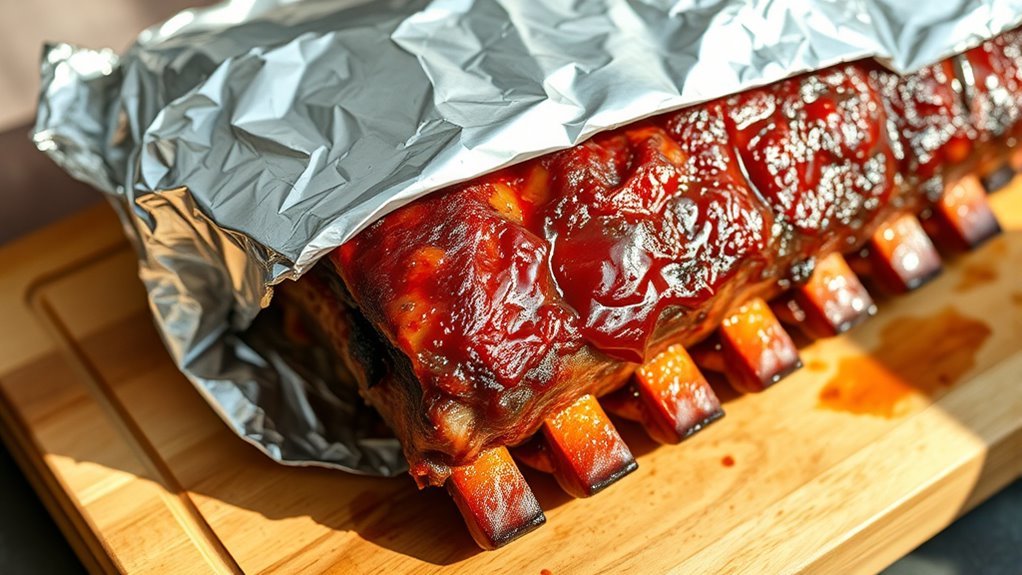
When you wrap the ribs tightly in foil or parchment paper, you lock in moisture that keeps the meat tender and juicy throughout reheating. This sealed environment prevents drying and ensures even reheating in your oven.
To get the best results when you reheat ribs, focus on wrapping them properly. Use aluminum foil to tightly wrap the ribs and seal in moisture.
Add a splash of apple juice or broth inside the foil to boost juiciness. Make sure the wrap is snug to prevent steam from escaping.
Avoid opening the foil during reheating to maintain a tender texture. That way, your ribs stay delicious and moist every time.
Place the Ribs on a Baking Sheet
To guarantee your ribs heat evenly and stay juicy, arrange them in a single layer on a rimmed baking sheet. This setup guarantees even heat distribution and catches any drips during reheating.
Before placing the ribs, line the baking sheet with aluminum foil or parchment paper to prevent sticking and simplify cleanup. Position the ribs with the meaty side up to aid moisture preservation and maintain the bark’s texture.
Make sure to leave space between ribs; this gap promotes proper heat circulation, allowing each rib to warm thoroughly without steaming. Avoid overcrowding the sheet, as it can cause uneven heating and soggy spots.
Reheat the Ribs for the Right Duration
Although reheating ribs may seem simple, getting the timing right guarantees they stay juicy and flavorful. To reheat the ribs properly in an oven at 350°F, you need to balance time and moisture.
Follow these steps to evenly heat and achieve moist ribs:
- Cover with foil tightly to trap steam and prevent drying out.
- For small portions, reheat about 20-25 minutes; larger or bone-in ribs need 30-40 minutes.
- Add a splash of broth or apple juice before covering to keep ribs moist.
- Uncover during the last 5 minutes to caramelize sauce or bark if desired.
Make sure the ribs are fully heated by checking the internal temperature, but avoid overcooking to keep them tender.
Check Internal Temperature for Safety
Since reheating ribs involves both safety and quality, you’ll want to check their internal temperature to guarantee they reach at least 165°F. Using a reliable meat thermometer, insert it into the thickest part of the ribs to verify temperature accurately.
This step ensures cooking safety, preventing undercooking and preserving optimal texture. Monitoring the internal temperature during reheating helps you reheat ribs to the safe threshold recommended for food safety.
| Step | Action | Purpose |
|---|---|---|
| 1 | Insert meat thermometer | Measure internal temperature |
| 2 | Check reading at thickest part | Verify temperature is ≥165°F |
| 3 | Continue reheating if needed | Reach safe threshold |
| 4 | Remove from oven | Avoid overcooking |
| 5 | Let ribs rest briefly | Stabilize temperature |
Let the Ribs Rest Before Serving
After reheating your ribs, let them rest for at least 5 minutes to allow the juices to redistribute evenly. This step prevents the meat from drying out when you cut or serve it.
For best results, loosely tent the ribs with foil during this resting period to keep them warm and tender. It’ll help make sure every bite is juicy and delicious.
Importance of Resting
When you remove ribs from the oven, letting them rest for at least 5 minutes allows the juices to redistribute evenly throughout the meat. Resting is essential to maintain the ribs’ moisture and tenderness while improving their texture.
Covering the ribs loosely with foil during this time helps trap heat and moisture, preventing the meat from drying out. Without rest, the juices escape quickly when you cut into the ribs, leaving them dry and tough.
Here’s why resting matters:
- Resting preserves moisture, keeping the ribs juicy.
- Covering with foil retains heat and enhances texture.
- Juices redistribute for balanced flavor in every bite.
- Tenderness improves as the meat relaxes during rest.
Give your ribs the proper rest—they’ll taste better and be easier to carve. You’ll notice the difference for sure!
Optimal Resting Time
Although it’s tempting to dig in right away, you’ll want to let your reheated ribs rest for at least 5 minutes before serving. This essential resting time allows the juices to redistribute evenly throughout the meat, ensuring better moisture retention and tenderness.
After you reheat ribs in the oven at 350°F, remove them and cover loosely with foil during this rest period to keep heat in without causing sogginess. Skipping this step, especially after reheating at higher oven temperatures, risks drying out the meat and losing flavor.
Conclusion
Now that you know how to reheat ribs at 350°F, you’re all set to bring that smoky, tender goodness back to life without drying them out. Just follow these simple steps, and your ribs will be as juicy as a secret waiting to be told.
Remember, patience is your best friend here—let them rest before digging in. Enjoy every flavorful bite like it’s the grand encore of a delicious show.
Reheating ribs in the oven at 350°F ensures they stay tender and moist. By wrapping them in foil and heating slowly, you keep that smoky flavor intact. So next time you want to reheat ribs, stick to these easy steps for juicy, mouthwatering results every time.