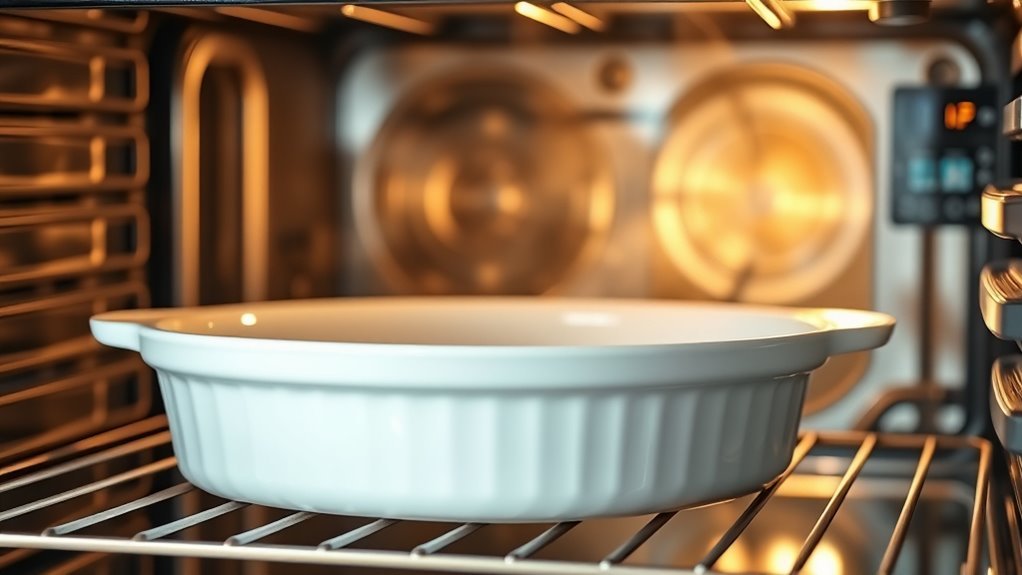
How You Can Put Porcelain in the Oven Safely
To safely put porcelain in the oven, first check for an oven-safe label or manufacturer’s guidelines. Not all porcelain is made to withstand oven heat, so this step is crucial.
Avoid porcelain with metallic trims or decorations, as these can cause sparks or damage.
Use thick, well-glazed pieces designed for heat, and heat them gradually to prevent cracking from thermal shock.
Always follow recommended temperature limits and handle with oven mitts to avoid injury.
Want to guarantee your porcelain stays intact and safe during oven use? You’ll find helpful tips ahead to make sure your beautiful dishes handle the heat without a hitch.
Ensuring Porcelain Plates Are Oven-Safe Before Use
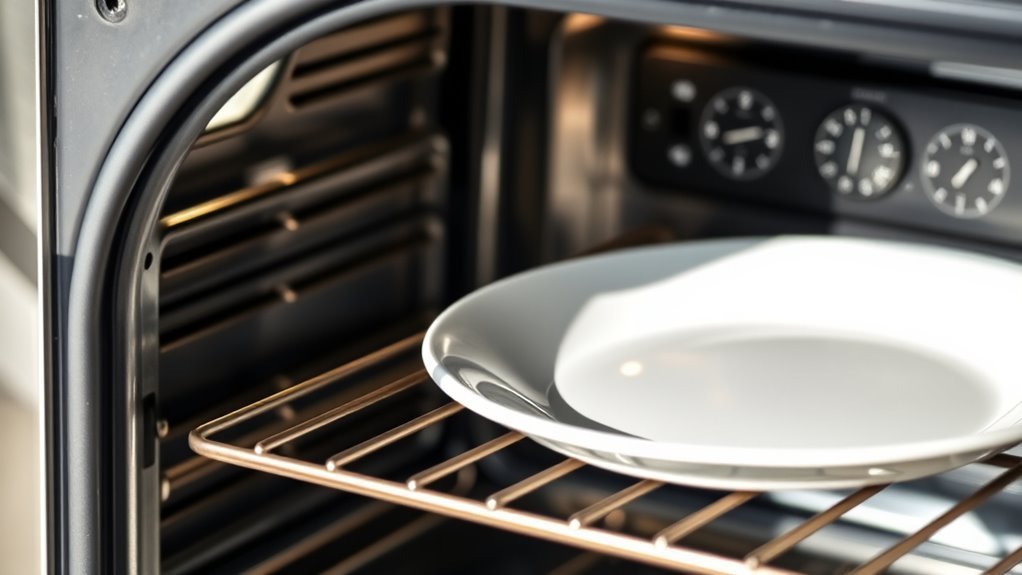
Before you put porcelain plates in the oven, make sure they’re labeled as oven-safe. Check the bottom or packaging for clear markings indicating the plate’s ability to withstand oven heat and specific temperature ranges.
Always verify porcelain plates are oven-safe by checking for clear markings or labels before use.
If markings are absent, consult the manufacturer or product specifications for testing results on thermal shock resistance. Avoid porcelain with metallic trims or decorations, as these can cause sparking or damage.
Opt for thick, well-glazed porcelain, since glazing helps protect the plate and ensures safety under oven conditions. Using unmarked or decorative porcelain without verified oven-safe status risks cracking or hazardous outcomes.
Prioritizing these checks guarantees your porcelain plate handles oven heat safely and maintains durability during cooking or reheating. It’s always better to be safe than sorry when it comes to oven use!
Best Practices for Heating and Handling Porcelain in the Oven
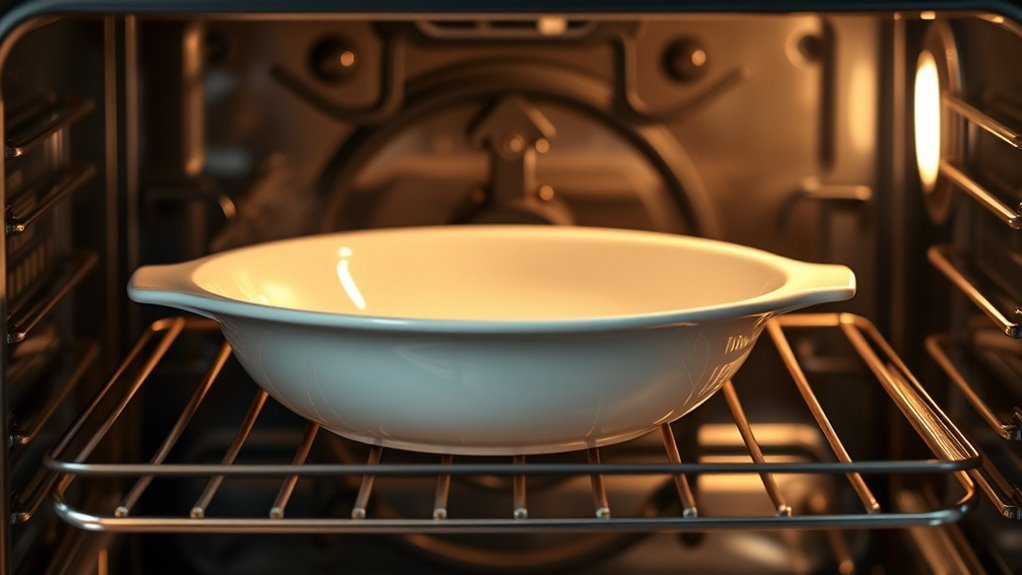
When you heat porcelain in the oven, always confirm it’s marked as oven-safe and follow the manufacturer’s temperature guidelines to prevent damage. Gradually preheat the oven to avoid thermal shock, which can cause cracking.
Also, avoid placing porcelain with metallic trims inside, as these can spark or discolor. Make sure your piece has consistent wall thickness; thin or fragile porcelain increases the risk of shattering under heat.
Always use heat-resistant gloves or oven mitts to handle hot porcelain safely. After heating, allow the porcelain to cool slowly inside the oven or on a heat-safe surface to prevent sudden temperature changes that lead to cracks.
Conclusion
Before you let your porcelain dance with the oven’s heat, make sure it’s truly ready for the stage. Treat it like a delicate partner—check for oven-safe labels and avoid sudden temperature shocks.
When you handle it with care, your porcelain will shine like a star in every meal you create. So go ahead, bake with confidence, and let your dishes tell a story of warmth and elegance, safely and beautifully.
Remember, putting porcelain in the oven safely means understanding its limits. Always verify that your porcelain is oven-safe and avoid drastic temperature changes to prevent cracks. With these simple steps, you can enjoy the beauty and practicality of porcelain cookware. Bake your favorite recipes with peace of mind, knowing your porcelain will hold up and enhance your culinary creations.