How Do Calphalon Pans Go in the Oven Safely?
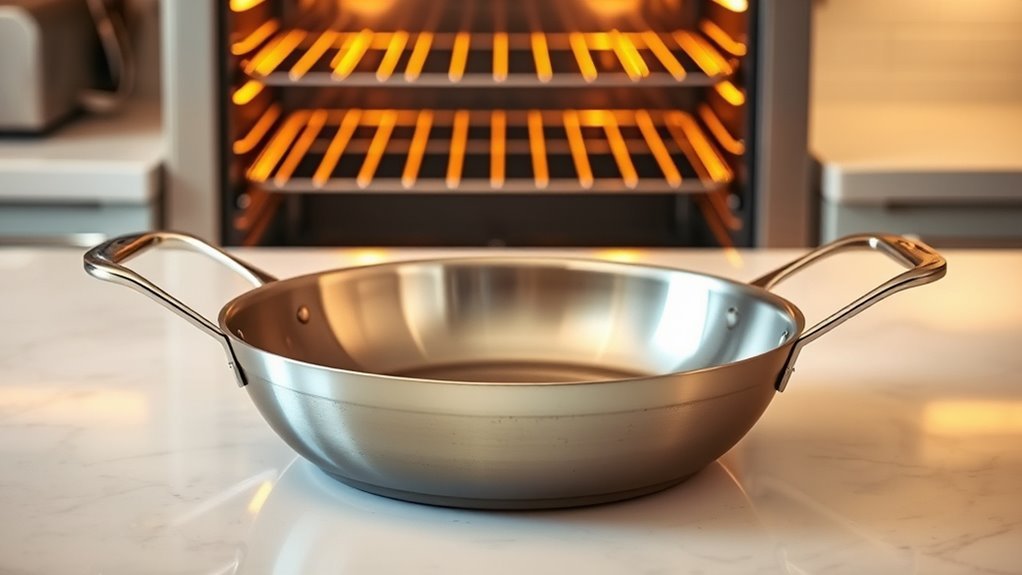
You can safely use Calphalon pans in your oven by first checking the manufacturer’s temperature guidelines. Most Calphalon pans handle up to 400°F, but some models can go up to 450°F or even 500°F. It’s important to know your specific pan’s limits before heating it.
Also, make sure the lids and handles are rated for oven use. Plastic or silicone parts may not be oven-safe and could melt or get damaged.
Using an oven thermometer is a smart way to ensure you don’t exceed the recommended temperature.
By following these tips, you’ll protect your cookware and enjoy the best baking results. It’s all about knowing your pan and keeping an eye on the heat!
Understanding Oven Safety Ratings for Calphalon Cookware
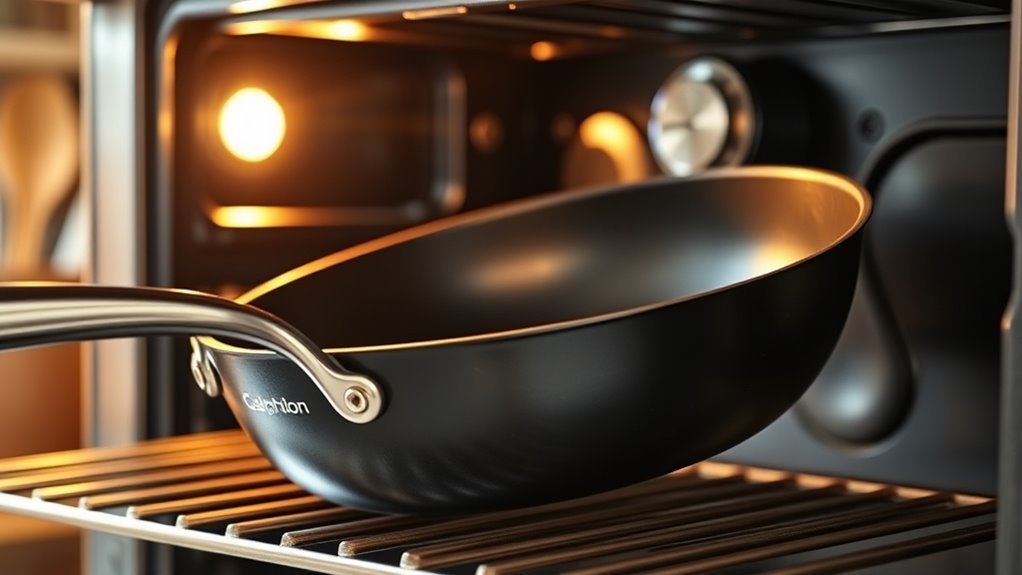
Although Calphalon cookware is known for its durability, you should always check the oven safety ratings before using your pans in the oven. Each Cookware Set has specific temperature limits, often oven safe up to 400°F. But some models can handle 450°F or even 500°F.
Before placing your pan inside, verify the manufacturer’s guidelines and product labels to avoid damage. Glass lids typically withstand up to 400°F, but you should confirm this for your specific set.
Keep in mind, the oven temperature you set might not be exact—using an oven thermometer helps ensure accuracy. Overheating beyond the rated temperature can harm non-oven-safe parts like handles or lids, which affects food release and cookware longevity.
Best Practices for Using Calphalon Pans and Lids in the Oven
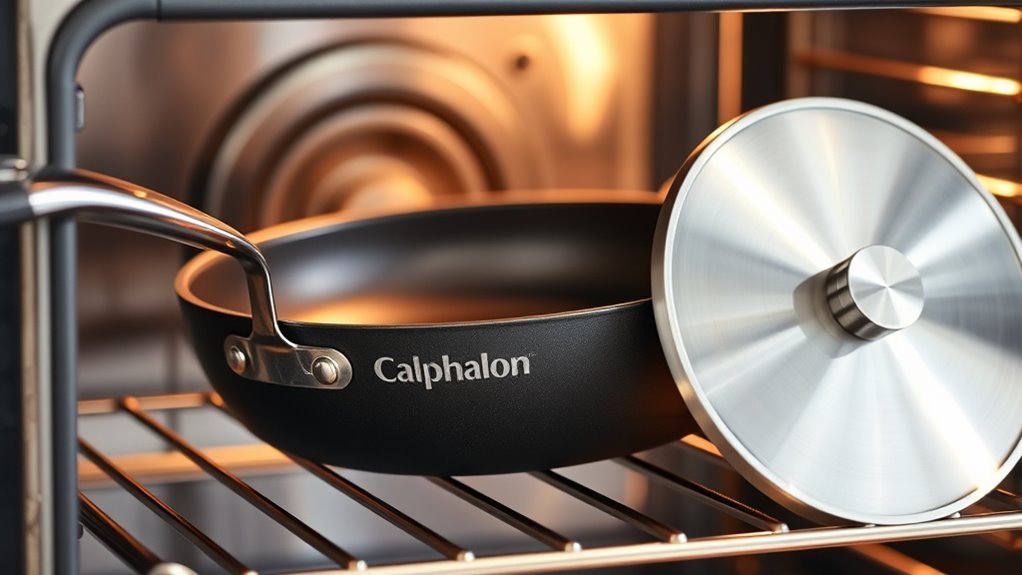
When you use Calphalon pans and lids in the oven, always verify they’re made from oven-safe materials like hard-anodized aluminum or stainless steel and check their maximum temperature ratings. Follow the manufacturer guidelines closely to ensure proper oven safety.
Ensure Calphalon pans and lids are oven-safe materials and follow manufacturer temperature guidelines for safe use.
If your pan has a glass lid, confirm its oven temperature rating—many handle up to 400°F, while some tolerate 450°F or 500°F. Avoid using pans with plastic or silicone handles unless the manufacturer explicitly states they’re oven-safe.
Since oven displays can be inaccurate, use an oven thermometer to measure the actual oven temperature and prevent damage. When unsure, consult the user manual or contact Calphalon customer service to confirm if your cookware and lids are suitable for your intended oven use.
This approach guarantees safe, effective baking with your Calphalon pans.
Conclusion
So, you want to toss your Calphalon pan in the oven without a second thought? Just remember: not all parts are created equal. While the pan might bravely handle the heat, those lids and handles could stage a meltdown.
It’s almost like your cookware is testing your attention to detail—because nothing says “kitchen adventure” like a surprise oven mishap. Play it safe, follow the ratings, and keep your cooking drama-free.
When using Calphalon pans in the oven, always check the manufacturer’s guidelines for maximum temperature limits. Many Calphalon pans are oven-safe up to 450°F, but handles or lids might have lower thresholds or be entirely unsafe for oven use. Removing plastic or wooden handles before placing the pan in the oven is a smart move.
By knowing how Calphalon pans go in the oven safely, you ensure your cookware lasts longer and your meals come out perfect every time. Keep safety in mind, and your Calphalon pans will be your trusty kitchen companions for years to come.