How Long to Roast Chestnuts in Oven in 5 Easy Steps
To roast chestnuts in the oven perfectly, start by picking firm, shiny chestnuts without any cracks. This ensures you get the best flavor and texture.
Next, rinse the chestnuts and score an X on the rounded side of each one. This step is important because it helps the chestnuts cook evenly and makes peeling easier later on. After scoring, soak them in cold water for at least an hour to further ease peeling.
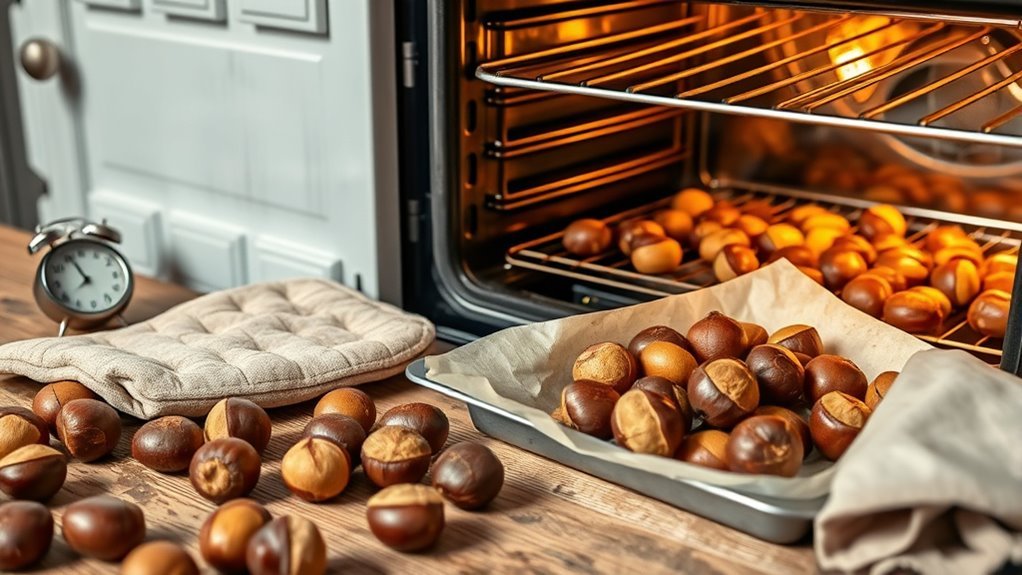
Now, preheat your oven to 425°F. Place the chestnuts on a baking sheet and roast them for 25-30 minutes. Keep an eye on them after 20 minutes so they don’t burn.
Once roasted, steam the chestnuts briefly to loosen the skins. This makes peeling a breeze.
Follow these simple steps, and you’ll master roasting chestnuts perfectly every time!
Selecting the Right Chestnuts for Roasting
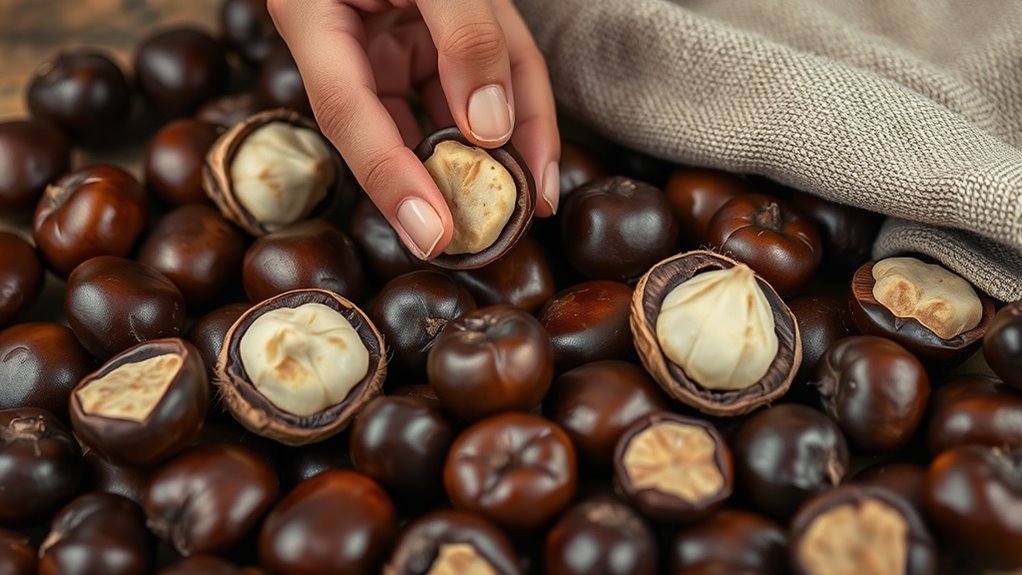
When selecting chestnuts for roasting, you’ll want to choose ones that are firm, plump, and shiny without any blemishes or mold. Look for fresh chestnuts with a deep brown color and a glossy exterior, which signals quality and freshness.
Choose firm, plump chestnuts with a deep brown, glossy exterior for the best roasting results.
Avoid chestnuts with soft spots or cracks, as these indicate spoilage. Gently squeeze each chestnut; if it feels firm and solid, it’s a good candidate for roasting.
Remember to pick only true edible chestnuts from trustworthy sources—never horse chestnuts, which are toxic. By choosing chestnuts free from blemishes and damage, you ensure the best roasting results.
Proper selection is the first step to enjoying perfectly roasted chestnuts with rich flavor and texture. So, take your time and pick the best ones for a delicious treat!
Preparing Chestnuts Before Roasting
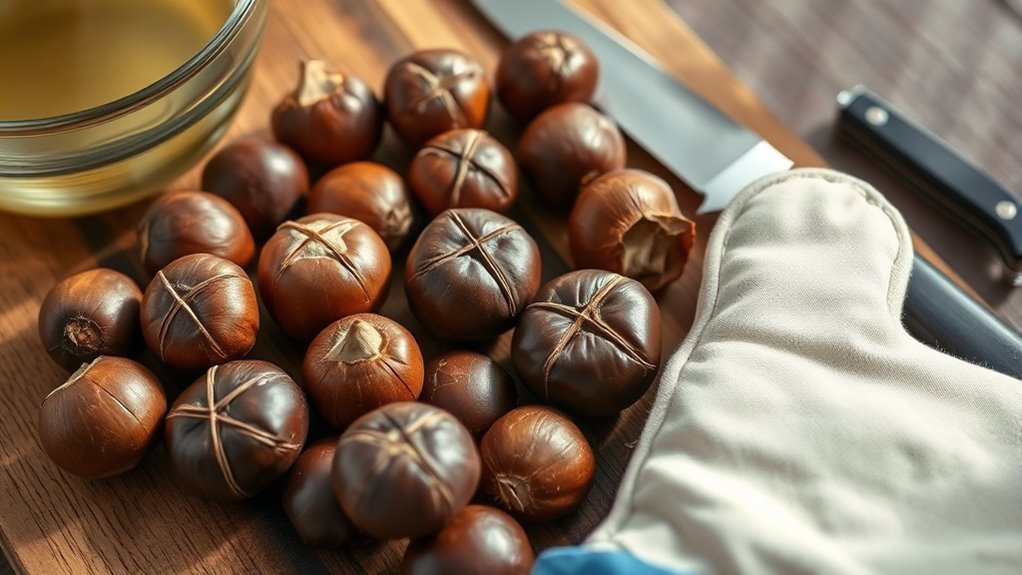
You should rinse your chestnuts thoroughly under cold water to remove any dirt or debris. Next, take a sharp serrated knife and score an X on the rounded side of each chestnut. Make shallow cuts through the outer shell and inner skin to avoid damaging the flesh.
After scoring, soak the chestnuts in cold water for at least one hour; this helps loosen the shell and inner skin, making peeling easier. Once soaked, pat them dry carefully before roasting.
Proper preparation guarantees even cooking and safe roasting without exploding shells.
| Step | Action | Purpose |
|---|---|---|
| 1 | Rinse chestnuts | Remove dirt and debris |
| 2 | Score an X | Allow steam release |
| 3 | Soak in cold water | Loosen outer shell and skin |
| 4 | Pat dry | Prevent sogginess |
| 5 | Ready for roasting | Ensure safe, easy peeling |
Roasting Chestnuts: Timing and Temperature
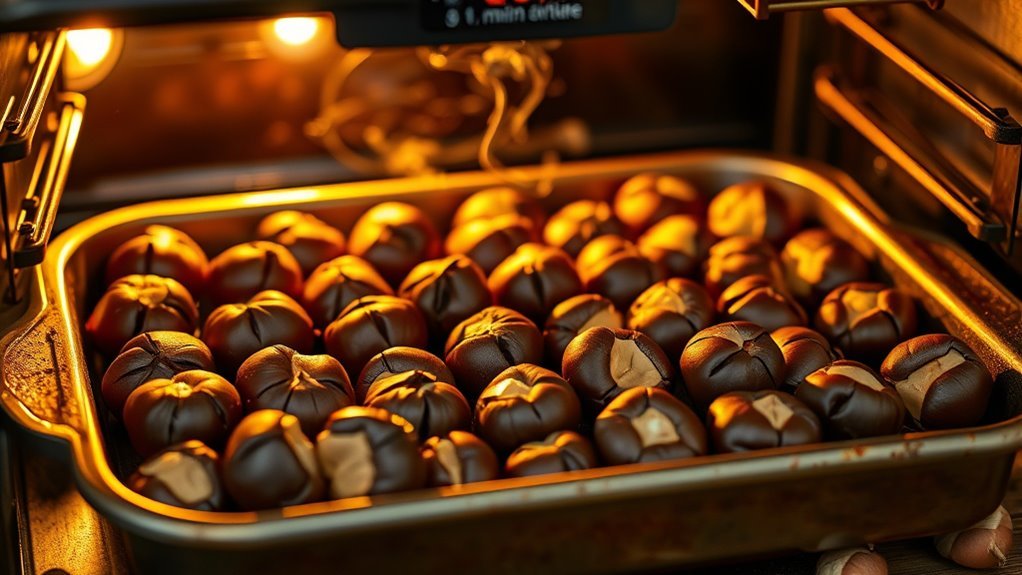
Although roasting chestnuts requires patience, maintaining the right temperature and timing guarantees a tender, flavorful result. Set your oven temperature to 425°F (218°C) and roast the chestnuts for about 25-30 minutes.
Begin monitoring around the 20-minute mark to avoid over-roasting, as roasting time can vary depending on chestnut size and oven performance. You’ll know the roasting duration is perfect when the shells open and you hear gentle cracking sounds.
At this point, the tender flesh inside should feel soft when tested with a fork. Removing chestnuts promptly at this stage ensures perfect results, preventing dryness and hardness.
Keep a close eye during roasting to achieve chestnuts with shells open and deliciously tender flesh every time.
Peeling Roasted Chestnuts With Ease
Since chestnuts are much easier to peel while still warm, immediately placing them in a cloth or paper bag after roasting helps steam and loosen their tough outer shells and inner skins. Let the roasted chestnuts steam for 10-15 minutes to soften the skins, making peeling easier.
When you start peeling, gently squeeze or crack each chestnut to peel away the shell and fuzzy inner skin without damaging the nut inside. If you find some stubborn inner skin that won’t come off by hand, use a small, sharp knife to carefully remove it.
Remember to discard any chestnuts with moldy or broken shells during peeling to ensure you enjoy only the best. By steaming and peeling while warm, you’ll find that roasted chestnuts peel easily every time.
Storing and Serving Roasted Chestnuts
Once you’ve peeled your roasted chestnuts while they’re still warm, the next step is storing and serving them properly to keep their flavor and texture intact. For short-term storage, place the cooled, dry chestnuts in an airtight container and store them in the refrigerator for up to four days. This prevents spoilage while maintaining freshness.
If you want long-term storage, peel the chestnuts completely and freeze them in a sealed bag. They can last up to a year without losing quality. When you’re ready to enjoy them, simply reheat the chestnuts briefly in the oven or microwave to bring back their warmth and softness.
Alternatively, you can eat them at room temperature for a quick snack. Just remember, peeled chestnuts taste best soon after roasting, so try to consume them promptly for the ideal flavor and texture.
Conclusion
Now that you know how long to roast chestnuts in the oven, you’re all set for a cozy treat—just in time for chilly evenings or unexpected guests. It’s funny how something so simple, like scoring and roasting chestnuts for about 20 minutes, can warm up your whole kitchen and heart.
So go ahead, enjoy that perfect crunch and sweet nutty flavor—you might just find yourself craving chestnuts every season! Roasting chestnuts in the oven really brings out their natural sweetness and makes for a delightful snack or addition to your holiday meals. Plus, once you get the hang of the timing and technique, it’s an easy and satisfying way to enjoy this classic treat. Give it a try and see how this simple process transforms fresh chestnuts into a warm, comforting delight!