7 Simple Steps to Roast Whole Eggplant in the Oven
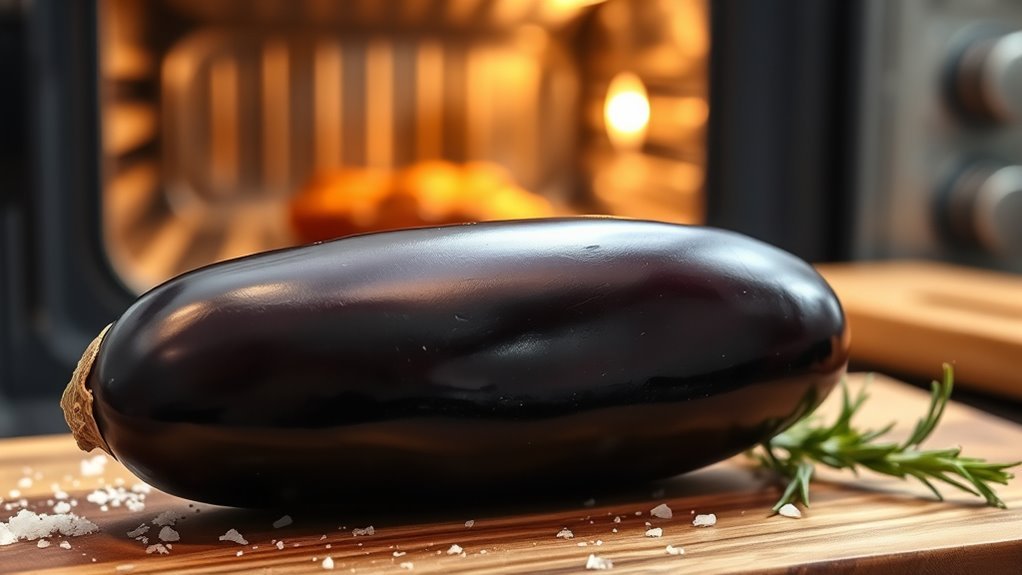
Choose firm, shiny eggplants and rinse them well.
Poke 7-10 holes in the skin to let steam escape.
Preheat your oven to 400°F and line a baking sheet with foil.
Place the eggplants in a single layer and roast for about 50-60 minutes, turning every 20 minutes until tender and charred.
Let them cool before handling, then scoop out the soft flesh.
Keep following along to discover tips for storage, reheating, and serving your perfectly roasted eggplant.
Choosing the Right Eggplant
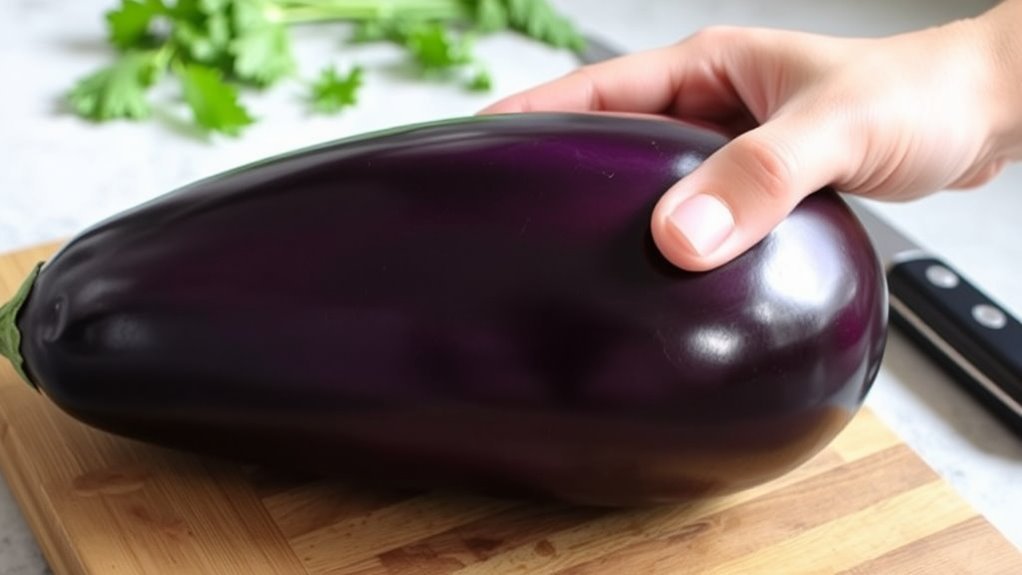
How do you pick the perfect eggplant for roasting? Start by choosing a standard globe or graffiti eggplant with shiny, uniformly dark purple skin. The skin should be firm and smooth to the touch—avoid any with bruises, blemishes, soft spots, or wrinkles to guarantee even roasting and a good texture.
When roasting whole eggplants in the oven, size matters: pick ones heavy for their size, as this indicates freshness and better water content. If you’re roasting multiple eggplants, select those that are similarly sized so they cook evenly.
Before roasting, rinse each eggplant thoroughly under cold water and pat dry to remove any dirt or debris. This careful selection sets you up for a perfectly roasted eggplant every time.
Preparing the Eggplant for Roasting
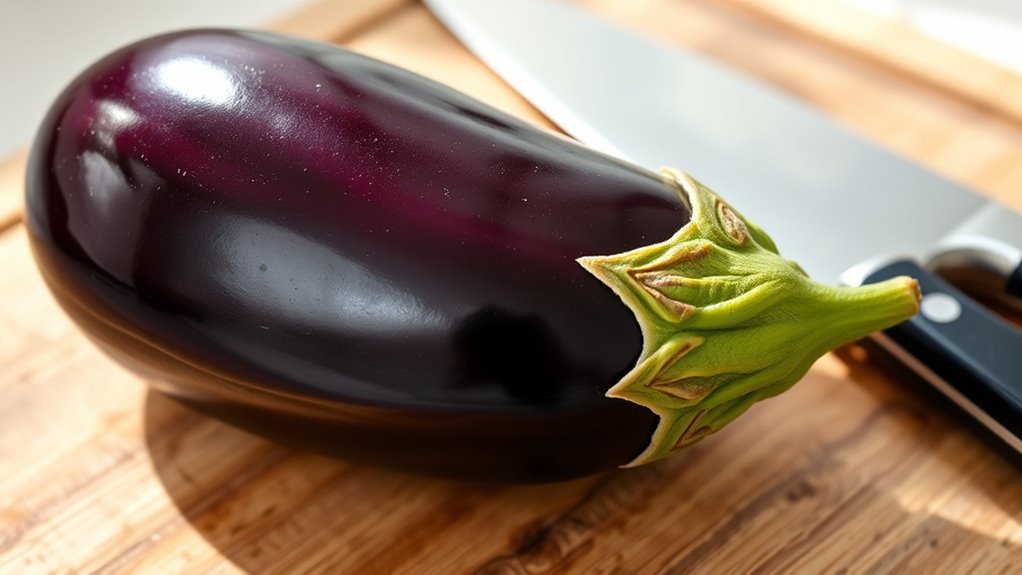
Start by choosing firm, heavy eggplants with smooth, shiny skin free of bruises or soft spots. Rinse them well under cold water and pat them dry to remove any dirt or moisture.
Then, poke several small holes in the skin to help steam escape while roasting. This little trick really helps the eggplant cook evenly.
Selecting Quality Eggplants
When selecting eggplants for roasting, you’ll want to pick firm, heavy ones with shiny, evenly colored skin—dark purple or graffiti varieties work best. Good eggplant selection means avoiding any with blemishes, bruises, or soft spots, as these can affect texture and flavor.
Choosing firm eggplants *ensures* they hold up well during cooking, leading to even roasting and a better final dish. Try to select eggplants of similar size; this helps them cook uniformly and makes handling easier.
Once you’ve picked your eggplants, give them a thorough rinse under cold water to remove any dirt and pat them dry. Remember, shiny skin is a sign of freshness, so steer clear of dull or wrinkled ones to guarantee quality and the best roasting results.
Pre-Roasting Preparation Steps
After selecting and cleaning your eggplants, the next step is to prepare them properly for roasting. For effective pre-roasting preparation, rinse your whole eggplant thoroughly under cold water to remove any dirt, then pat it dry completely.
Use a fork or sharp knife to poke 7-10 holes across the eggplant’s surface; this allows steam to escape during roasting in the oven, preventing bursting. There’s no need for skinning before roasting—the skin softens and becomes edible once cooked.
Optionally, you can lightly score the skin or rub the eggplant with oil or salt for added flavor, but this isn’t required. Following these simple steps ensures your eggplant is ready for even roasting and a deliciously tender result straight from the oven.
Preheating the Oven and Setting Up
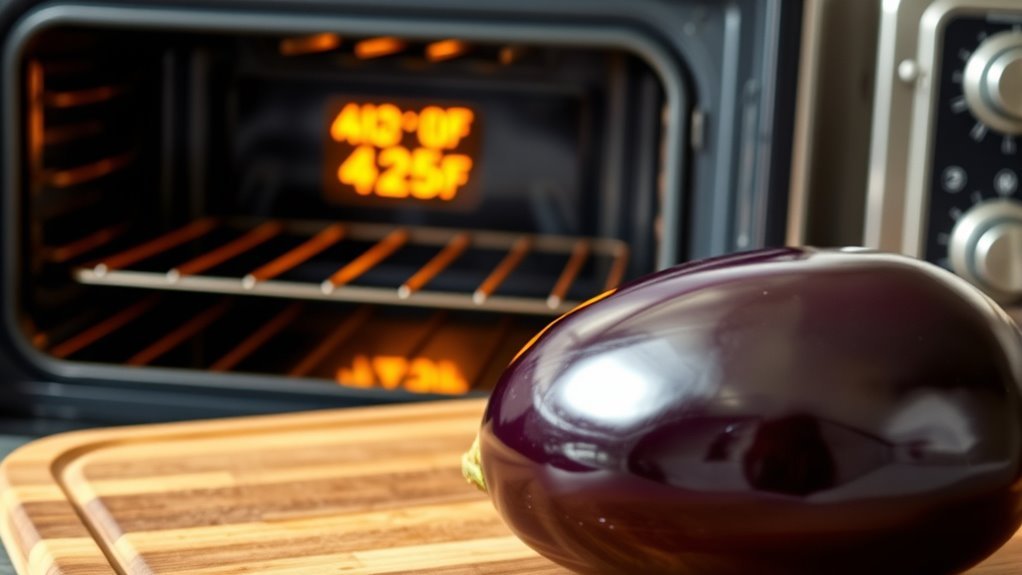
First, preheat your oven to 400°F to get the perfect roasting temperature.
While it warms up, line a baking sheet with foil or parchment paper to keep cleanup easy. Then, position your eggplant on the prepared sheet, ready to roast evenly.
Oven Temperature Settings
To guarantee your eggplant roasts evenly, preheat your oven to 400°F (204°C) and let it reach the full temperature for at least 10-15 minutes before putting the eggplant inside. Correct oven temperature is key for consistent roasting results.
Here’s how to set it up:
- Use an oven thermometer to confirm the actual temperature, since ovens can vary.
- Position the oven rack in the middle or upper-middle slot to maximize heat circulation.
- Avoid opening the oven door frequently to maintain stable heat.
- Ensure the oven is fully preheated before adding the eggplant.
- Keep the temperature steady at 400°F for even roasting and caramelization.
Following these steps will help your eggplant cook evenly and develop that perfect roasted flavor. Just stick to these tips, and you’ll get great results every time!
Baking Sheet Preparation
Though you’ve already preheated your oven to 400°F (204°C), it’s important to prepare your baking sheet properly to guarantee the eggplants roast evenly and don’t stick. First, line your baking sheet with foil or parchment paper; this prevents sticking and makes cleanup easier.
Place the whole eggplants in a single layer, leaving space between each for even heat circulation. Poke 7-10 holes in each eggplant to let steam escape during roasting. Position the baking sheet on the middle rack to ensure uniform cooking.
Using a roasting pan works well too, but always focus on oven safety by avoiding overcrowding.
| Step | Action | Purpose |
|---|---|---|
| Preheat Oven | 400°F (204°C) | Ensures even heat |
| Prepare Sheet | Line with foil | Prevents sticking |
| Arrange Eggplant | Single layer, spaced | Promotes even roasting |
| Position Sheet | Middle rack | Uniform cooking & browning |
Roasting the Eggplant Whole
When you preheat your oven to 400°F (204°C) and prepare a baking sheet with foil or parchment paper, you’re ready to roast the eggplant whole.
To roast a whole eggplant perfectly, follow these steps: poke 7-10 holes in the eggplant skin with a fork or sharp knife to allow steam to escape. Then, place the eggplant on the prepared baking sheet in a single layer.
Poke holes in the eggplant skin to let steam escape before roasting on a baking sheet.
Roast it in the oven for 50-60 minutes, turning every 20 minutes to make sure it cooks evenly. You’ll know it’s done when the skin chars slightly and the flesh feels soft and collapses easily.
Once it’s out of the oven, let it cool slightly before handling. This method ensures your eggplant cooks evenly and develops rich flavor with tender flesh.
Checking for Doneness
After roasting your eggplant whole and letting it cool slightly, you’ll want to verify if it’s done before moving on. Start by pressing gently on the eggplant; it should collapse easily, feeling very soft to the touch.
Next, use the skewer test—insert a fork or skewer into the flesh. It should slide in smoothly without resistance, confirming tenderness.
Check the charred skin, which should be crispy with slight bubbling or blistering. Look for caramelized edges on the soft flesh, showing it’s cooked through.
If you want to be precise, measure the oven temperature inside the thickest part of the eggplant; it should reach about 200°F (93°C). These indicators ensure your eggplant is perfectly roasted and ready for the next step.
Cooling and Handling Post-Roast
Since the eggplant comes out of the oven extremely hot, you’ll want to let it cool for at least 10 minutes before handling. This helps you avoid burns and makes the process easier.
When it’s time to handle the roasted eggplant, keep these tips in mind: use tongs or oven mitts to safely manage the hot veggie. It’s always better to be safe than sorry!
Gently peel away the charred skin with your fingers or a small knife to get a smoother texture. Then, scoop out the tender flesh with a spoon or fork, discarding any burnt bits.
Let the flesh cool down a bit before mashing it or using it in recipes. And remember, avoid touching the eggplant directly while it’s still hot to prevent burns.
Following these simple cooling and handling steps ensures both your safety and the best texture for your roasted eggplant. Easy, right?
Using and Storing Roasted Eggplant
Although roasted eggplant tastes amazing fresh, knowing how to store and use it properly lets you enjoy its rich flavor longer and cut down on waste.
To keep roasted eggplant fresh, pop it in an airtight container and store it in the fridge for up to three days.
If you want to keep it even longer, freeze the cooled flesh in sealed freezer bags or containers for up to three months.
When you’re ready to eat, you can reheat roasted eggplant in the oven at 350°F until warmed through. Or, if you’re in a hurry, microwave it in short bursts for convenience.
Alternatively, you can serve cold roasted eggplant straight from the fridge as part of salads, spreads, or dips.
Just remember to label your containers with dates to keep track of freshness and avoid spoilage.
Conclusion
Once you master roasting a whole eggplant, your kitchen will smell like a magical garden on fire, and every bite will feel like a smoky, creamy cloud melting in your mouth.
You’ll wonder how you ever lived without this simple, transformative skill. Just follow these steps, and you’ll turn humble eggplants into culinary masterpieces that even the toughest food critics will bow down to.
Get ready—your taste buds are in for the ride of their lives! Roasting whole eggplant in the oven is not only easy but also brings out deep, rich flavors and a silky texture that’s perfect for dips, spreads, or as a side dish.
By mastering this technique, you open up a world of delicious possibilities with eggplant, making your meals more exciting and flavorful every time.