How You Can Put a Pot Safely in the Oven
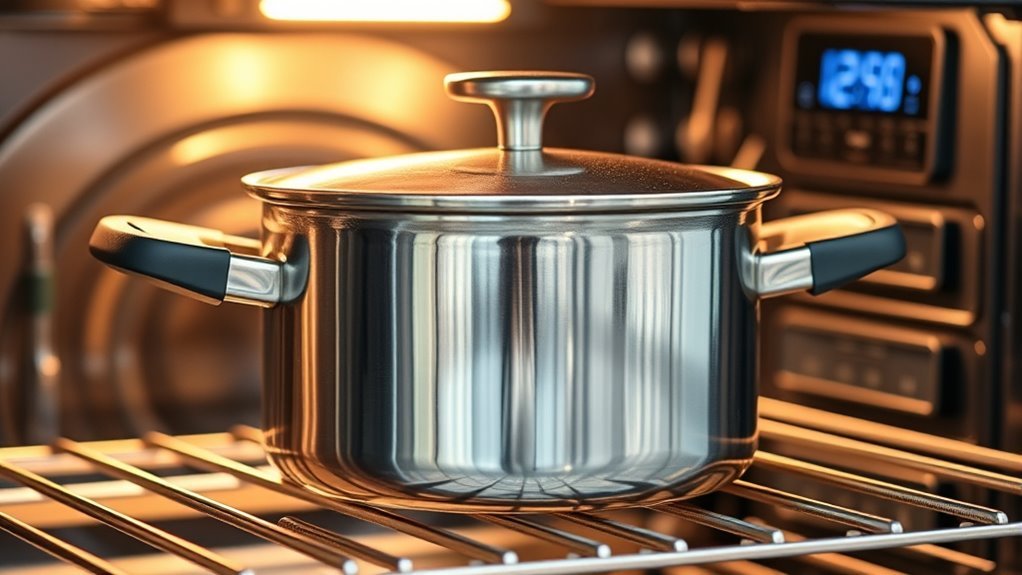
You can safely put a pot in the oven by first making sure it’s made from oven-safe materials like cast iron or stainless steel. These materials can handle the high heat without damage or releasing harmful chemicals. Always check the manufacturer’s guidelines for maximum heat limits to avoid any surprises.
Also, confirm that handles and lids are oven-safe too. You don’t want a plastic handle melting or a lid cracking in the oven. Avoid pots with plastic or silicone parts unless they’re specifically rated for high heat.
Remember to always preheat your oven before placing the pot inside. And don’t forget to use oven mitts to prevent burns when handling hot cookware.
Keep these basics in mind, and you’ll be ready to explore more tips on safe oven use. It’s all about staying safe while cooking delicious meals!
Essential Criteria for Oven-Safe Pots
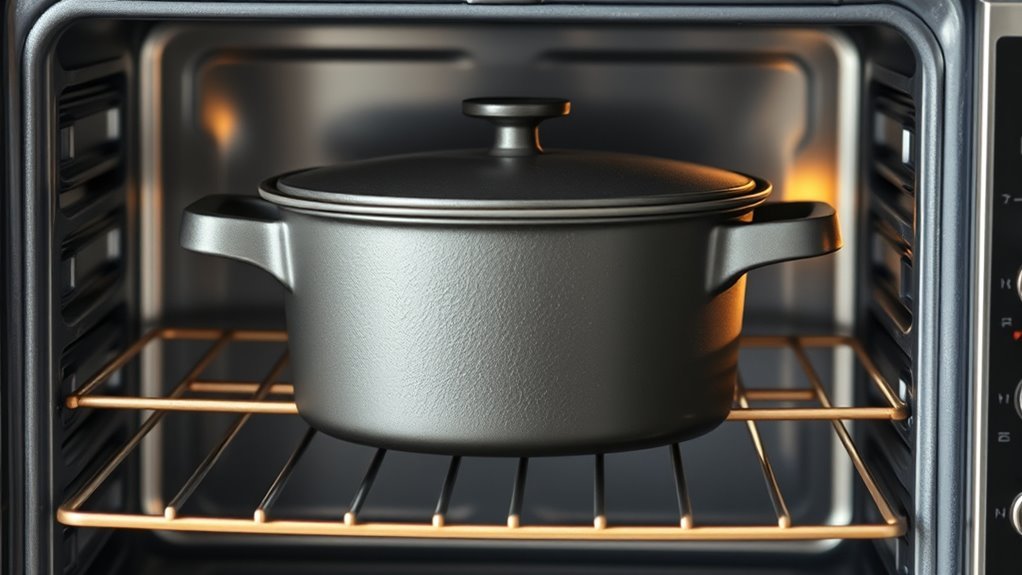
Before you put a pot in the oven, make certain it’s truly oven-safe by checking its material and construction. Oven-safe cookware like cast iron, stainless steel, enameled cast iron, and carbon steel handle high heat without damage and offer excellent heat retention.
Confirm that both the pot and lid, including handles or knobs, have oven-safe markings indicating their maximum oven temperatures. Avoid pots with plastic or silicone parts unless explicitly rated for high heat, as these can melt.
Ceramic pans may be oven-safe but always verify. Checking the manufacturer’s guidelines guarantees your cookware materials can withstand temperatures up to 450–500°F.
When placing your pot on the oven rack, ensure it’s suitable for the heat level to prevent any damage or safety risks. Just a little extra caution can save you from a melted mess!
Best Practices for Using Pots in the Oven
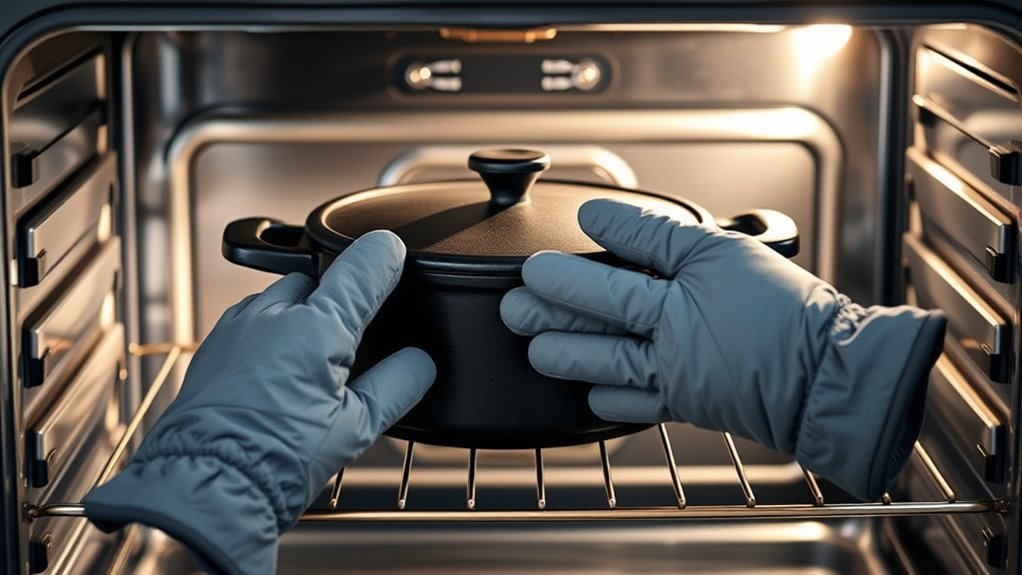
Once you’ve confirmed your pot is oven-safe and suitable for your cooking needs, it’s important to follow certain practices to keep both your cookware and yourself safe. Oven-safe cookware, like carbon steel cookware, often has heat-resistant handles and an oven-safe lid, but always double-check before using it.
Avoid thermal shock by preheating the oven before placing your pot inside. This helps prevent any sudden temperature changes that could damage your pot.
When handling hot pots, make sure to use oven mitts to prevent burns. Also, keep in mind that not all lids or handles are dishwasher safe or suitable for high-temperature cooking.
- Verify maximum temperature and oven-safe labeling
- Use pots with metal or heat-resistant handles
- Preheat oven to avoid thermal shock
- Only use lids marked oven-safe
- Handle with oven mitts to prevent burns
Conclusion
Remember when you tried baking in a plastic container and ended up with a melted mess? That’s why knowing your pot’s oven safety is essential. Just like you wouldn’t put a phone in water, don’t put pots with plastic handles or non-oven-safe materials in the oven.
By choosing the right pot and following best practices, you’ll keep your cookware—and your meals—safe and perfect every time. It’s all about cooking smart, not just cooking hard.
Ensuring your pot is oven-safe means checking the material and handle type before you start. Cast iron, stainless steel, and oven-safe glass are great options. Avoid anything with plastic or wooden parts unless specified as oven-safe.
In the end, putting a pot safely in the oven is about knowing your cookware and using it properly. When you select the right pot and handle it correctly, you protect your investment and make delicious meals without worry. Cooking smart with oven-safe pots keeps your kitchen safe, your food tasty, and your experience stress-free every time.