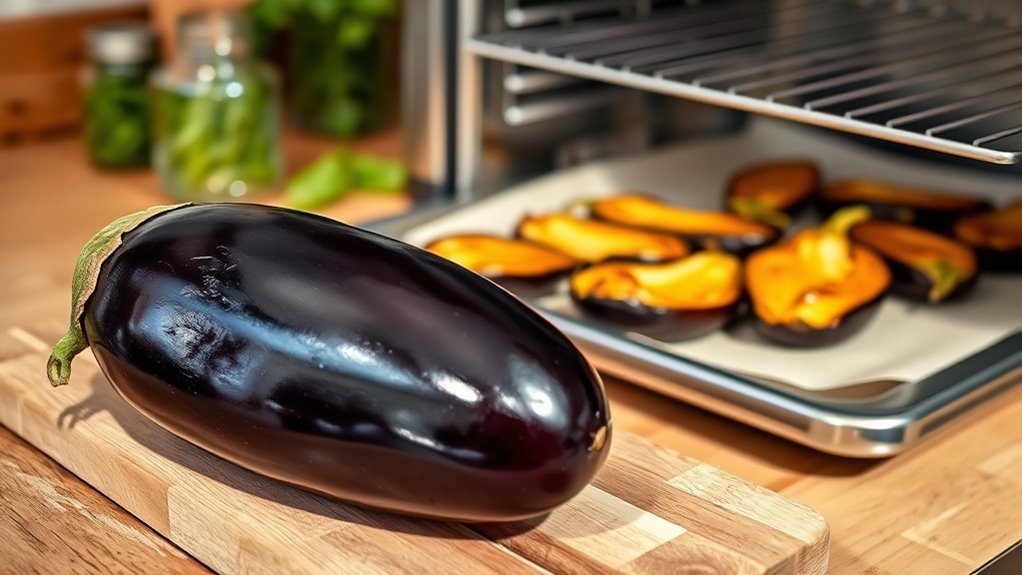
7 Simple Steps to Roast Whole Eggplant in the Oven
Choose a fresh, firm eggplant and wash it well. Preheat your oven to 400°F (204°C). Poke several holes in the eggplant to let steam escape.
Place it on a baking sheet or directly on the rack, then roast for 30–45 minutes, turning occasionally. When the skin is charred and the flesh feels soft, it’s done.
Let it cool slightly before scooping out the tender inside. Keep going to discover tips for the best results and uses.
Choose the Right Eggplant
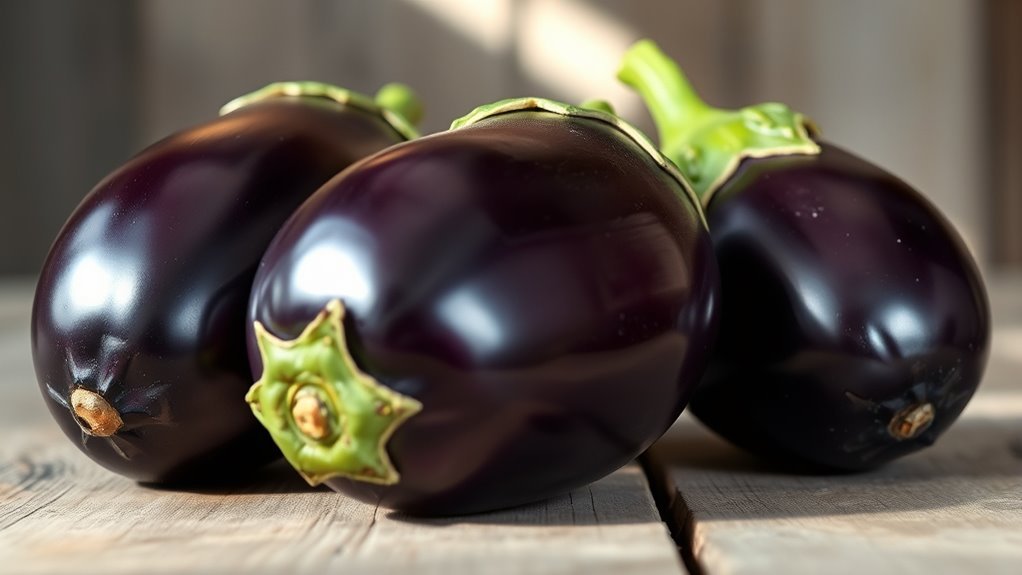
When selecting an eggplant for roasting, choose one that feels heavy and firm with shiny, evenly-colored skin. You want to select an eggplant free of bruises, blemishes, or soft spots to guarantee even cooking and a pleasant texture.
Opt for globe or graffiti eggplants, as they roast consistently. But Japanese or Chinese varieties work too—just adjust cooking times accordingly.
To get the best results, pick eggplants that are similar in size; this helps them roast evenly, so you don’t end up with some undercooked or overdone. Heavier eggplants relative to their size usually indicate better moisture content and quality, so trust your hands as much as your eyes when making your selection.
Prepare the Eggplant for Roasting
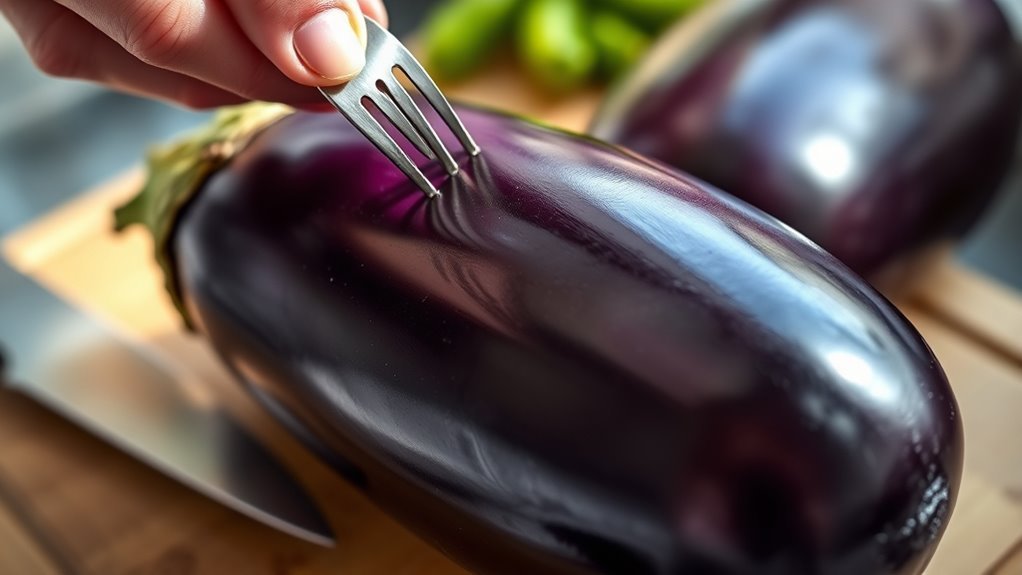
Before roasting, rinse your eggplants under cold water and pat them dry to guarantee a clean surface. To prepare your whole eggplant for roasting, poke 7-10 small holes in the skin with a fork or sharp knife. This lets steam escape and prevents bursting.
You don’t need to peel the skin beforehand; it becomes tender and edible after roasting. Optionally, you can lightly score the skin to promote even cooking and easier peeling later if you prefer.
| Step | Purpose |
|---|---|
| Rinse & dry | Ensure clean, dry skin for roasting |
| Poke holes | Allow steam to escape during roasting |
| Leave skin intact | Skin softens and adds flavor |
| Optional scoring | Helps cook evenly and peel easily |
These simple preparations make roasting your eggplant easy and effective. Give it a try!
Preheat the Oven
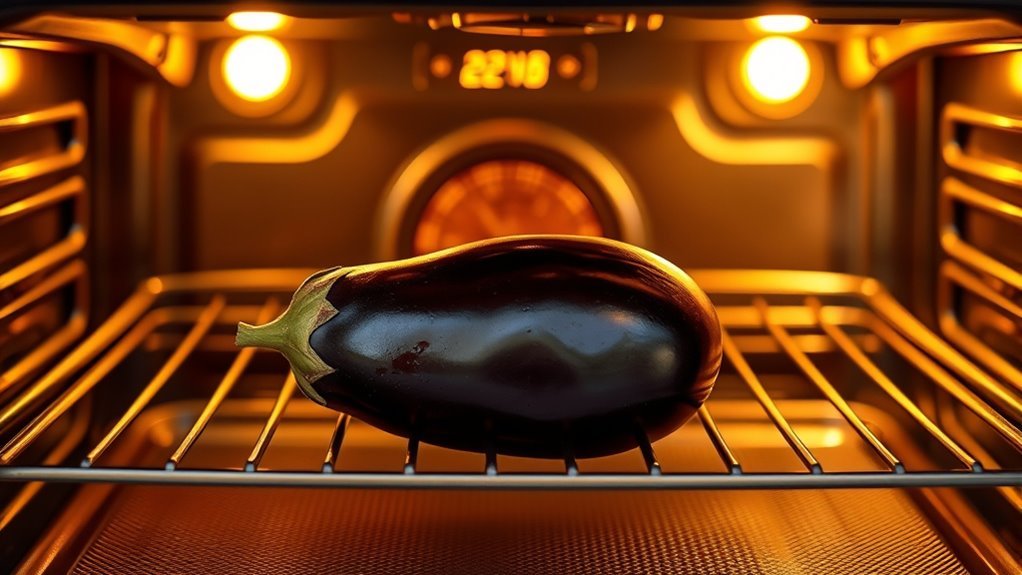
Now that your eggplant is prepped with holes and ready to roast, focus on getting your oven set to the right temperature. Preheat your oven to 400°F (204°C) to guarantee even and thorough roasting.
Preheat your oven to 400°F to ensure your eggplant roasts evenly and thoroughly every time.
Make sure the oven fully reaches this temperature before you place the eggplant inside. Position the oven rack in the middle or upper-middle spot to promote ideal heat circulation around the eggplant.
Grab a clean, oven-safe baking sheet or roasting pan and line it with foil or parchment paper for easy cleanup. If you have an oven thermometer, use it to confirm the oven temperature is accurate.
Taking these steps helps guarantee your eggplant roasts evenly and develops a perfect texture. Easy, right?
Poke Holes in the Eggplant
Before roasting, poke 7-10 small holes evenly across the eggplant’s surface with a fork or sharp knife. This lets steam escape and prevents the eggplant from bursting in the oven.
Make sure each hole is about 1/4 to 1/2 inch deep for even cooking and tender flesh. You’ll want to spread the holes out so the heat can do its magic evenly.
Purpose of Poking Holes
Although it might seem like a small step, poking holes in the eggplant is essential because it lets steam escape during roasting, preventing the vegetable from bursting.
These vent holes regulate internal pressure, ensuring oven safety and avoiding messy explosions. By creating 7-10 evenly spaced holes, you promote consistent cooking and allow moisture to evaporate faster.
| Benefit | Explanation |
|---|---|
| Steam Escape | Prevents buildup causing bursting |
| Oven Safety | Reduces risk of explosion from trapped moisture |
| Faster Cooking | Moisture evaporates efficiently through vent holes |
How to Poke Properly
To make certain your eggplant roasts evenly without bursting, you need to poke holes properly. This roasting technique ensures uniform venting, allowing steam to escape through the eggplant skin and preventing pressure buildup.
When you poke holes, follow these steps:
- Use a fork or sharp knife to create 7-10 evenly spaced holes around the entire eggplant, including the top and bottom.
- Poke holes about 1/4 to 1/2 inch deep, just enough to reach the flesh beneath the skin.
- Avoid over-puncturing to prevent excessive moisture loss and drying out.
Doing it right keeps your eggplant juicy and perfectly roasted.
Preventing Eggplant Bursting
When you poke 7-10 shallow holes evenly around your eggplant, you create necessary vents for steam to escape during roasting. These vent holes are essential for bursting prevention, as steam buildup inside a whole eggplant can cause it to split open.
Use a fork or sharp knife to make shallow, evenly spaced holes across the surface, ensuring proper venting. This allows excess moisture to release, promoting even cooking and helping the eggplant maintain its shape.
Be gentle when poking to avoid damaging the flesh while still providing enough pathways for steam escape. By following this simple step, you’ll roast eggplant perfectly every time without worrying about messy bursts in your oven.
Proper vent holes make all the difference in your roasting success.
Roast the Eggplant
Set your oven to 400°F (204°C) to make certain of the perfect roasting temperature.
Place the eggplant on a lined baking sheet and roast it for about an hour, turning it every 20 minutes. This guarantees even cooking and a nicely charred skin.
Trust me, that charred skin is where all the flavor lives! Keep an eye on it so it roasts evenly and gets that beautiful golden-brown color.
Oven Temperature Settings
Although roasting whole eggplant requires some patience, you’ll get perfectly tender flesh and beautiful caramelization by keeping your oven at 400°F (204°C).
Before you roast, always preheat your oven to guarantee even heat distribution. This temperature setting balances slow roasting with ideal caramelization.
Here’s how to manage your oven temperature settings effectively:
- Preheat the oven to 400°F (204°C) for consistent roasting.
- Roast the eggplant for 50-60 minutes, adjusting time for size.
- For a smoky finish, switch to broil on high for the last 5-8 minutes, but watch closely to prevent burning.
Sticking to these steps will help you master roasting whole eggplant perfectly every time.
Turning for Even Cooking
Keeping your oven at 400°F guarantees even heat, but you’ll need to turn the eggplant every 20 minutes during roasting. This rotation promotes even cooking by ensuring heat distribution reaches all sides, preventing burning or undercooked spots.
Use tongs or a heat-resistant glove to carefully flip the eggplant, protecting the skin and yourself. Consistent turning helps the flesh soften uniformly and the skin to char evenly, resulting in a tender interior with a crispy, charred exterior.
Here’s a quick guide on turning benefits:
| Aspect | Benefit |
|---|---|
| Turning Interval | Every 20 minutes |
| Heat Distribution | Prevents burning, ensures even |
| Texture Outcome | Tender flesh, crispy skin |
| Safety Tip | Use tongs or gloves to flip |
Rotate regularly for perfect roasting every time.
Check for Doneness
Two key signs tell you when your whole eggplant is perfectly roasted: the flesh should collapse easily when pierced, and the skin will be charred and crispy. To check for doneness, insert a skewer into the thickest part of the eggplant.
Perfectly roasted eggplant is soft inside and has a beautifully charred, crispy skin.
If it slides in effortlessly with no resistance, the eggplant is fully cooked. Rely on these visual cues and texture rather than time alone, as roasting can vary.
Remember these steps:
- Look for a charred, crispy skin.
- Use a skewer to test the soft interior.
- Ensure the flesh feels tender and collapses easily.
When these signs align, your eggplant is tender and ready to enjoy. Easy, right?
Cool and Scoop Out the Flesh
How long should you let the eggplant cool before handling it? After roasting, let it cool for about 5-10 minutes so you can safely manage it.
Use tongs or oven mitts to remove the hot eggplant from the oven and place it on a cooling rack. Once it’s cool enough to touch, gently peel away the charred skin if you want a smoother texture, or leave it on to keep the smoky flavor.
Cut the eggplant in half or sections, then use a spoon to scoop out the tender, roasted flesh. Discard any burnt skin and seeds if you prefer, and transfer the roasted flesh to a bowl.
Now, your eggplant is ready for your favorite recipe or seasoning!
Conclusion
Now that you’ve mastered roasting a whole eggplant, imagine the smoky aroma filling your kitchen, inviting warmth and comfort. With just a few simple steps, you’ve transformed a humble vegetable into a silky, flavorful delight ready for your favorite dishes.
Don’t be afraid to experiment—each roasted eggplant is a little victory, a delicious reward that proves cooking can be both easy and satisfying. So go ahead, savor the magic you’ve created with your roasted whole eggplant!
Roasting eggplant in the oven is truly a game-changer. It brings out a deep, smoky flavor and creamy texture that’s perfect for dips, spreads, or as a side. Keep practicing these simple steps, and you’ll find that roasting whole eggplants becomes your go-to method for delicious, versatile meals. Enjoy every bite!