7 Tips to Keep Food Warm in the Oven Perfectly
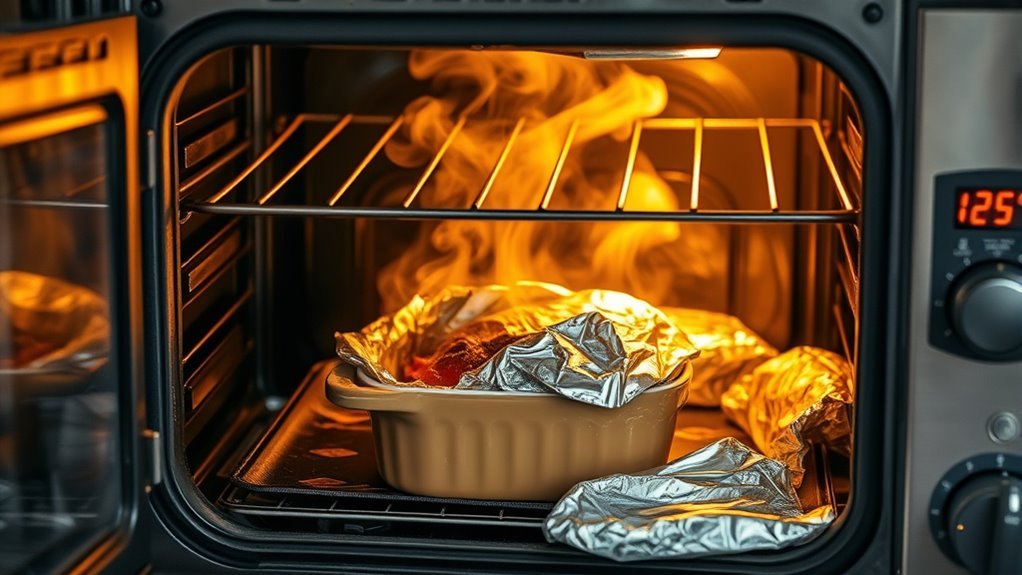
To keep food warm in the oven perfectly, start by fully cooking your dishes and transferring them into oven-safe containers. Cover the containers with foil to lock in moisture and keep the food from drying out. This simple step helps maintain the food’s flavor and texture while it stays warm.
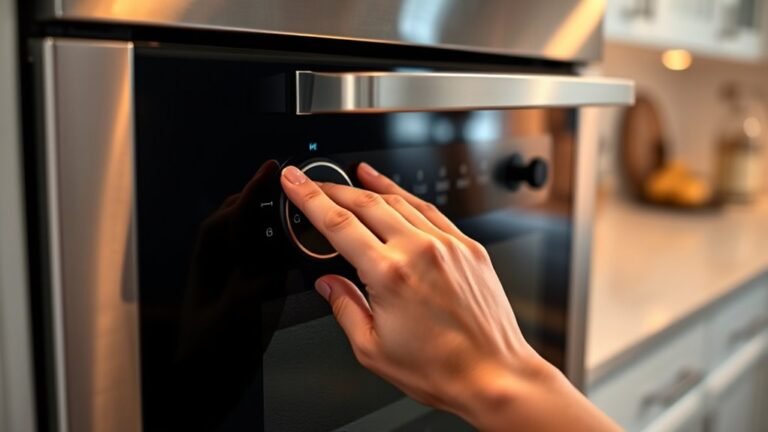
Next, set your oven temperature between 140°F and 160°F. This range is ideal because it keeps your food warm without overcooking it.
Make sure to arrange the dishes with space around them so heat can circulate evenly. This way, every bite stays delicious.
Don’t forget to check the temperature regularly to ensure food safety. Also, try to limit warming times to 1 or 2 hours for the best quality.
Want to master every step for perfect results each time? Keep exploring these tips.
Prepare Food Properly Before Warming
Before you warm food in the oven, make sure it’s fully cooked to the right internal temperature to avoid any safety risks. Undercooked meat, poultry, or seafood can lead to food safety issues, so never rely on the oven to finish cooking.
Always ensure food is fully cooked before reheating to prevent any safety hazards or health risks.
Use oven-safe containers for reheating and remove any plastic or non-oven-safe materials beforehand. This is super important to keep things safe and avoid any messes.
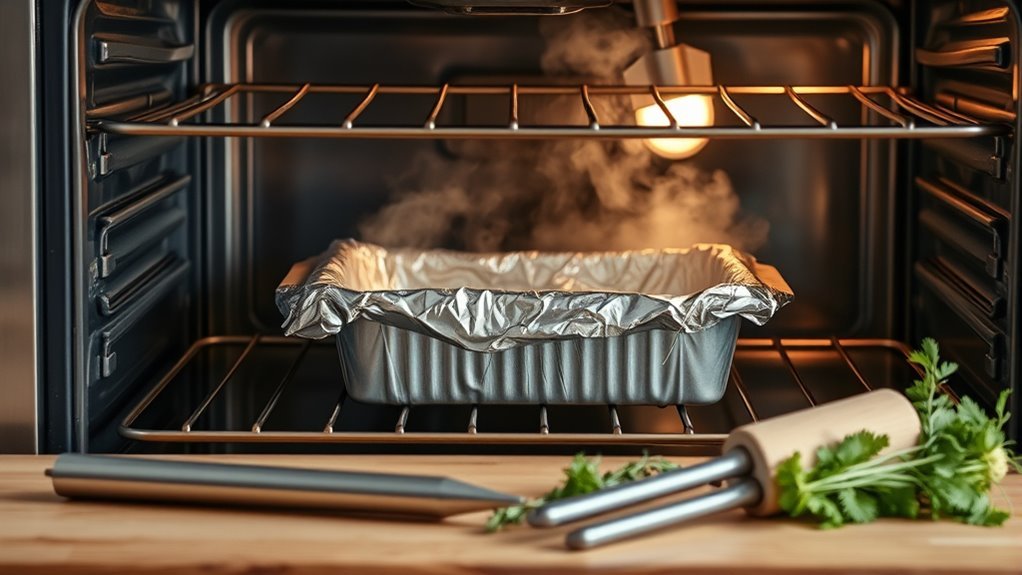
To keep moisture locked in, cover dishes with oven-safe lids or aluminum foil. This helps prevent your food from drying out during warming.
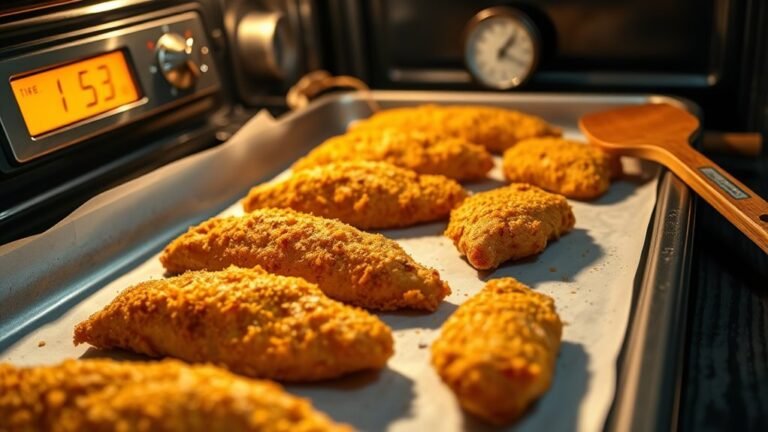
If you want to keep crispy items crisp, place them in a single layer on a cooling rack inside the preheated oven. By preparing your food properly before warming, you ensure safe, delicious results without compromising texture or flavor.
Choose the Right Oven Temperature
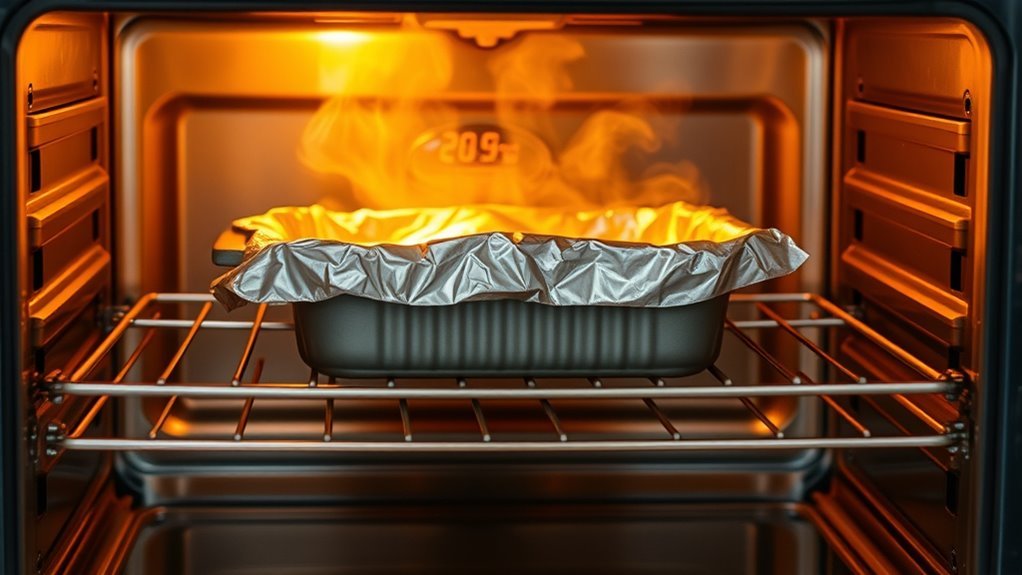
You’ll want to set your oven between 140°F and 160°F to keep food warm without cooking it further.
Try to avoid overheating by using the lowest possible setting or the “Warm” preset if your oven has one.
It’s a good idea to keep an eye on the temperature with an oven thermometer.
That way, you can make sure your food stays safe and tasty.
Ideal Temperature Range
You keep food warm without overcooking or drying it out by setting the oven temperature between 140°F and 160°F. This ideal temperature range allows you to warm in the oven safely, maintaining the serving temperature without further cooking.
Many ovens feature a keep warm setting, usually around 170°F, which also works well for keeping food warm while ensuring it stays safe. Use a food thermometer to check that your dishes remain within this range, preventing bacterial growth that can occur below 140°F.
Avoid temperatures above 160°F to stop food from burning or overcooking. By carefully managing your oven’s temperature, you’ll serve perfectly warm food with the right texture and quality every time.
Avoid Overheating Food
When keeping food warm in the oven, choosing the right temperature is crucial to avoid overheating and drying it out. Set your oven between 140°F and 160°F to maintain gentle heat and preserve food quality.
Using the keep warm setting, usually around 170°F, also helps avoid overheating. High heat settings above 250°F can cook or dry out your food quickly, so steer clear of those.
Always monitor oven temperature with a thermometer to ensure it stays within the safe range, preventing drying out. Limit warm holding time to 1-2 hours to keep food fresh.
| Oven Temperature Setting | Effect on Food |
|---|---|
| 140°F – 160°F | Keeps food warm gently |
| Keep Warm (~170°F) | Maintains gentle heat |
| >250°F | Causes overheating/drying out |
Monitor Food Temperature
Maintaining the right oven temperature plays a key role in keeping your food warm without overcooking it. Set the oven between 140°F and 160°F to hold your dishes safely without further cooking.
If your oven has a keep warm setting, usually around 170°F, that’s ideal for gentle heat. Always monitor temperature using a food thermometer to check your food’s internal temperature stays above the safe temperature of 140°F.
Avoid going over 200°F, as higher heat can dry out or ruin your meal. Keep the oven door closed as much as possible to maintain consistent oven temperature.
Use Oven-Safe Containers and Cover Food
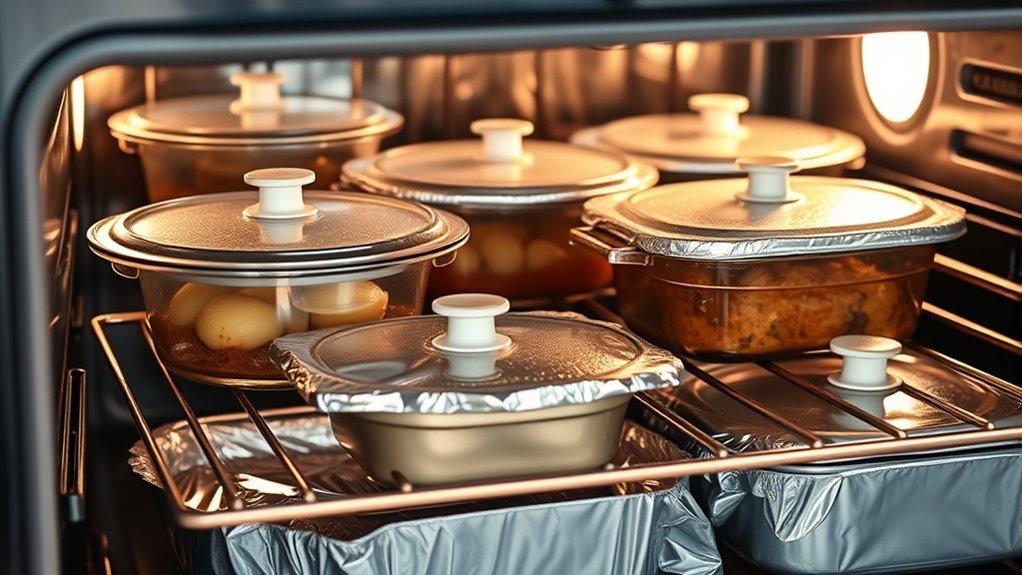
Make sure you transfer your food into oven-safe containers like glass, ceramic, or metal before warming. Don’t forget to cover your dishes with oven-safe lids or foil to keep moisture locked in.
This helps your food stay tender and evenly heated without drying out. It’s a simple step that makes a big difference!
Choose Oven-Safe Cookware
Although it’s tempting to reheat food in any container, you should always choose oven-safe cookware like glass, ceramic, or metal to avoid cracking or melting. Using the right baking dish ensures safety and preserves your food’s quality.
Here’s how to pick and use oven-safe cookware effectively:
- Confirm your cookware is labeled oven-safe and check the maximum temperature recommended by the manufacturer.
- Remove any plastic or non-oven-safe parts before placing dishes in the oven.
- Cover your baking dish with oven-safe lids or aluminum foil to help keep food warm without drying it out.
- Use oven-safe cooling racks for crispy items to maintain texture while warming.
Following these tips keeps your food safe and delicious while in the oven. It’s really worth taking these small steps!
Cover to Retain Moisture
When you cover your food with oven-safe lids or aluminum foil, you trap steam that keeps moisture locked in during warming. This steam maintains the humidity inside the container, preventing your dish from drying out.
Always use oven-safe containers and covers designed to withstand heat, so they won’t melt or warp. For dishes like casseroles or baked pasta, tightly fitting lids or foil work best to preserve moisture.
If you’re warming crispy foods, loosely cover them with aluminum foil to retain some humidity without making them soggy. Properly covering your food ensures it stays juicy and flavorful while warming in the oven.
Arrange Food for Even Heat Circulation
To guarantee your food warms evenly in the oven, arrange items on oven-safe trays or dishes with enough space between them to allow heat to circulate freely. Proper heat circulation prevents cold spots and ensures even warming.
Use oven racks positioned in the middle or upper levels to maximize consistent air flow. Avoid overcrowding, as it blocks air and disrupts heat distribution.
To optimize even warming:
- Place dishes on oven-safe trays with gaps between items.
- Use middle or upper oven racks for better air flow.
- Avoid stacking or tightly packing dishes to distribute heat evenly.
- Rotate trays periodically to expose all sides to consistent heat.
Following these steps helps you maintain uniform temperature and perfect warmth throughout your food. It’s a simple way to make sure everything heats up just right!
Monitor Food Temperature Regularly
Since maintaining the right temperature is essential, you should use a reliable food thermometer to check your dishes every 15-20 minutes while they’re in the oven. Insert the thermometer into the thickest part of the food to get an accurate internal temperature reading.
Keep the oven temperature between 140°F and 160°F, ideally using the keep warm setting to maintain food safety without overcooking. Regularly monitor temperature to ensure the food stays above 140°F, adjusting the oven temperature if it begins to cool down.
Recording your temperature readings can help track consistency and prevent unsafe conditions. By staying vigilant and monitoring temperature, you’ll keep your food warm and safe, preserving quality until serving time.
Limit Warming Time to Maintain Quality
Although keeping food warm in the oven is convenient, you shouldn’t leave it there for more than 1 to 2 hours. To limit warming time and maintain quality, use the oven’s keep warm setting wisely.
Here’s how to keep food warm without compromising flavor or safety:
- Limit warming time to 1–2 hours to prevent drying out and texture loss.
- Use a timer to avoid overcooking and ensure you don’t forget food in the oven.
- Regularly check that the internal temperature stays above 140°F to sustain food safety.
- After 2 hours, either refrigerate leftovers or discard them to preserve freshness and prevent spoilage.
Following these tips helps you maintain quality while keeping food warm efficiently. It’s a simple way to enjoy your meal without sacrificing taste or safety.
Consider Alternative Warming Methods
When you need to keep food warm for longer periods or want to avoid the risks of using an oven, alternative warming methods offer practical solutions that preserve flavor and texture.
Warming trays use an electric heat source to maintain steady temperatures without overcooking. A slow cooker set to the keep warm setting holds food between 140°F and 160°F, which is perfect for extended holding times.
Electric warming trays and slow cookers keep food perfectly warm without overcooking for hours.
For soups and beverages, insulated thermoses or heated coolers lined with hot towels keep contents hot during transport. When reheating food, it’s best to use low-power microwave or toaster oven settings to prevent drying out.
You can also use indirect heat on a gas grill by turning off one side and covering dishes with foil. This creates a gentle, consistent warming environment without direct oven heat.
Conclusion
When you keep food warm in the oven just right, it’s like wrapping each bite in a cozy blanket of heat, preserving its flavor and texture. By prepping properly, choosing the perfect temperature, and covering your dishes, you’ll avoid dry, overcooked meals.
Think of your oven as a gentle guardian, holding your food exactly where it needs to be until you’re ready to enjoy. Follow these tips, and every meal will feel freshly made, every time.
Keeping food warm in the oven isn’t just about heat—it’s about maintaining taste and texture. With the right approach, your dishes stay juicy and delicious, never dry or rubbery. So, remember to cover your food, set the right temperature, and check it occasionally.
By doing this, you’ll master how to keep food warm in the oven perfectly, ensuring every bite tastes just like it was freshly cooked. Your oven becomes your best kitchen ally, keeping meals warm, tasty, and ready whenever you are.