Clean Your Oven Door in 10 Easy Steps
To clean your oven door effectively, start by gathering all the necessary supplies like baking soda, vinegar, microfiber cloths, and a plastic scraper. Make sure your oven is completely cool before you begin, and prepare your workspace to avoid any mess.
If possible, remove the oven door for a more thorough cleaning. Next, mix baking soda with water to create a thick paste. Spread this paste evenly over the glass surface of the oven door.
Then, spray vinegar or lemon juice over the baking soda paste. You’ll notice it fizzing—that’s how it breaks down grime!
After a few minutes, wipe off the mixture with a damp cloth.
For stubborn, tough stains, gently use the plastic scraper to lift them away.
Finally, buff the glass to a streak-free shine with a clean microfiber cloth. Keep reading for more tips to get your oven door sparkling like new!
Gather All Necessary Cleaning Supplies
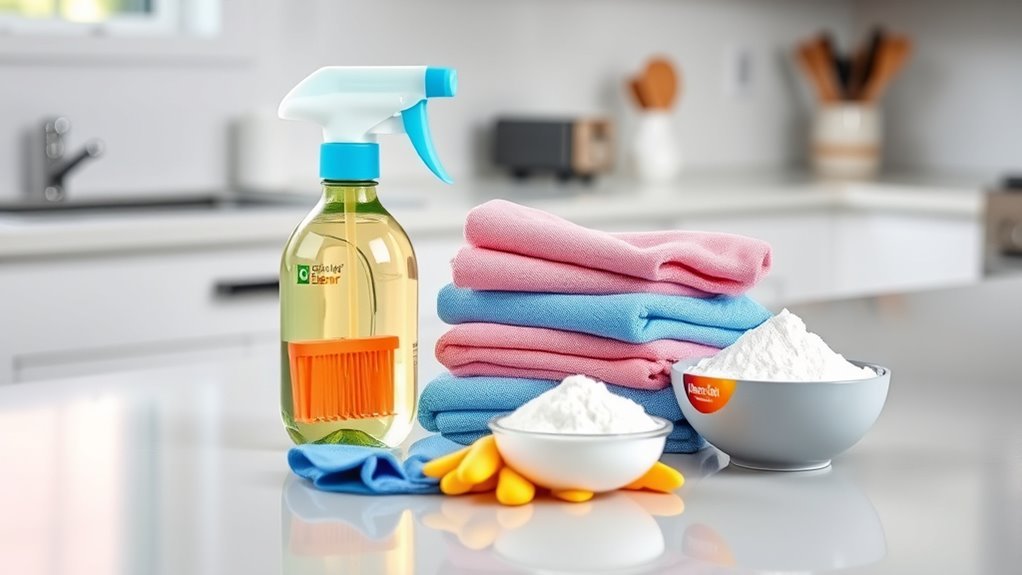
Before you begin cleaning your oven door, gather all necessary supplies to make the process smooth and efficient. You’ll need baking soda, water, white vinegar or lemon juice, microfiber cloths, a plastic scraper, and gloves.
Mix ½ cup of baking soda with 3 tablespoons of water to create an effective cleaning paste. Prepare a spray bottle with diluted vinegar or lemon juice to boost your cleaning power.
Having all your cleaning supplies within reach saves time and effort, so clear your workspace beforehand. Using microfiber cloths will help you wipe the oven door without scratching its surface.
Ensure Oven Is Completely Cool and Prepare Work Area
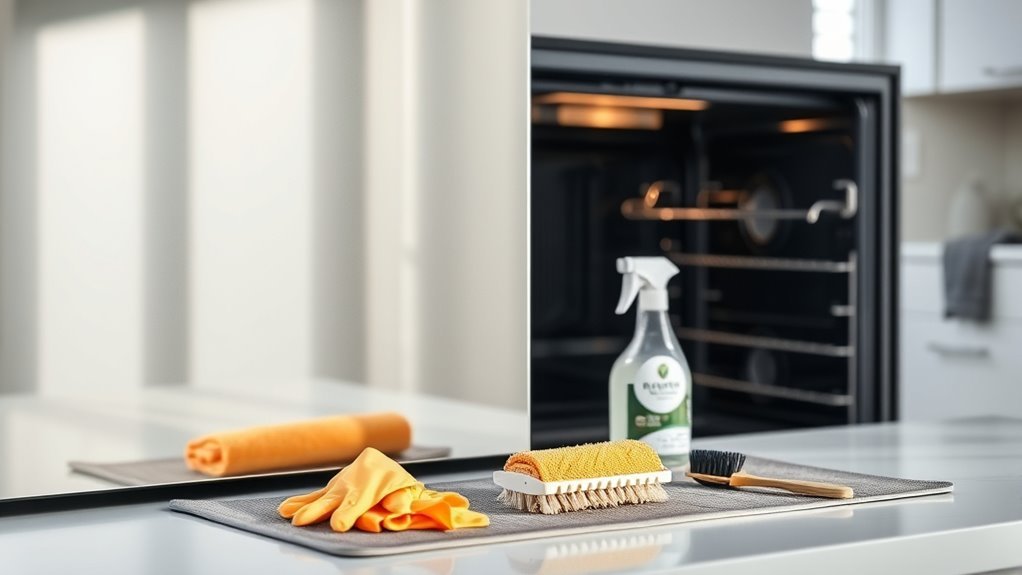
Since cleaning a hot oven can lead to burns, make sure your oven is completely cool before you start. This step protects you and guarantees the cleaning process goes smoothly.
Next, clear the area around your oven for easy access. Lay old towels on the floor in front of the oven to catch drips and debris from the door and glass.
Remove any loose dirt from the door and glass surface to prepare for a thorough clean. Gather all your cleaning supplies beforehand, so you don’t have to stop mid-task.
Remove Oven Door if Possible for Thorough Cleaning
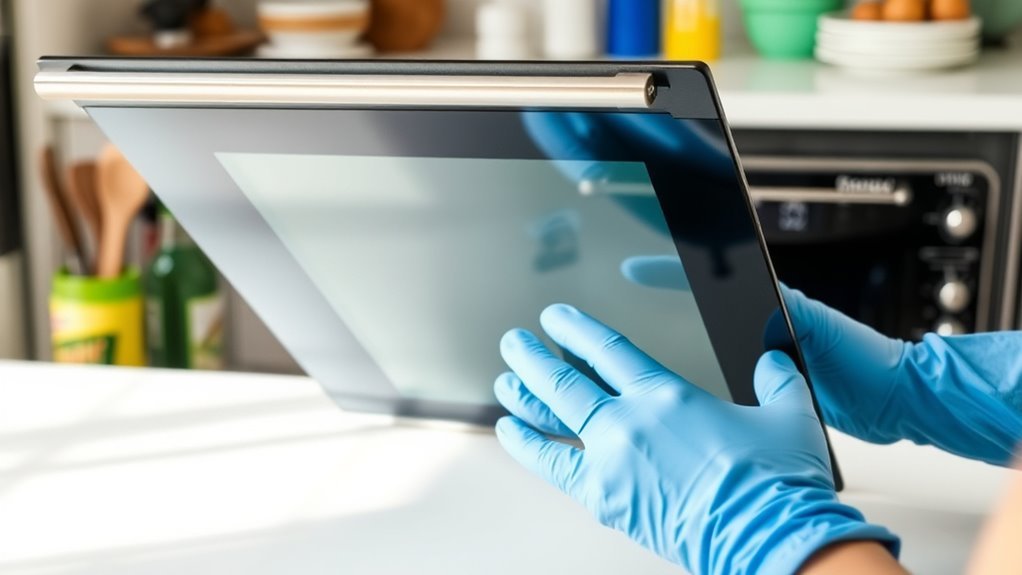
If your oven door allows, removing it can make cleaning much easier and more effective. To remove oven door, first open it fully and consult your user manual for specific hinge instructions.
Usually, you’ll need to release or loosen the hinges and lift the door upward to detach it safely from the oven frame. Disassembling the oven door lets you separate the oven door glass panels, giving you better access for thorough cleaning oven tasks.
This is especially helpful when dealing with stubborn grime or baked-on grease that’s tough to reach otherwise. Just be sure to follow the manufacturer’s guidelines carefully to avoid damage or safety hazards during removal.
Taking this step will save you time and effort in restoring your oven door’s sparkle.
Mix Baking Soda and Water to Form Cleaning Paste
When you mix half a cup of baking soda with three tablespoons of water, you create a thick, creamy paste that’s perfect for tackling oven door grime. In a small bowl, combine the baking soda and water, stirring thoroughly until the mixture achieves a consistent, spreadable texture.
If the cleaning paste feels too dry, add a bit more water; if it’s too runny, sprinkle in more baking soda. Aim for a shaving cream-like consistency—neither dripping nor crumbly—to ensure easy application.
Always use fresh, clean water to maintain the paste’s effectiveness and avoid contamination. This simple baking soda and water combination forms a powerful yet gentle cleaning paste that prepares your oven door for a deep, effective scrub.
Apply Baking Soda Paste Evenly on Oven Door Glass
Before you let the baking soda paste work its magic, use a brush or spatula to spread it evenly over the entire oven door glass. Focus on greasy or stained areas without letting the paste spill over the edges.
This guarantees your cleaning covers every spot that needs attention without extra mess. The baking soda paste should be creamy, making it easy to apply and stick to the oven door surface.
Here’s a quick guide to help you apply the paste efficiently:
| Step | Tool Needed | Tip |
|---|---|---|
| Mix paste | Bowl & spoon | Creamy consistency |
| Apply paste | Brush/spatula | Cover grease & stains |
| Avoid excess paste | Careful spreading | Keep paste on glass only |
| Check coverage | Visual check | Ensure even layer |
This method guarantees thorough cleaning with minimal hassle.
Let the Paste Sit to Loosen Stubborn Grime
After you apply the baking soda paste, let it sit for at least 20 minutes to break down stubborn grime effectively.
If your oven door is really dirty, extending the wait time to 30 minutes or more will boost the paste’s cleaning power. Giving it enough time means less scrubbing and a cleaner glass without damage.
Waiting Time Importance
Although it might be tempting to wipe off the paste right away, letting it sit for at least 20 minutes gives it time to break down grease and grime effectively. The waiting time is essential because the baking soda paste needs this period to penetrate and loosen stubborn buildup.
If you rush, you’ll likely struggle with grime removal and spend more effort scrubbing. For tougher stains, extending the waiting time to 30 minutes or even an hour considerably boosts cleaning efficiency.
During this period, applying vinegar or lemon juice activates a chemical reaction that enhances the paste’s power. By giving the baking soda paste enough time, you guarantee a deeper clean and save yourself from extra work later.
Patience truly pays off in oven door cleaning.
Paste Effectiveness Duration
When you let the baking soda paste sit on your oven door glass for at least 20 minutes, it starts to break down and loosen stubborn grime effectively.
For tougher buildup, extending the paste duration to 30 minutes or more enhances its ability to soften baked-on residues, making them easier to remove.
It’s important not to let the paste dry out completely; keeping it moist maintains its abrasive cleaning action.
While some cleaning products work quickly, baking soda needs this sitting time to penetrate grime deeply.
Monitor the paste as it works to ensure it stays damp and active.
Spray Vinegar or Lemon Juice Mixture Over the Paste
Once you’ve spread the baking soda paste on the oven glass, spray an equal mix of white vinegar or lemon juice and water over it. The vinegar or lemon juice reacts with the baking soda, causing a bubbling, fizzing action that loosens grime and stains.
Be sure to spray lightly and evenly so the entire surface covered with paste gets infused with the mixture. This reaction breaks down stubborn residues, making your cleaning job easier.
Let the vinegar or lemon juice and baking soda sit for about 5 to 10 minutes to maximize effectiveness. The fizzing action you see signals the paste working hard to lift dirt, preparing the oven glass for the final wipe-down.
This simple spray step is key to a sparkling clean oven door.
Wipe off Paste and Residue With a Damp Microfiber Cloth
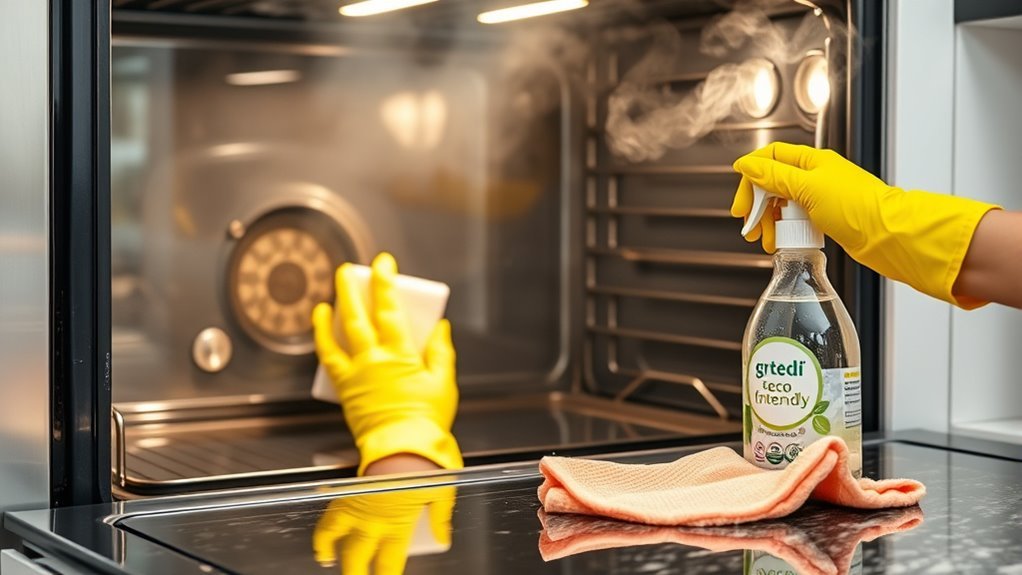
Grab a damp microfiber cloth to gently wipe away the baking soda paste without scratching your oven glass. Using soft, circular motions helps remove residue effectively while preventing streaks.
For the best shine, finish by buffing with a dry microfiber cloth to leave your oven door spotless. Easy, right? Just take your time and you’ll have that glass looking great in no time!
Effective Paste Removal
Although the baking soda paste works wonders on grime, you’ll need a damp microfiber cloth to gently wipe it off the glass surface without scratching. Use circular or downward motions to remove all residue effectively while protecting the glass.
If you encounter stubborn spots, just dampen the microfiber cloth with a bit more water and keep wiping until the surface is clean. Remember to rinse your cloth frequently to avoid spreading dirt and to help prevent streaks.
Once the baking soda paste is fully removed, dry the glass with a clean, dry microfiber cloth to eliminate any remaining moisture and streaks. This careful approach guarantees your oven door glass stays spotless and polished without damage.
Best Cloth Choices
A damp microfiber cloth works best for wiping off paste and residue from your oven door glass. These cloths attract and hold dirt without scratching, making them perfect for achieving a clean glass surface.
Make sure your microfiber cloth is lint-free to avoid leaving fibers behind. Slightly dampening it enhances its grease and residue pickup. Plus, microfiber cloths are reusable, economical, and eco-friendly.
Feel confident knowing you’re protecting your oven glass from scratches. Enjoy the ease of removing stubborn paste without harsh scrubbing.
Save money and reduce waste by using cloths you can wash and reuse. Using the right microfiber cloth ensures efficient cleaning and sets you up for streak-free results in the next step.
Streak-Free Finishing
When you’re ready to remove the baking soda paste, grab a damp microfiber cloth and gently wipe away all the residue from the oven glass. Wipe in circular or downward motions to effectively eliminate streaks and get a clean, streak-free finish.
Be sure to fold the microfiber cloth frequently to a fresh section. This helps prevent dirt or residue from spreading back onto the surface.
After removing all the paste and residue, switch to a dry microfiber cloth to buff the glass. This step enhances its shine and clarity.
Using microfiber regularly not only keeps your oven door spotless and streak-free but also prevents scratches. It’s a simple way to keep your oven looking pristine for longer.
This easy step guarantees your oven glass stays perfectly clean and streak-free every time.
Use a Plastic Scraper for Tough Baked-On Stains
Since baked-on stains can be stubborn, you’ll find a plastic scraper invaluable for gently lifting residue without scratching your oven door’s glass. Start by dampening the glass slightly; this softens grime and protects the surface.
Hold your plastic scraper at a shallow angle and apply gentle pressure to carefully loosen baked-on stains. Avoid harsh scrubbing to prevent damage.
Using a plastic scraper offers peace of mind knowing you won’t scratch the glass. It also makes removing tough, stubborn residue easier.
Plus, it’s a safe, effective alternative to metal blades.
Buff the Glass Door to a Streak-Free Shine
To get a streak-free shine on your oven glass, use a dry, lint-free microfiber cloth and buff in gentle circular motions. Buff the glass while it’s slightly damp to help break down any stubborn streaks or smudges.
Avoid rough cloths or paper towels, then finish with a clean, dry cloth to polish the surface perfectly. This way, your glass will look spotless and shiny every time!
Choose the Right Cloth
Although cleaning your oven door removes grime, choosing the right cloth is essential to achieve a streak-free shine. Use a clean, dry microfiber cloth to buff the glass door gently. This type of cloth prevents scratches and lint, ensuring your surface stays crystal clear.
Avoid rough fabrics or paper towels, as they can leave marks or damage the glass. When you buff, use circular or gentle back-and-forth motions to evenly spread pressure and eliminate streaks. Dry the glass thoroughly with a lint-free microfiber cloth to prevent water spots.
Selecting the proper cloth not only improves your cleaning results but also helps maintain the oven door’s clarity over time.
- Feel proud of your spotless, shining oven door
- Enjoy the smooth, lint-free surface every time
- Save time with effortless, streak-free cleaning
Dry Wiping Techniques
When you finish cleaning your oven door, buffing it with a dry, lint-free microfiber cloth removes any lingering streaks and restores a clear shine. To get the best results, fold the microfiber cloth into a small pad and apply light pressure as you buff.
Use gentle, circular motions or straight downward strokes to wipe the glass evenly. Avoid damp or wet cloths during this step since moisture can cause streaks to reappear.
Regularly buffing your oven door after cleaning helps maintain its glossy, streak-free look and keeps the glass looking crystal clear. By following these dry wiping techniques, you’ll easily achieve a sparkling finish that enhances your oven’s overall appearance without any hassle.
Remove Streaks Effectively
Even if you’ve thoroughly cleaned your oven door, streaks can still spoil its shine. To remove them effectively, grab a clean, dry microfiber cloth and a bit of glass cleaner or a vinegar solution.
Spray lightly, then buff the glass in gentle circular motions. This method lifts residue and smudges without scratching the surface. Avoid abrasive materials—they cause uneven streaks and damage.
Regularly buffing with a dry microfiber cloth keeps your oven door looking polished and clear over time. Remember, patience during buffing makes a big difference.
- Enjoy the satisfaction of a sparkling, streak-free oven door
- Feel confident showing off your kitchen’s cleanest spot
- Save time with effortless, lasting glass shine
Conclusion
Now that you’ve tackled your oven door like a pro, you’ll see how a little elbow grease can turn a cloudy window into a crystal-clear view. Cleaning isn’t just about removing grime—it’s about restoring clarity and brightness to your kitchen’s heart.
Like wiping fog from a mirror, your effort reveals the true sparkle beneath. Keep these steps handy, and your oven door will shine effortlessly every time you need it. Regular oven door cleaning not only improves the look but also helps maintain your appliance’s efficiency.
So, next time you clean your kitchen, remember these easy steps to keep your oven door spotless and clear. A clean oven door makes cooking more enjoyable and showcases your kitchen’s true shine!