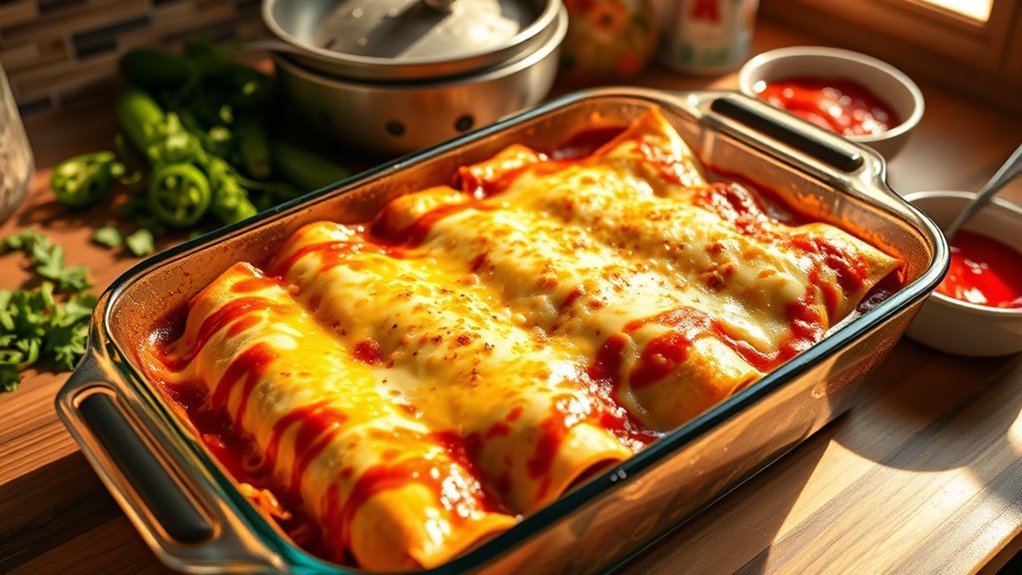
How to Reheat Enchiladas in the Oven in 7 Easy Steps
Preheat your oven to 350°F (175°C) and pick an oven-safe dish that fits your enchiladas. Arranging them in a single layer helps them heat evenly. Cover the dish with foil to keep the moisture locked in.
Bake for 20–25 minutes until the enchiladas are heated through. Then, remove the foil for the last 5–10 minutes to melt the cheese and crisp up the top. This step adds a delicious finish!
Don’t forget to check the internal temperature—it should reach 165°F to ensure food safety.
Follow these simple steps, and you’ll enjoy perfectly reheated enchiladas every time. There’s always a little extra to learn for the best results, so keep experimenting!
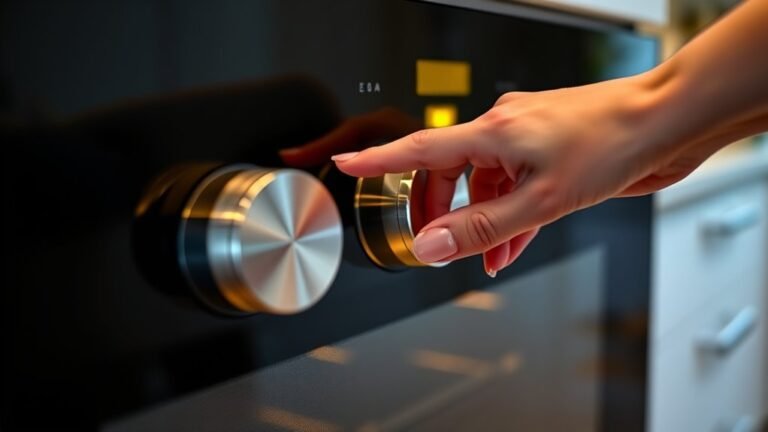
Preheat Your Oven to 350°F (175°C)
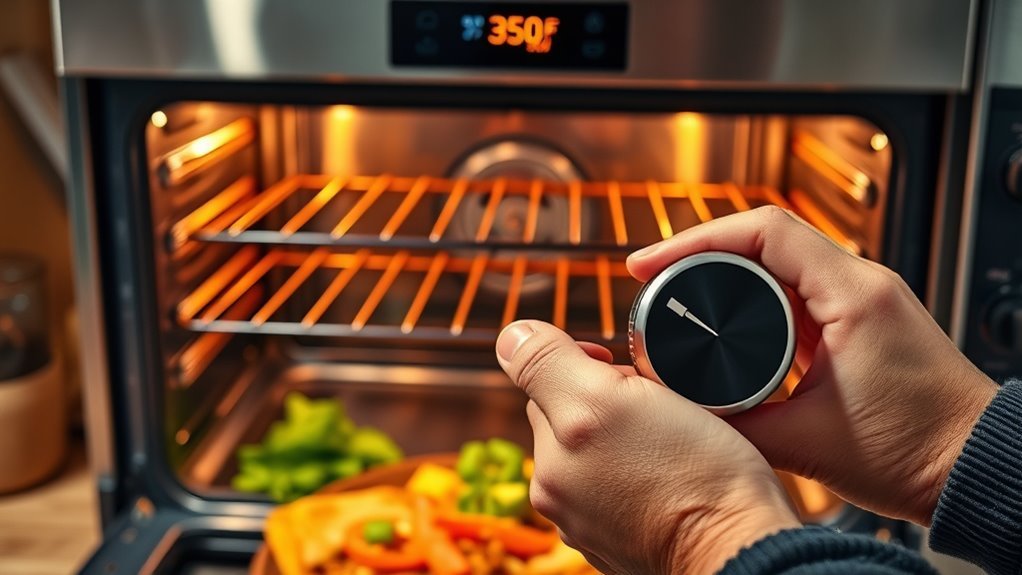
Before you place your enchiladas in the oven, make sure to preheat it to exactly 350°F (175°C). Setting the correct oven temperature is essential for even reheating. This ensures your enchiladas warm thoroughly without drying out or becoming soggy.
Use an oven thermometer to verify the oven has reached the precise temperature before you insert your oven-safe dish. Preheating your oven for at least 10-15 minutes distributes heat evenly, preventing cold spots that can lead to uneven warming.
Verify oven temperature with a thermometer and preheat 10-15 minutes for even heating and no cold spots.
Skipping this step risks undercooked centers or unevenly heated edges. By taking the time to preheat, you promote consistent, thorough warming. This makes your reheated enchiladas just as delicious as when they were fresh.
Don’t rush—proper preheating is key for perfect results every time.
Select an Oven-Safe Baking Dish
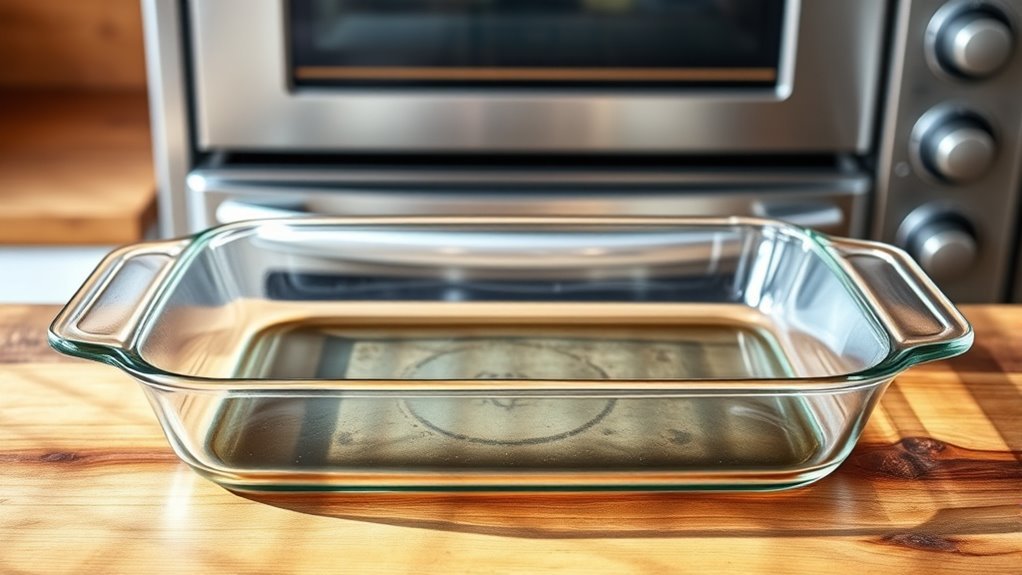
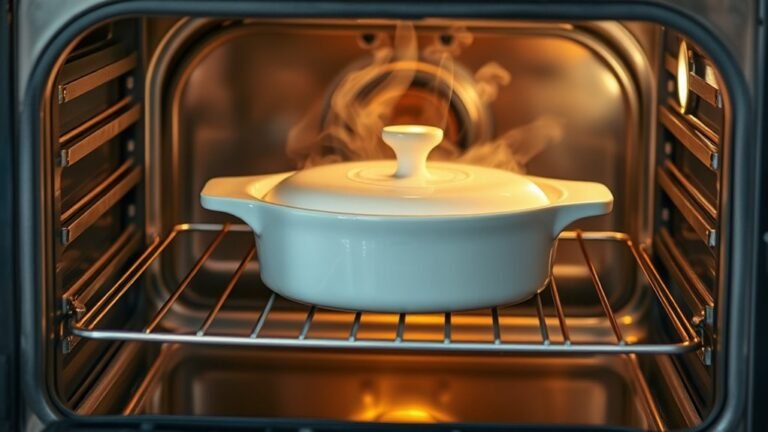
When reheating enchiladas, choosing an oven-safe baking dish that fits them comfortably is crucial for even warming.
Pick a dish made of ceramic, glass, or metal to guarantee it withstands oven temperatures of at least 400°F without cracking or melting. The dish should have a flat, even surface to promote uniform heating throughout your enchiladas.
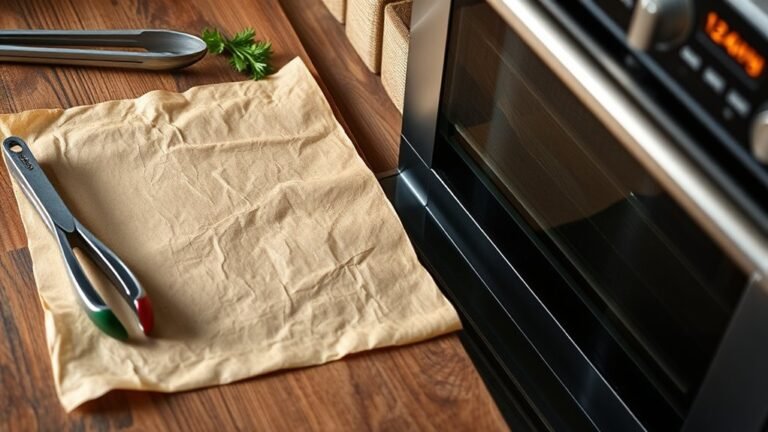
Also, opt for a deep baking dish if your enchiladas are saucy or topped with extra sauce, preventing spills during reheating. For easier cleanup, select a non-stick or glazed dish, or line the dish with parchment paper or aluminum foil.
Arrange Enchiladas in a Single Layer
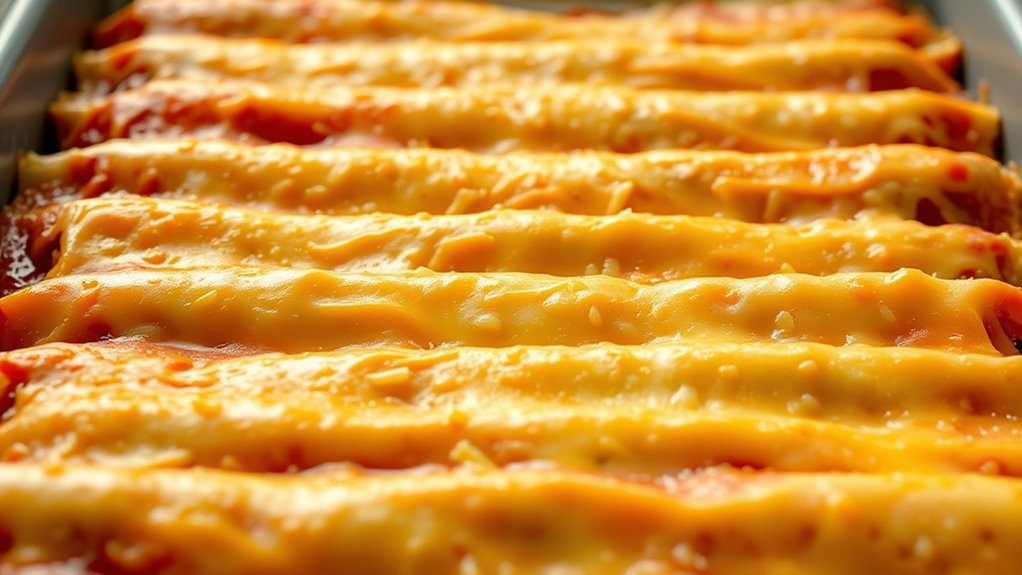
To guarantee your enchiladas heat evenly, arrange them in a single layer in your baking dish. Avoid overlapping or crowding, as this can cause uneven reheating and sogginess.
Use a shallow, oven-safe dish so heat reaches all enchiladas uniformly. Spacing them apart lets hot air circulate freely, ensuring each enchilada warms perfectly.
Don’t stack or pack them tightly; trapped moisture will prevent proper reheating.
| Correct Arrangement | What to Avoid |
|---|---|
| Single layer in dish | Overlapping enchiladas |
| Shallow dish for heat flow | Crowding enchiladas |
| Space between pieces | Stacking enchiladas |
| Even heat exposure | Trapping moisture |
Following these tips guarantees your enchiladas reheat evenly in the oven every time.
Cover the Dish With Aluminum Foil
Cover your enchiladas with aluminum foil to lock in moisture and keep the surface from drying out. Using heavy-duty foil helps distribute heat evenly across the dish.
Just make sure to tent it loosely so steam can escape without losing that essential moisture. It’s a simple trick that makes a big difference in the final texture.
Retain Moisture Effectively
Although reheating enchiladas can dry them out, you can keep them tender by wrapping the dish in aluminum foil. This method guarantees excellent moisture retention during oven reheating by trapping steam inside, preventing the tortillas from drying out.
To maximize steam trapping and even heating, follow these tips: Use heat-resistant aluminum foil and create a tent-like cover to avoid foil touching cheese or sauce. Seal the foil edges tightly around the dish to create an airtight environment.
This approach lets the enchiladas reheat evenly without drying. Just remember to remove the foil during the last 5-10 minutes to let cheese melt and toppings crisp while still keeping the moisture locked in.
Prevent Surface Drying
When you reheat enchiladas, wrapping the dish with aluminum foil helps trap moisture and prevents the surface from drying out. To prevent dryness, cover your enchiladas loosely with foil in the oven, ensuring steam can circulate while keeping humidity inside.
Seal the foil tightly around the edges to lock in heat and moisture, but avoid letting it touch the food directly. This method keeps the enchiladas moist and flavorful during reheating.
For a perfect finish, remove the foil during the last 5 to 10 minutes in the oven to let the cheese melt and the top crisp up without drying out the surface. Using foil to cover your enchiladas is a simple but essential step to prevent dryness and maintain delicious moisture throughout reheating.
Ensure Even Heat
To keep your enchiladas heating evenly, wrap the dish tightly with aluminum foil. This covering traps heat and moisture, preventing your enchiladas from drying out while reheating.
Proper use of aluminum foil promotes even heat distribution, ensuring the center warms thoroughly without sacrificing flavor or texture. When reheating enchiladas using the oven method, sealing the dish well is key.
- Cover the dish tightly with aluminum foil for consistent temperature
- Retain moisture to keep enchiladas soft and flavorful
- Prevent the top from becoming overly crispy or burnt
- Remove foil during the last 5-10 minutes to crisp cheese and toppings
Bake for 20 to 25 Minutes
Since you’ve preheated your oven to 350°F (175°C), arrange the enchiladas in a single layer in an oven-safe dish without crowding. Cover the dish tightly with aluminum foil to trap moisture and help the enchiladas heat evenly.
Place the covered dish in the oven and bake for 20 to 25 minutes. This cooking time at the correct temperature guarantees the enchiladas are thoroughly heated throughout without drying out.
The aluminum foil plays an essential role by maintaining moisture and distributing heat evenly, preventing any cold spots. By following this step, you’ll guarantee your enchiladas reach the perfect temperature, ready for the next step in reheating.
Just be patient and let the oven do its work for a deliciously warm meal.
Remove Foil to Melt Cheese and Crisp the Top
Although the enchiladas have heated through, you’ll want to remove the foil now to let the cheese melt fully and develop a crispy, golden top. Uncovering enchiladas during oven reheating creates that irresistible golden-brown crust, preventing sogginess and enhancing flavor.
Remove foil once heated through to melt cheese fully and achieve a crispy, golden top.
Here’s how to get perfect results:
- Remove foil carefully after 20-25 minutes of baking.
- Increase oven temperature to about 375°F to promote a crispy top.
- Watch closely for melted cheese turning bubbly and golden.
- Let the enchiladas crisp for 5-10 minutes uncovered.
Check Internal Temperature Before Serving
You’ll want to check the internal temperature of your enchiladas before serving to make certain they’re safe to eat. Use a digital food thermometer and make sure the thickest part reaches at least 165°F.
This step guarantees proper reheating and helps prevent any foodborne illness. It’s a simple check that makes a big difference in safety and taste.
Importance of Temperature Check
How can you be sure your reheated enchiladas are safe to eat? The key is performing a thorough temperature check with a food thermometer. This safety verification guarantees the internal temperature reaches at least 165°F (74°C), making the dish hot enough to kill harmful bacteria.
During the reheating process, cold spots can form, so checking the thickest part of the enchiladas is essential. To maintain food safety, follow these steps:
- Insert the thermometer into the center of the thickest part
- Confirm the internal temperature hits 165°F (74°C) or higher
- Let the enchiladas rest for a few minutes, then recheck
- Use regular temperature checks to verify thorough heating
Safe Serving Temperature
After confirming your enchiladas have reached the safe reheating temperature, it’s important to check the internal temperature again before serving. This step guarantees food safety by verifying that the entire dish is evenly heated to at least 165°F.
Use a food thermometer to check multiple spots, especially with larger portions, to confirm even heating. Let the enchiladas rest a few minutes after oven reheating to stabilize heat distribution before measuring.
Never serve until the internal temperature hits 165°F to avoid foodborne illness.
| Step | Action | Purpose |
|---|---|---|
| 1 | Reheat enchiladas in oven | Achieve safe temp |
| 2 | Let rest 2-3 minutes | Stabilize heat |
| 3 | Check internal temperature | Confirm 165°F reached |
| 4 | Verify multiple spots | Ensure even heating |
Using a Food Thermometer
When reheating enchiladas, using a food thermometer guarantees they reach the safe internal temperature of 165°F before serving. This step is essential for food safety, ensuring thorough heating and preventing foodborne illness.
To get an accurate temperature check, insert the thermometer into the center of the enchiladas, avoiding contact with the pan or foil.
During oven reheating, keep an eye on the reheat temperature by regularly checking the internal temperature. Follow these tips for best results:
- Insert the food thermometer into the thickest part of the dish.
- Wait for the thermometer reading to stabilize before checking.
- Reheat until the internal temperature hits 165°F (74°C).
- Avoid overcooking by monitoring the temperature throughout reheating.
This simple process guarantees your enchiladas are safely heated and delicious.
Conclusion
Now that you’ve mastered reheating enchiladas in the oven, get ready to experience a flavor explosion that’ll make you question every other leftover meal you’ve ever had!
With that perfectly melted cheese and crispy top, you’ll swear you just ordered fresh from your favorite Mexican spot. Don’t underestimate this simple method—it turns your enchiladas into a mouthwatering masterpiece.
Reheating enchiladas in the oven not only preserves their delicious texture but also enhances the flavors, making each bite irresistible. This easy oven reheating technique ensures your enchiladas stay moist inside while getting that delightful crispy top you love.
So next time you have leftover enchiladas, just pop them in the oven and enjoy a meal that tastes like it’s straight from a restaurant. Trust me, once you try this oven reheating method, you’ll never settle for anything less!