How Long to Roast Chestnuts in Oven in 5 Easy Steps
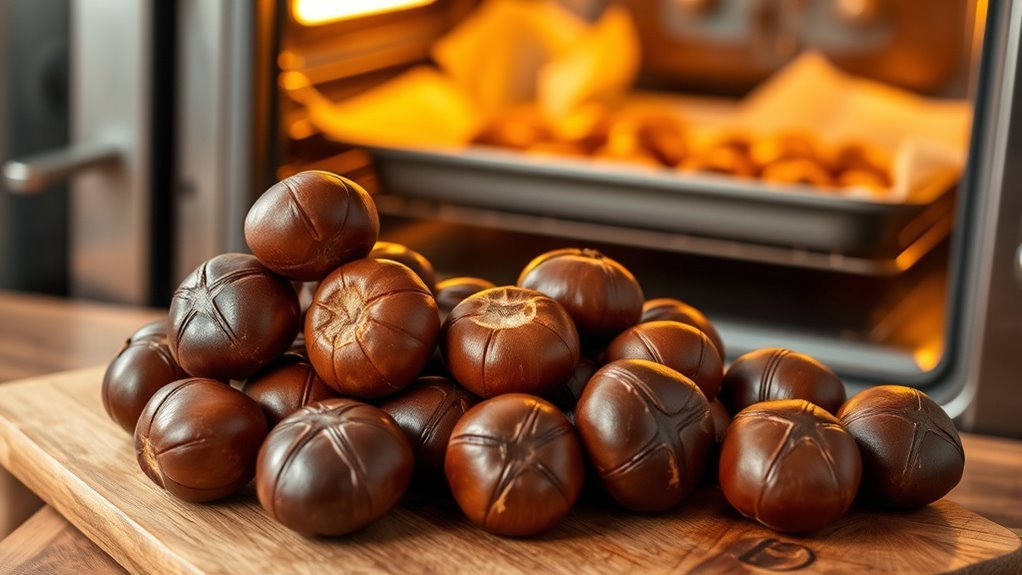
To roast chestnuts in the oven, start by picking firm, shiny chestnuts without blemishes. These fresh chestnuts will give you the best flavor and texture once roasted. Score each one with an X and soak them in water for about an hour to make peeling easier later.
Preheat your oven to 425°F (218°C). Then, roast the chestnuts for 25 to 30 minutes, turning them occasionally to ensure even cooking. You’ll know they’re done when the shells crack and the nuts smell nutty and warm.
Peel the chestnuts while they’re still warm for the best results. Follow these simple steps, and you’ll soon enjoy perfectly roasted chestnuts with ease.
Plus, I’ll share some handy tips to make your chestnut roasting even better!
Choosing the Right Chestnuts for Roasting
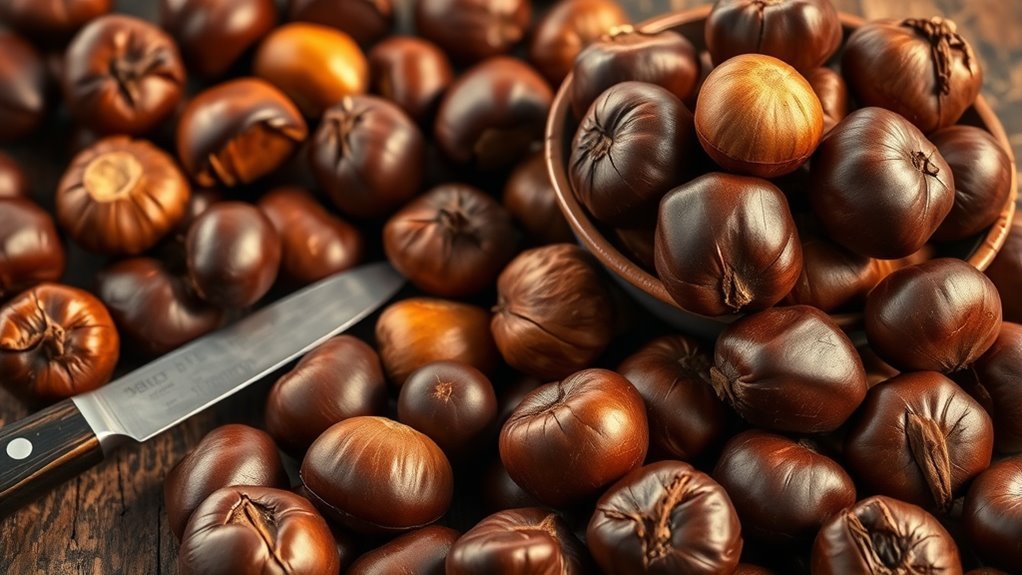
When selecting chestnuts for roasting, you’ll want to pick plump, firm ones with shiny, smooth shells that are deep brown and free of blemishes or mold. Fresh chestnuts with a shiny shell indicate high quality and better flavor.
Choose plump, firm chestnuts with shiny, smooth, deep brown shells free of blemishes for the best roasting results.
Avoid any chestnuts that feel soft, have holes, or rattle when shaken, as these signs point to spoilage. Selecting chestnuts of even size helps ensure they roast uniformly and peel easily afterward.
Check that the smooth shell isn’t dry or cracked, which could mean the chestnut is old or poor quality. Since chestnuts are seasonal, you’ll find the best quality during fall and winter.
And hey, sticking to reputable sources guarantees you get fresh chestnuts that’ll roast perfectly every time.
Preparing Chestnuts for the Oven
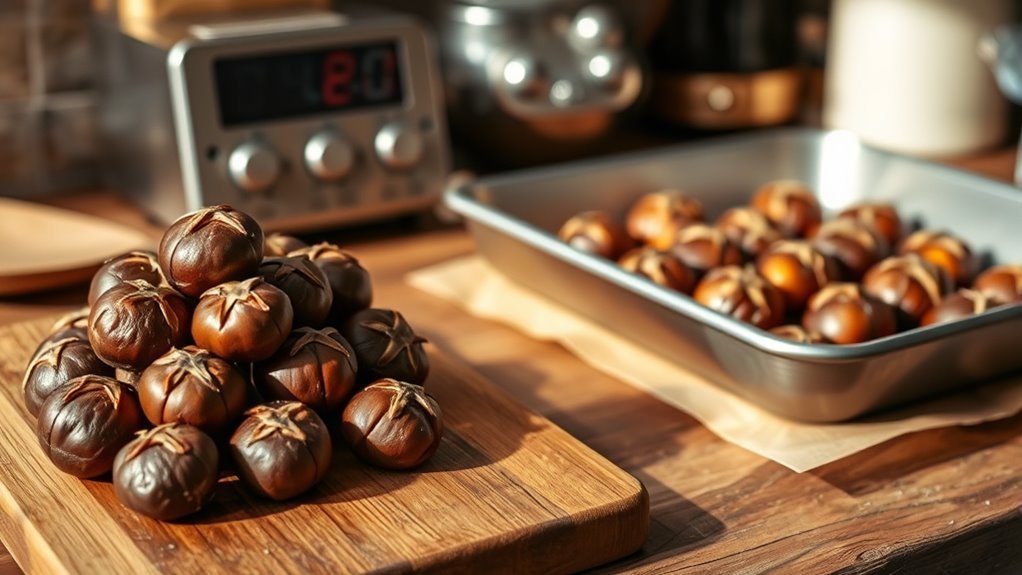
How do you get chestnuts ready for roasting? Start by rinsing the chestnuts thoroughly under cold water to remove any dirt.
For proper preparation, use a sharp knife to score each chestnut with a shallow X or lengthwise slit on the rounded side. This scoring allows steam to escape during roasting.
Next, soak the scored chestnuts in cold water for about an hour. Soaking helps loosen the shells and inner skin, making peeling easier.
After soaking, dry the chestnuts completely with a clean towel to avoid excess moisture affecting the roasting process.
Finally, arrange the chestnuts in a single layer on a roasting sheet, placing them with the scored side facing up.
Following these easy steps prepares your chestnuts perfectly for the oven.
Setting the Oven and Roasting Time
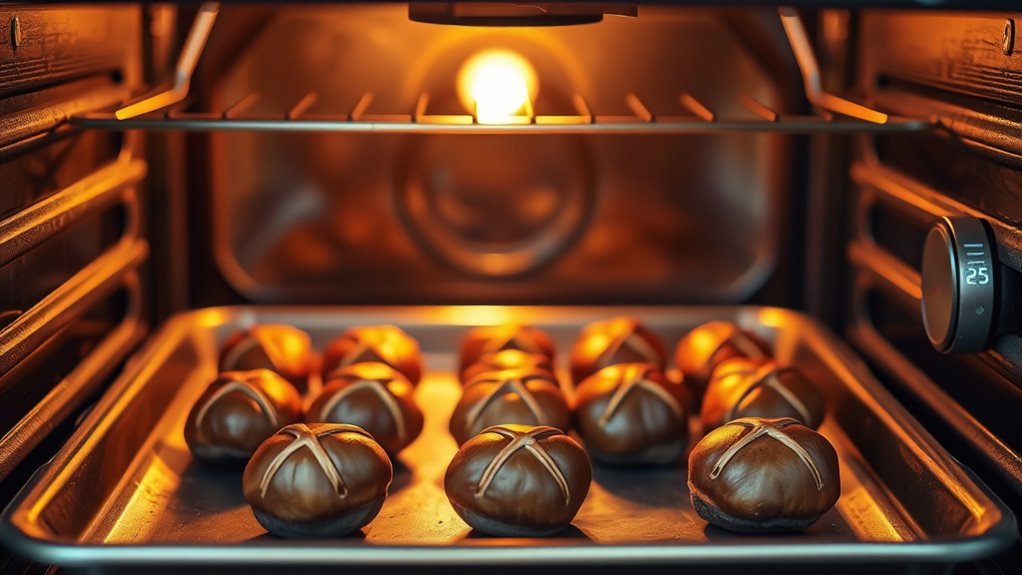
Although chestnuts can vary in size and moisture, you should preheat your oven to 425°F (218°C) for the best roasting results. Once you score chestnuts to allow steam to escape, place them on a baking sheet with the cut side up.
Roast chestnuts for 25-30 minutes, turning them occasionally to ensure even cooking and prevent burning. Keep an eye on the roasting duration, especially after 20 minutes, since oven temperature and chestnut size affect cooking time.
You’ll notice the shells start to split and open when they’re nearly done. This is your cue to check doneness but avoid overcooking.
Performing a doneness test around this time helps you roast chestnuts perfectly with tender flesh inside and nicely split shells.
How to Know When Chestnuts Are Done
Once the chestnuts start to crack open and release a warm, nutty aroma, you know they’re nearing readiness. Look for shells that have naturally begun to peel back at the scoring marks you made before roasting.
These open shells reveal tender flesh inside, a clear sign of doneness. To be sure, gently pierce the chestnut with a fork or knife—the inside should feel soft and easily pierced without resistance.
You can also squeeze the chestnut gently; it should yield slightly, indicating it’s cooked through. Typically, roasting at 425°F for 25-30 minutes achieves this perfect texture.
When the shells are fully open and the aroma is strong, your chestnuts are done and ready to enjoy. Easy, right? Just keep an eye on them and you’ll have a tasty treat in no time!
Tips for Peeling and Serving Hot Chestnuts
To get the shells off easily, peel your chestnuts while they’re still hot from the oven. Wrap the hot chestnuts in a clean towel and let them steam for 10-15 minutes. This loosens the outer shell and inner skin, making peeling simpler.
Use gentle pressure to crack or squeeze each chestnut, then carefully peel away the shell and fuzzy inner skin. For stubborn bits, a small sharp knife helps with precise removal without damaging the nut.
Apply gentle pressure to crack chestnuts, then peel carefully—use a sharp knife for stubborn bits without harming the nut.
Remember, peeling tips like working quickly while the chestnuts remain warm are key to smooth removal. Serve your peeled chestnuts immediately to enjoy their best flavor and texture.
Following these steps, you’ll have perfectly peeled, delicious chestnuts ready to delight your guests. Easy, right?
Conclusion
Now that you know the secret to roasting chestnuts perfectly, you’re basically a holiday hero! In just minutes, you’ll transform simple chestnuts into the most irresistible, mouthwatering treats ever.
They’re so good they might just start a festive frenzy among your friends and family. Don’t be surprised if everyone begs you to roast chestnuts all year round. Seriously, once you nail this, your oven will feel like a magical treasure chest of deliciousness!
Roasting chestnuts in the oven is easier than you think, and the results are always worth it. With these simple steps, you’ll enjoy perfectly roasted chestnuts every time — warm, tender, and full of rich flavor. So go ahead, make roasting chestnuts a new holiday tradition that everyone will love!