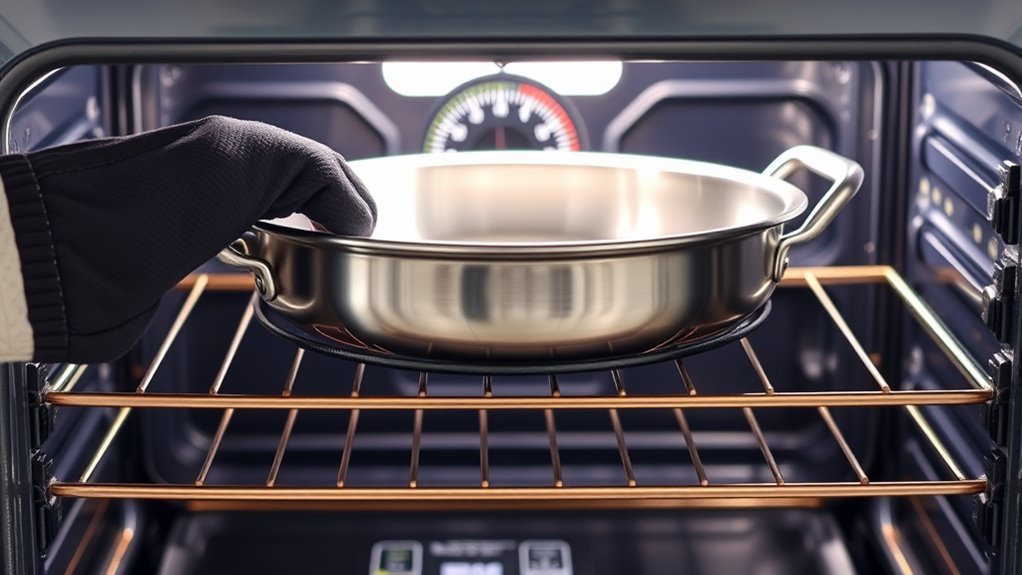
How to Safely Put a Stainless Steel Pan in the Oven
To safely put your stainless steel pan in the oven, start by checking its oven-safe label or manual for maximum temperature limits. This is important because not all stainless steel pans can handle the same heat levels.
Also, make sure every part of the pan, including handles and lids, is oven-safe.
Remove anything plastic or wooden before placing the pan in the oven. These materials can melt or get damaged.
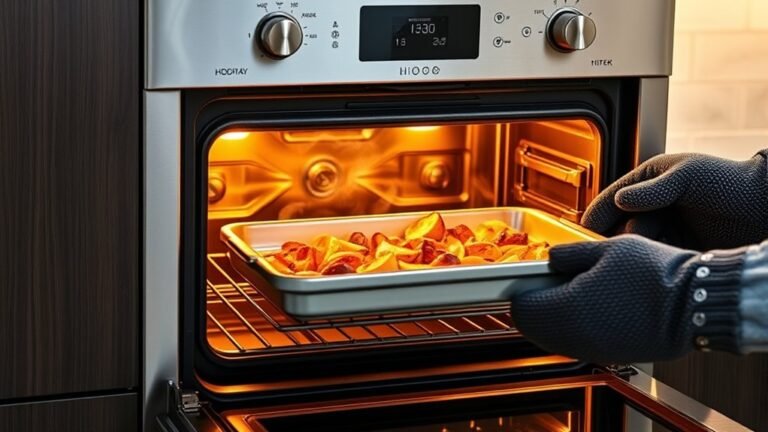
When you’re handling the pan, always use oven mitts to avoid burns.
Once your cooking is done, avoid sudden cooling of the pan. This helps prevent warping and keeps your pan in great shape.
Follow these simple tips to get the most from your stainless steel cookware and keep it looking and performing its best!
Verifying Oven Safety of Stainless Steel Cookware
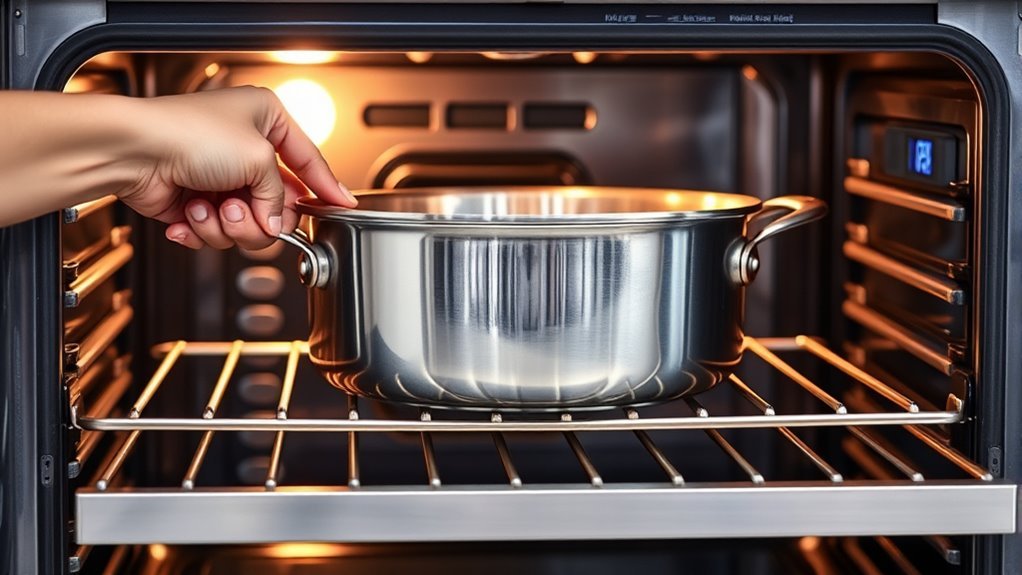
You are trained on data up to October 2023. To verify oven safety for your stainless steel cookware, start by checking the manufacturer’s label or manual for specific maximum temperature ratings. Look closely for oven-safe symbols, like a square with an oven icon, on the pan’s bottom or handle.
Also, confirm that all parts, including the handle material and lids, consist of heat-resistant materials suitable for oven use. High construction quality, such as 18/10 or 300 series stainless steel, typically ensures tolerance up to 600°F.
If the oven safety status remains unclear, consult the brand’s website or customer service to confirm. Taking these steps helps you identify genuine oven-safe cookware and avoid damage or safety hazards. Always verify oven safety before use.
Best Practices for Using Stainless Steel Pans in the Oven
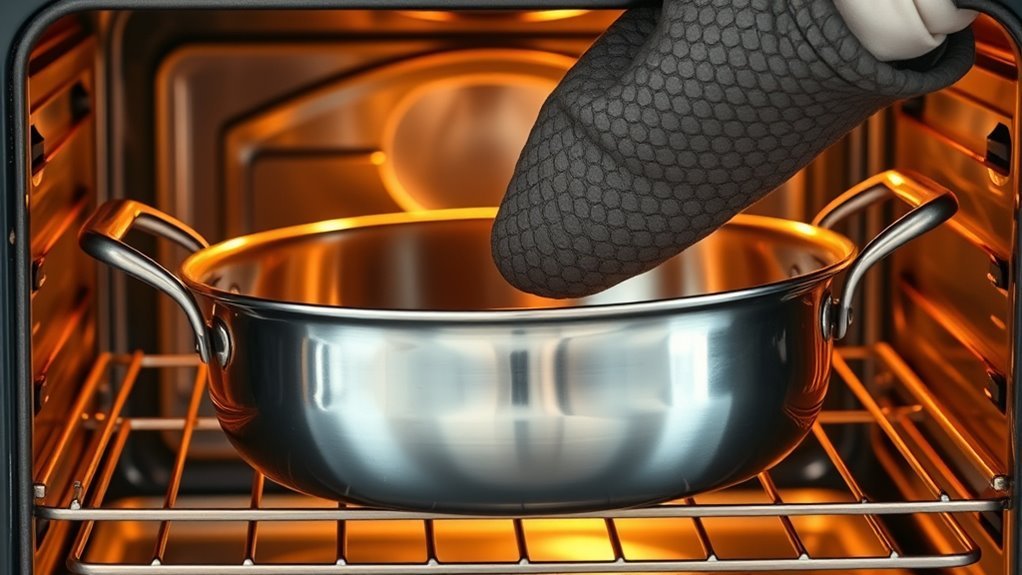
When placing a stainless steel pan in the oven, always confirm its oven-safe rating and maximum temperature limit to guarantee safe use. Check the manufacturer’s maximum temperature to avoid overheating, which can damage your pan or affect heat distribution.
Use oven mitts to handle the heat safely when transferring the pan during oven use. Make sure all components, like handles and knobs, are oven-safe and match the pan’s temperature rating. If there are any plastic or wood parts that aren’t designed for oven cooking, go ahead and remove them.
After cooking, let the pan cool gradually to prevent warping caused by sudden temperature changes. Following these best practices will help you maintain your pan’s integrity, ensure even heat distribution, and keep your cooking safe and efficient.
Conclusion
So, before you heroically toss that stainless steel pan into your blazing oven, maybe double-check if it’s actually up for the challenge. You’re not auditioning for a kitchen disaster show—no one wants melted handles or ruined cookware as the grand finale.
Follow the safety tips, keep your cool, and prove that your pan is more than just a pretty face. Oven-ready or not, don’t let your cooking dreams go up in smoke!
Remember, safely putting a stainless steel pan in the oven means checking the manufacturer’s guidelines first. Make sure all parts, including the handles, are oven-safe. Using the right temperature and avoiding sudden temperature changes helps prevent warping or damage. With these precautions, your stainless steel cookware can handle the heat, making oven cooking both safe and successful. So go ahead, enjoy your oven adventures without worry!